
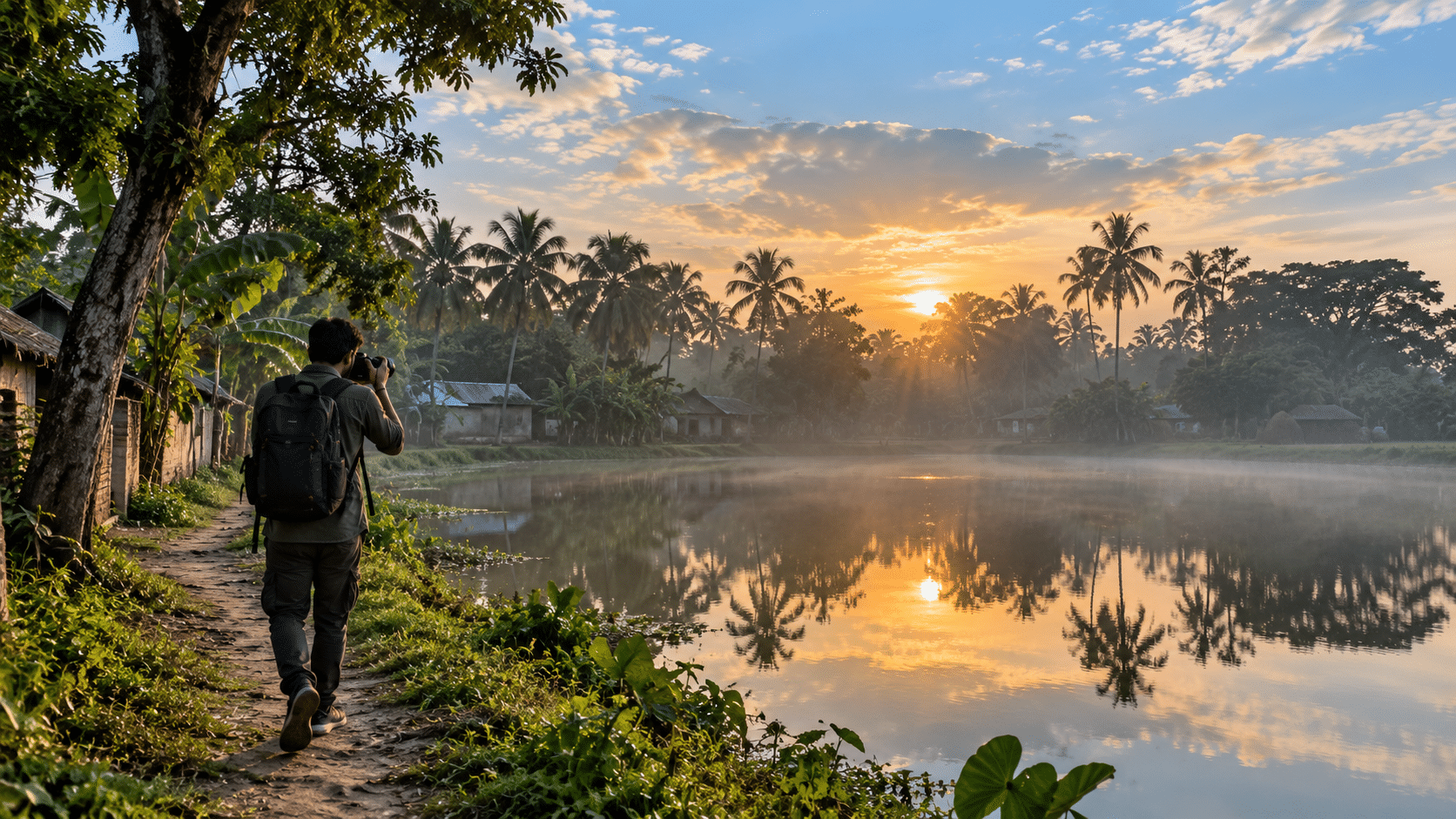
A Shariatpur photography walk is a slow way to see the district. Instead of rushing from one famous spot to another, you move through old ponds, mosques, monasteries and village lanes with a camera and a curious mind. Shariatpur does not have giant monuments, but it has texture, light and stories, and those are exactly what photographers love.
Why Try a Shariatpur Photography Walk?
Many travel photos look the same. A Shariatpur photography walk gives you subjects that few people have photographed: moss on old steps, tile patterns on a village mosque, mist over a large dighi and the daily rhythm of a market. It is perfect for beginners with a phone and for serious photographers with a full camera bag.
Suggested Stops for a Shariatpur Photography Walk
- Mahisar Digambari Dighi: A big old pond with trees, still water and soft morning mist.
- Burir Hat Mosque: Decorative mosaic work and a lively market setting in Bhedarganj.
- Rudrokor Math: A quiet historic monastery with weathered walls and old trees.
- Dhanuka Mansha Bari: An old house of worship with strong folk character.
- Padma riverside: Wide river light and boats at sunset.
Best Light for a Shariatpur Photography Walk
Early morning and late afternoon give the softest light. Mornings are usually calmer, with mist over water and fewer people. Late afternoon turns walls and trees golden. Midday light is harsh, so use that time for lunch, travel or indoor details such as tile work.
A Simple Route Plan
- Morning: Start early in Shariatpur Sadar with Rudrokor Math and Dhanuka Mansha Bari.
- Midday: Rest, eat and edit a few photos.
- Afternoon: Travel to the Bhedarganj side for Burir Hat Mosque and Mahisar Digambari Dighi.
- Evening: If time allows, finish near the Padma for the last light.
This plan fits one long day or two relaxed days, depending on how slowly you like to shoot.
Camera and Phone Tips
- Look for lines, patterns and reflections before you press the shutter.
- Shoot wide for the place, then move close for small details like tiles or carvings.
- Use portrait mode only when people agree to be photographed.
- Carry a spare battery or power bank, as village power can be unreliable.
- Keep a small cloth to wipe your lens in humid weather.
Photo Ethics on the Walk
Many places on this route are living places of worship or private village spaces. Ask before taking close photos of people, avoid prayer times and never enter closed areas. A friendly smile and a short chat often lead to better photos and better stories. Treat every Shariatpur photography walk as a visit to someone’s home, not as a studio.
Best Season
November to February is the best season, with dry paths, clear light and mild weather. During the monsoon, ponds look beautiful, but roads can be muddy and photography gear needs rain cover.
What to Carry
- Comfortable walking shoes
- Water, snacks and a hat
- Small cash notes for tea and local transport
- A notebook to write down names and local stories
Quick Answers About a Shariatpur Photography Walk
Do I need a professional camera?
No. A modern phone is enough for most places on this route.
How many days do I need?
One long day can cover the main stops, but two days give you time for better light and slower shooting.
Is a Shariatpur photography walk safe?
It is generally calm, but go in daylight, tell someone your plan and ask locals about road conditions.