
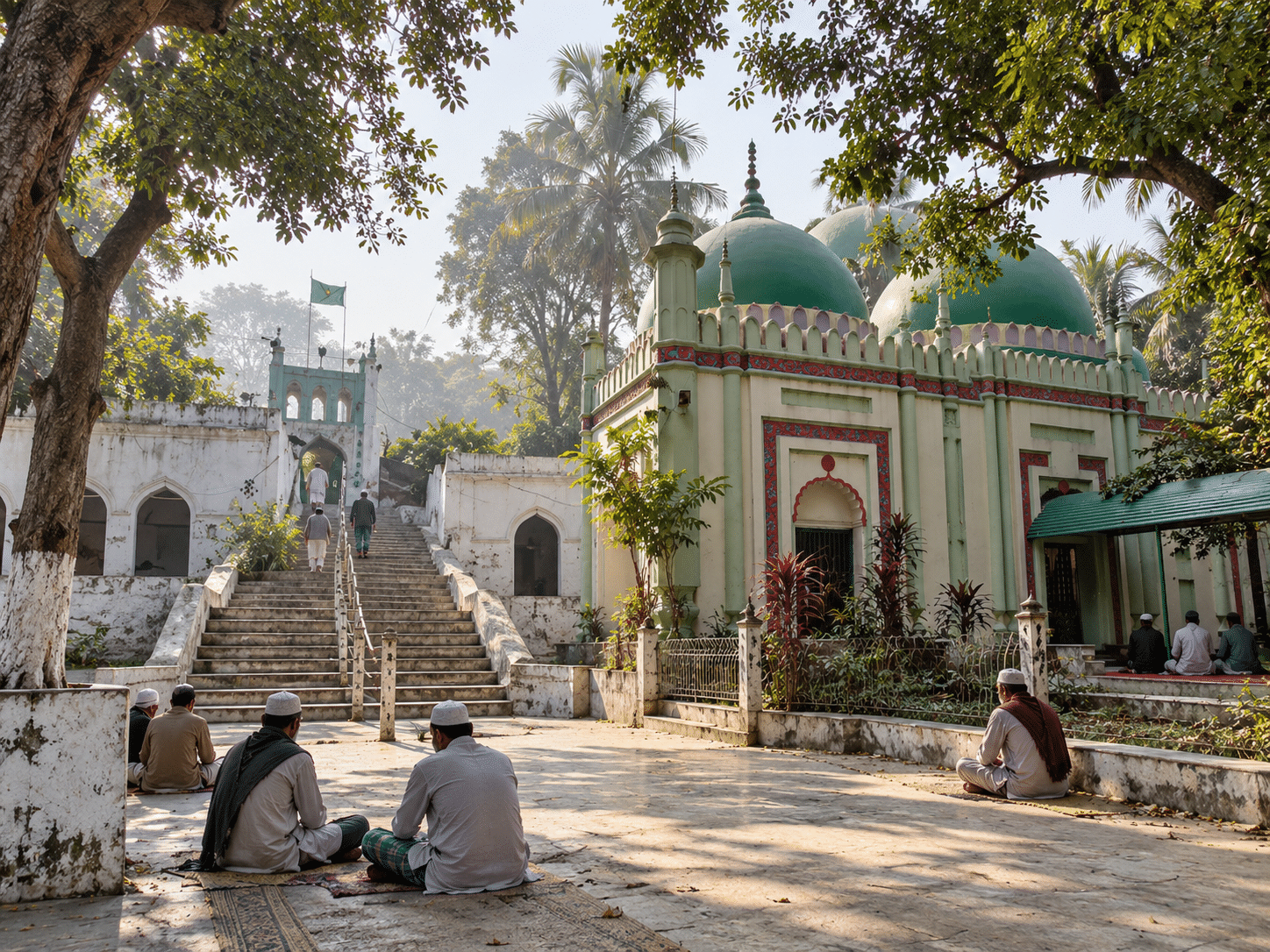
A Sufi shrine visit is not like a normal sightseeing trip. It is quieter, slower and more personal. In Shariatpur, the best-known place for this kind of visit is Sureswar Darbar Sharif in Naria, which sits near the Padma river. Whether you are religious, curious or simply looking for a calm day, a Sufi shrine visit can leave you with a peaceful memory that stays long after the trip ends.
What Is a Sufi Shrine Visit?
A Sufi shrine, often called a darbar or mazar, is a place linked with a saint or spiritual teacher. People come to pray, reflect, listen to devotional songs or sit in silence. A Sufi shrine visit is less about checking a box and more about being present. That is why the right attitude matters more than the right camera.
The Story of Sureswar in Naria
Sureswar Darbar Sharif was founded by Hazrat Jan Sharif Shah Sureswari (1856 to 1919), a learned Sufi saint born in this village. He is remembered for serving people of every religion and class, and for using music and song to speak about love for God. This background shapes the feeling of a Sufi shrine visit here: gentle, open and rooted in village life.
How to Prepare for a Sufi Shrine Visit
- Dress modestly: Cover shoulders and knees. Women may carry a scarf, and men should wear long trousers.
- Keep your phone silent: Loud calls and ringtones break the mood for everyone.
- Carry small cash: Use only official and clearly marked donation boxes.
- Go with an open mind: Ask politely if you are unsure about any custom.
What Happens During the Visit
You may see people praying, reading, sitting in groups or listening to soft chanting. You are welcome to sit quietly at the edge and simply observe. Most Sufi shrine visits take one to two hours, and nobody expects you to do more than behave with respect. If a caretaker guides you, follow his instructions and avoid walking into closed or private areas.
The Annual Urs
The yearly urs at Sureswar is held from 19 to 21 Magh, which usually falls in early February. During these days, devotees arrive from many parts of Bangladesh, and the place is full of prayer, food and community. A Sufi shrine visit during the urs is powerful but crowded. If you prefer calm, choose a weekday in winter and arrive in the morning.
Photography and Respect
- Always ask before photographing people, especially worshippers.
- Do not take photos during prayer or sensitive moments.
- Avoid using flash or drones.
- Never post photos of private moments without permission.
Best Time for a Sufi Shrine Visit
November to February is the most comfortable season for travel in Shariatpur. Morning hours are cooler and quieter. Heavy rain can make village roads muddy, so check the weather before you leave.
Plan the Rest of Your Day
After your Sufi shrine visit, you can have lunch in Naria town and visit the Modern Fantasy Kingdom park with children, or continue to the Padma Bridge landing at Jajira for a sunset. If you want an older heritage feel, the Shariatpur Sadar side has quiet temples and a historic monastery.
Quick Answers About a Sufi Shrine Visit
Can non-Muslims or tourists join a Sufi shrine visit?
Respectful visitors are generally welcome at open shrines. Follow local guidance, and ask the caretakers if you are unsure.
Is there an entry fee?
Shrines are usually open to the public without a ticket, but please confirm on arrival and give only through official donation boxes.
When is the best time for a Sufi shrine visit in Shariatpur?
A winter weekday morning is ideal for a calm visit, while the urs in early February suits those who want to see the larger gathering.