
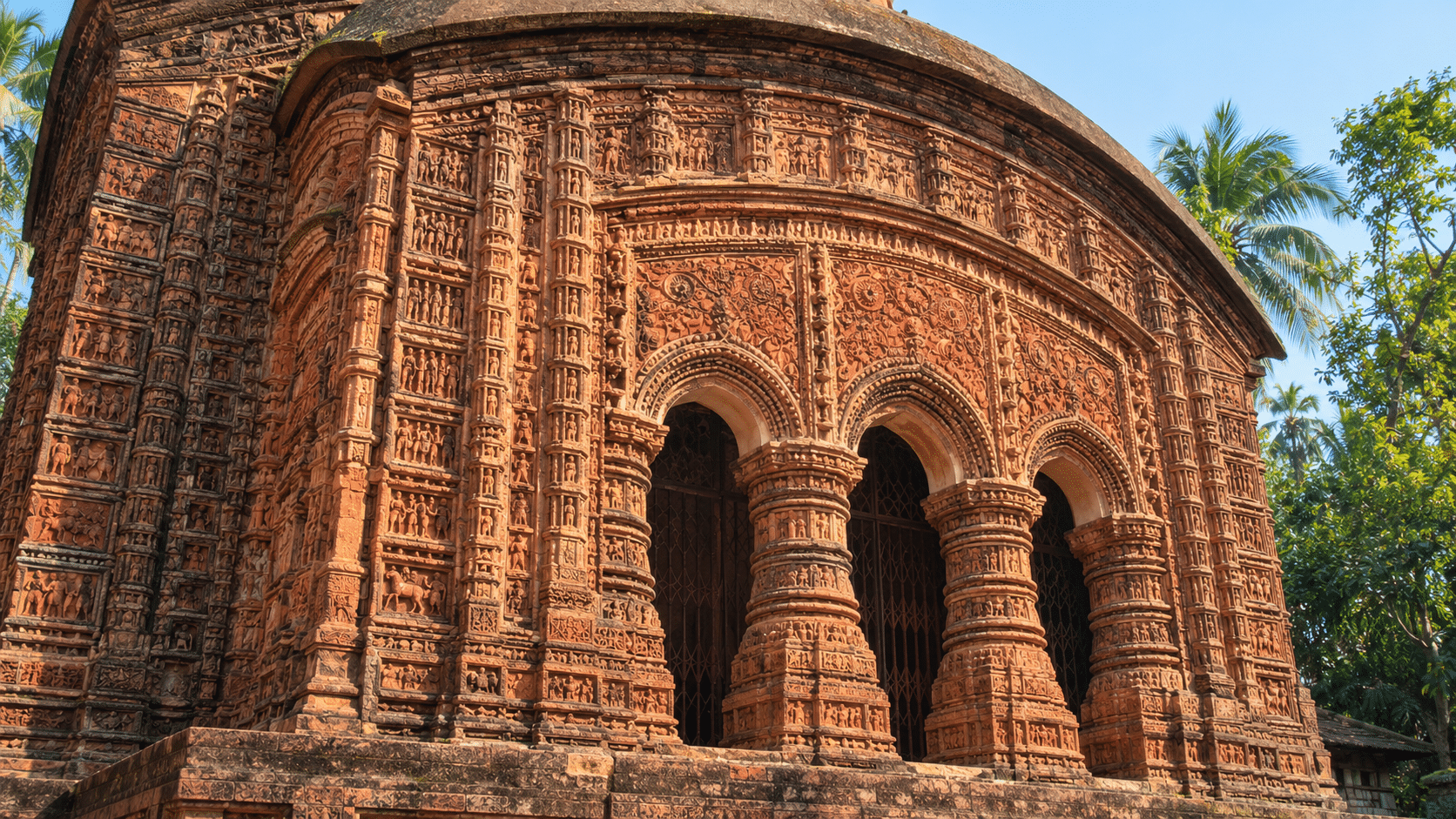
Terracotta Temple Photography at Khalia
Terracotta temple photography is a slow craft. It rewards patience, soft light and a quiet approach. In Khalia village of Rajoir, Madaripur, the Raja Ram Temple gives you a rare subject: a 17th century temple with terracotta panels, a double-sloped roof and a half-buried ground floor. This experience shows you how to photograph it with care.
Why Khalia Is Good for Terracotta Temple Photography
The Raja Ram Temple was built by the zamindar Rajaram Rai and is also known as the Jora Bangla Temple. Its front carries terracotta panels showing scenes from the Ramayana and the Mahabharata. Good terracotta temple photography is about telling those small stories one frame at a time, without rushing past them.
Best Light for Terracotta Temple Photography
Soft side light brings out the colour and the depth of terracotta. Early morning and late afternoon are best. Harsh midday light flattens the carving and creates dark shadows in the panels. In the cool dry months, the village is also easier to walk.
Shots to Try at the Temple
The Wide Village Shot
Begin with one wide frame that shows the temple in its village setting, with trees and the open ground around it. This is the picture that gives your story a sense of place.
The Roof Line
Raise your camera to the double-sloped roof. It explains the Jora Bangla name, and a clean side angle shows the shape clearly.
The Panel Details
Move closer for the terracotta panels. Shoot one panel at a time, and keep your frame straight so the carving reads clearly. Fine terracotta temple photography lives in these small details.
The Sunken Base
Much of the ground floor is now buried. A low angle that shows where the earth meets the wall tells the story of age better than words.
Faded Painted Details
Accounts of the temple also mention painted figures of deities. Many are faint, so look closely in good light and avoid forcing the exposure.
Rules for Responsible Terracotta Temple Photography
- Never touch, lean on or scratch the terracotta panels.
- Do not use flash, since it can flatten the carving and disturb worshippers.
- Do not climb on old walls or into damaged corners for an angle.
- Ask before photographing worshippers or local families.
- Take your waste with you and leave nothing behind.
Gear for Terracotta Temple Photography
A phone is enough, and a simple camera with a wide lens and a short zoom covers most scenes. Carry a soft cloth, water and a power bank, since facilities near the temple are limited.
Plan Your Terracotta Temple Photography Day
Start from Madaripur town and allow about half a day with the return journey. Use a CNG auto-rickshaw or rickshaw van, and ask local people for the road to Khalia. If you enjoy this subject, continue to the Faridpur terracotta heritage trail nearby for more.
Who Will Enjoy Terracotta Temple Photography
Heritage photographers, architecture students and slow travellers will enjoy this experience. If you love quiet places with real age, terracotta temple photography at Khalia is worth the extra village road.
Terracotta Temple Photography: Quick Answers
Where can I try terracotta temple photography in Madaripur?
The best place is the Raja Ram Temple in Khalia village, Rajoir Upazila, Madaripur District.
Is flash allowed for terracotta temple photography?
Avoid flash. It can flatten the carving and disturb worshippers, and natural side light gives better results.