
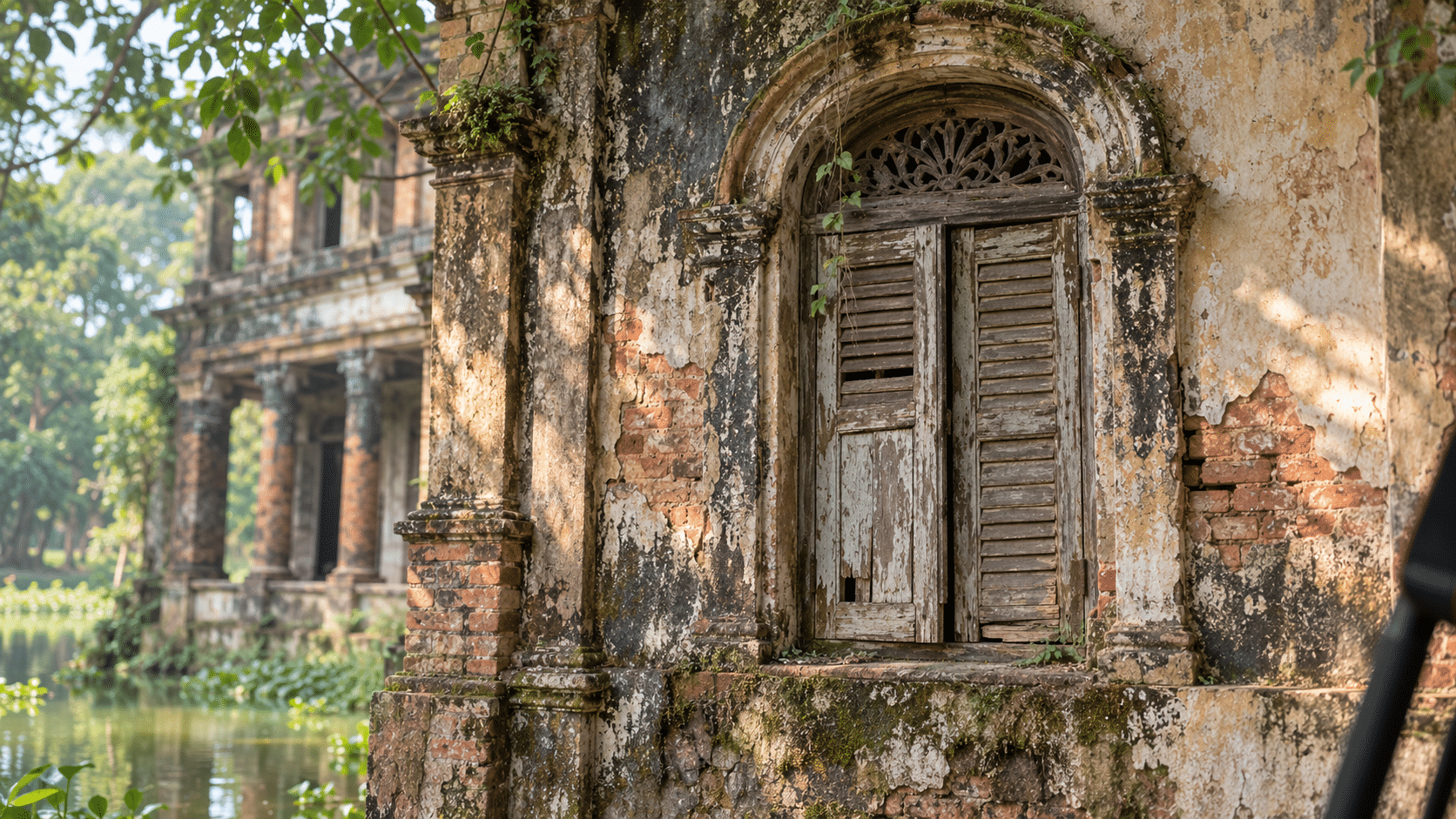
Zamindar bari photography is a quiet kind of treasure hunt, and Gopalganj has a good place for it. Zamindar bari photography at the Ulpur Zamindar Bari means chasing peeling plaster, arched windows and soft pond light, rather than posing in front of a famous landmark. This page describes what the experience feels like, and how to do it respectfully.
Arriving at a Fading Estate
The Ulpur Zamindar Bari stands in Ulpur village, close to the Bilrut Canal of the Madhumati. It is not polished like a museum. Several buildings still stand, including about eight two-storey structures once used for zamindari work, along with a large pond. The first feeling is stillness, as if the buildings are holding their breath.
What Zamindar Bari Photography Looks Like Here
Zamindar bari photography rewards patience. You look for lines, textures and small details that tell the story of a family that lived here long ago. Reports mention fine craftsmanship, and you can look for it in arches, cornices and window frames, even where time has done its damage.
Textures for Zamindar Bari Photography
Peeling plaster, mossy walls and old window shutters, wherever you find them, make beautiful close-up subjects. Run your eyes over them slowly and the patterns appear.
Light and Water in Zamindar Bari Photography
The pond and canal give the estate a soft, reflective mood. Morning light on still water turns the old walls golden, and a gentle mist can add depth. Cloudy days give even, moody light that suits black and white frames.
Frames Within Frames
- Arched windows that frame green trees outside
- Long corridors where light falls in thin stripes
- Reflections of walls broken by a floating leaf in the pond
- Staircases that disappear into shadow
The Honest Side of Zamindar Bari Photography
Reports say river erosion and neglect are damaging the Ulpur Zamindar Bari, and that some buildings are occupied. That shapes the experience. You are a guest in a place that is both heritage and home. Some of the most meaningful zamindar bari photography here is also quiet documentation: a record of what remains, shared with care so others can appreciate it too.
A Photographer’s Afternoon
Picture a hobby photographer from Gopalganj town who visits Ulpur on a clear November morning. She plans to take twenty photos and ends up taking two hundred. An elderly neighbour tells her how the place looked when he was a boy, and she records his words along with her frames. When she posts the best images online, a stranger writes back to say their grandfather was born near Ulpur. This is what zamindar bari photography can do: it turns walls into stories.
Respectful Zamindar Bari Photography Rules
- Ask before entering any courtyard or house, because some buildings are occupied.
- Never climb on stairs, balconies or walls, as many are fragile.
- Ask locals before photographing people, and do not fly a drone without permission.
- Take only photos, and do not remove bricks, tiles or decorative pieces.
- Share your images with context, and respect the privacy of local residents.
What You Take Home
Zamindar bari photography is not about perfect pictures. It teaches you to look closely, to notice decay as well as beauty and to understand that heritage is often fragile. At Ulpur, you leave with images, but also with a deeper respect for old buildings and the families who once filled them.
Zamindar Bari Photography FAQs
Where can I try zamindar bari photography in Gopalganj?
The Ulpur Zamindar Bari in Gopalganj Sadar upazila is a good option, though access is informal and should be confirmed locally.
Is it safe to explore the buildings?
Parts are fragile, so stay on open ground and avoid climbing on damaged structures.
What is the best light for photography?
Morning light and soft cloudy light work well, especially near the pond and canal.