
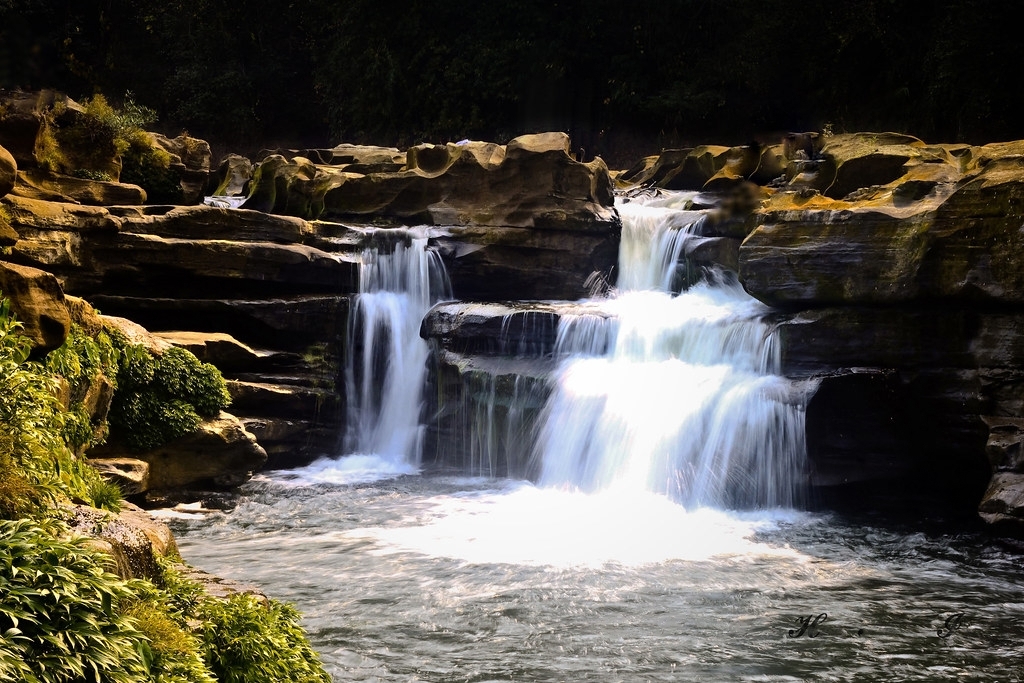
Nafakhum is a hill waterfall on the Remakri canal in Remakri Union, Thanchi Upazila, Bandarban, about 79 km from Bandarban town. It drops roughly 20 to 25 feet and is nicknamed the “Niagara of Bangladesh”. The usual route is by jeep to Thanchi, an engine boat up the Sangu River to Remakri Bazar, then a trek of about two to three hours. Tourist access to Nafakhum was reopened in August 2026 after a long closure, and visitors must follow the registration, guide and security rules.
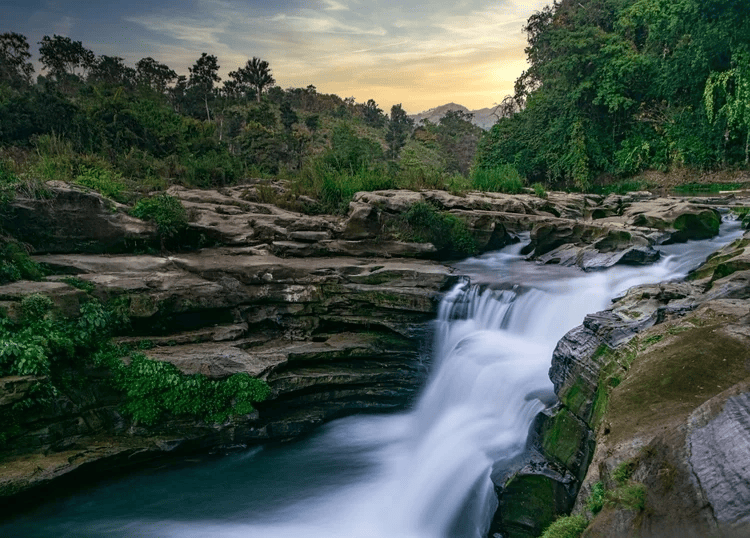
Nafakhum is not a postcard stop. You earn it. First comes a winding hill road above the clouds, then a long boat ride up a rocky river between tall green ridges, then a walk along a stream that gets louder with every step. When the sound becomes a roar, the water appears: a wide, stepped cascade in a deep forest, far from any road. It is also a place where careless swimming has cost lives, so this guide covers the route, the rules and the safety rules you should treat as non-negotiable.
Nafakhum at a Glance
- Also known as: Nafa-khum, Remakri waterfall, the “Niagara of Bangladesh”
- Location: Remakri Union, Thanchi Upazila, Bandarban, Chattogram Division
- Distance: About 79 km from Bandarban town
- Drop: About 20 to 25 feet, across the Remakri canal
- Route: Bandarban to Thanchi (jeep), Thanchi to Remakri Bazar (engine boat), then a trek of about 2 to 3 hours
- Access status: Reopened in August 2026, with registration, guides and security rules
- Best season: Winter, from November to February, when the water is lower
Before You Go: Access Rules for Nafakhum
Access to this part of Bandarban has changed many times. A travel ban on parts of Ruma, Rowangchhari and Thanchi was imposed in October 2022 over security concerns, and Nafakhum stayed closed even after some other spots reopened in 2025. The Business Standard reported in November 2025 that a tourist went missing after a group entered the area without permission. In August 2026, the Bandarban district administration reopened four areas, including the road and tourist area from Tindu Mukh to Nafakhum, as The Daily Observer reported.
Rules can change again, especially in the monsoon. Before you travel, please do the following:
- Check the current status with the Bandarban district administration or the Thanchi upazila office.
- Register at the local tourist information point and the army or BGB camp, as asked.
- Hire a registered local guide. Earlier travel rules in the area required registered guides, as bdnews24 reported.
- Follow all security instructions, and stay on approved routes only.
- If you are a foreign visitor, confirm in advance what permission you need.
How to Reach Nafakhum
Dhaka to Thanchi
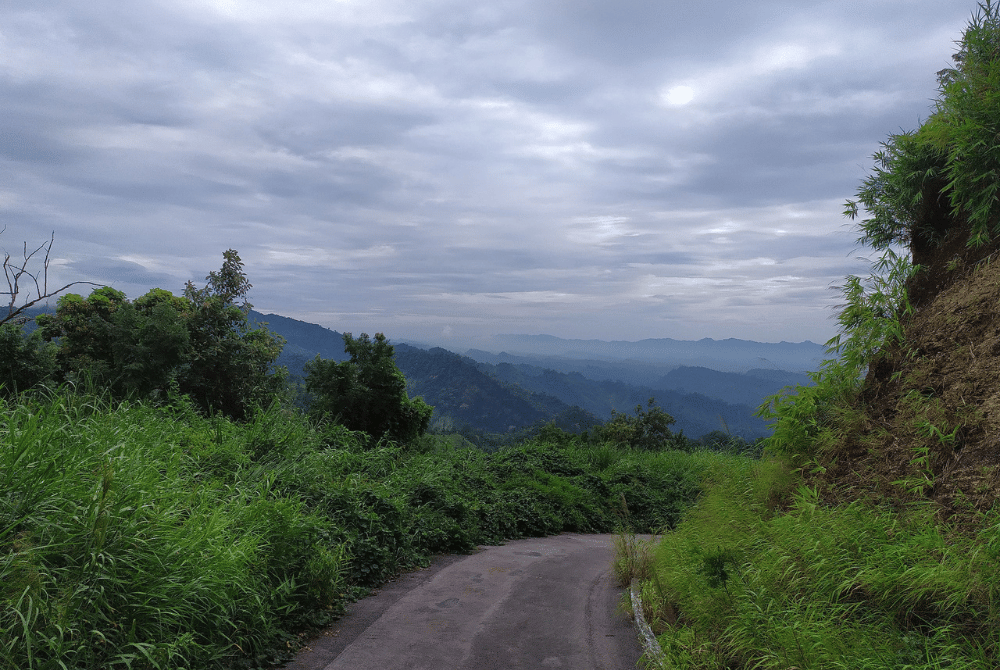
Take a bus from Dhaka to Bandarban town. From there, travel by Chander gari (the local jeep) along the hill road to Thanchi. The road twists high above the valleys, and you pass spots such as Shoilo Propat, Chimbuk and Nilgiri, where you can stop for views and tea. Beyond Thanchi, mobile phone coverage becomes weak, so tell someone your plan before you go.
Thanchi to Remakri by Boat
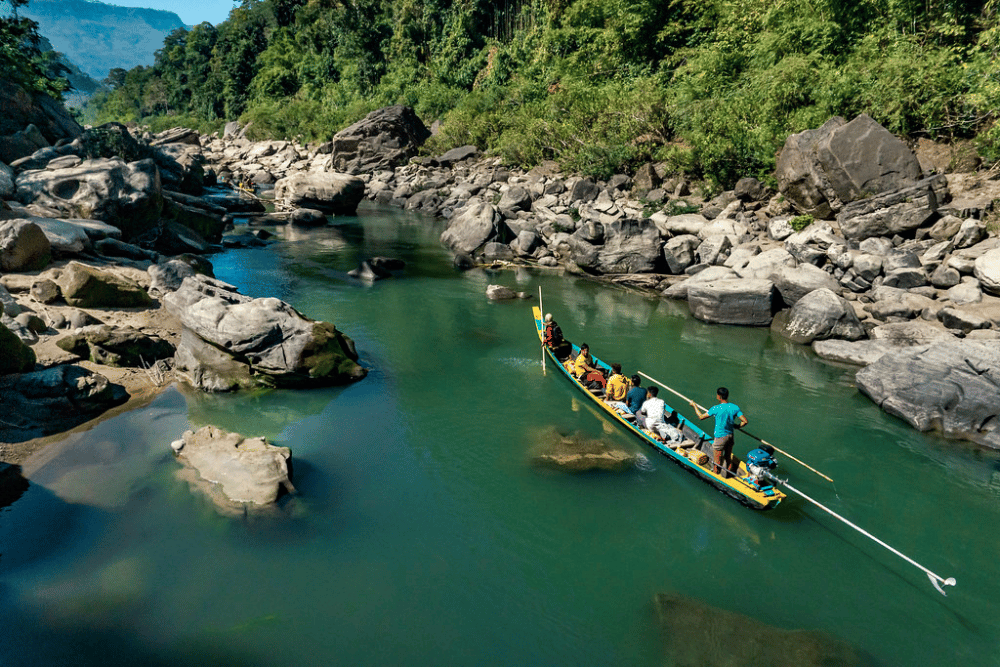
From the ghat at Thanchi, you take an engine boat up the Sangu River to Remakri Bazar. Reports put the trip at two to four hours, depending on the water level and the boat. The Sangu runs rocky and calm in winter, but it is fast and risky in the monsoon, so trips are often stopped when the water rises. Your boat and guide must be arranged in advance, and you will not find any transport in the area after about 4 pm.
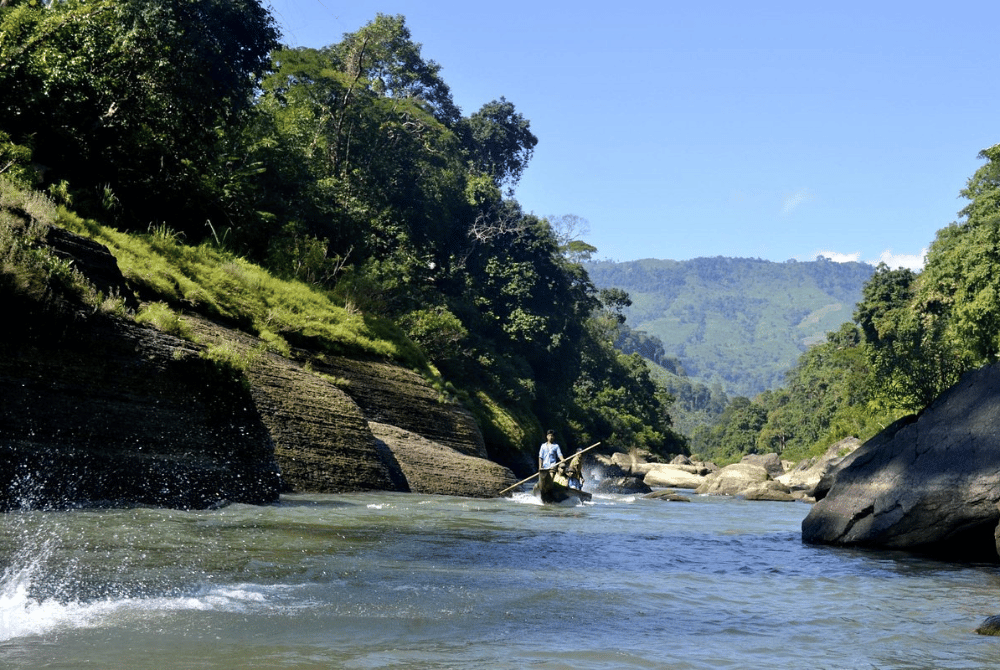
On the way, the boat passes Tindu, where the large rocks known as Tindu Boro Pathor (Big Stone) stand in the river. Many visitors stop at Tindu or stay overnight in Remakri to start the trek early the next morning.
The Trek from Remakri Bazar
The trek follows the Remakri canal. In winter, when the water is low, the path is fairly easy and takes about two to three hours, according to The Daily Star and The Business Standard. When the canal is full, you may need to cross it several times, and in heavy rain, the trek can be dangerous. A guide is essential, and you should turn back if the water rises.
The Name and the Story of Nafakhum
“Khum” is a Marma word for a waterfall or a deep pool that does not dry up. “Nafa” is the name of a fish that locals say leaps against the current in the Remakri stream, as UNB explains. Together, Nafakhum means roughly “the waterfall of the nafa fish”. The nickname “Niagara of Bangladesh” is a reference to its wide, stepped shape, not its size.
Over a long time, the water has carved steps, pools and narrow holes into the rock around the falls. A local story tells of a fisherman who tied a huge fish to a hook in one of the holes, was pulled in by the fish and never came out. Whether or not it is true, the holes are real, so do not step into or try to look inside them.
Safety at Nafakhum: Read This Before You Swim
Nafakhum is beautiful and dangerous. In 2020, the Dhaka Tribune reported that, over six years, 11 tourists had died and at least 200 had been injured at the falls, and the administration closed the spot at that time. More recently, a tourist went missing in November 2025 while swimming after his group entered without permission. Floods in July 2026 also left tourists stranded in remote parts of Thanchi, including Nafakhum, according to news reports.
- Never jump from the top of the falls or from the rocks above the pools.
- Do not swim if you cannot swim well, or when the water is high or fast.
- Stay out of the holes and tunnels in the rock, and do not climb behind the falls without a guide and proper gear.
- Avoid the monsoon. Water levels in the Sangu and the canal can rise quickly.
- Follow your guide. Do not enter areas that are closed, and never go without registration.
- Do not take selfies near the edge of the falls, because rocks are slippery.
Where to Stay and What to Pack for Nafakhum
Thanchi has guest houses and cottages, and Tindu and Remakri have basic local stays that you must arrange in advance. Tell your guide how many days you plan to stay, so that boat and food are ready. Pack trekking sandals or shoes with good grip, quick-dry clothes, a towel, a first-aid kit, oral rehydration salts, plenty of dry food and water, a headlamp and a power bank. Leeches are most common in the rainy season, so carry a little salt if you visit then.
You can also read our guides to Boga Lake and the hidden waterfalls and hill trails of Bandarban, and our hotel guides and tips on local transport. For a different hill region, see Rangamati.
Beyond Nafakhum: Amiakhum
Behind Nafakhum, the stream continues toward more remote falls. Amiakhum, one of the most remote waterfalls in Bangladesh, lies in the Nakshiyang area of Thanchi, and Wikipedia describes a route through Remakri and Nafakhum. It is a separate, longer trek and may have its own access rules, so ask your guide and the administration before you plan it.
Leave No Trace at Nafakhum
This is a remote and delicate place. Carry your waste back in a bag, avoid plastic, do not wash with soap in the stream, and respect the people who live nearby. Ask before photographing villagers, and buy local food and services where you can.
Frequently Asked Questions About Nafakhum
Where is Nafakhum located?
Nafakhum is in Remakri Union, Thanchi Upazila, Bandarban District, about 79 km from Bandarban town.
How high is Nafakhum waterfall?
Nafakhum has a drop of roughly 20 to 25 feet across the Remakri canal. It is wide and stepped, which is why it is nicknamed the “Niagara of Bangladesh”.
How do you get to Nafakhum?
Go by bus from Dhaka to Bandarban, then by jeep to Thanchi, then by engine boat on the Sangu River to Remakri Bazar, and trek for about two to three hours.
Is Nafakhum open to tourists?
The Bandarban district administration reopened the road and tourist area from Tindu Mukh to Nafakhum in August 2026. Rules can change, so check with the administration and use a registered guide.
What does Nafakhum mean?
“Khum” means a waterfall or deep pool in the Marma language, and “nafa” is a fish said to leap against the current there.
Is it safe to swim at Nafakhum?
Swimming is risky, especially when the water is high or fast. Several tourists have died there, so avoid swimming if you are not a strong swimmer, never jump from the top and follow your guide.
What is the best time to visit Nafakhum?
Winter, from November to February, when the water is lower and the trek is easier. The monsoon is dangerous.
Final Thoughts on Nafakhum
Nafakhum rewards effort and respect. Go with a registered guide, check the rules, travel in the dry season and leave the place as clean as you found it. For more ideas, explore our places to visit in Bangladesh, our Places to Visit stories and our travel experiences.