
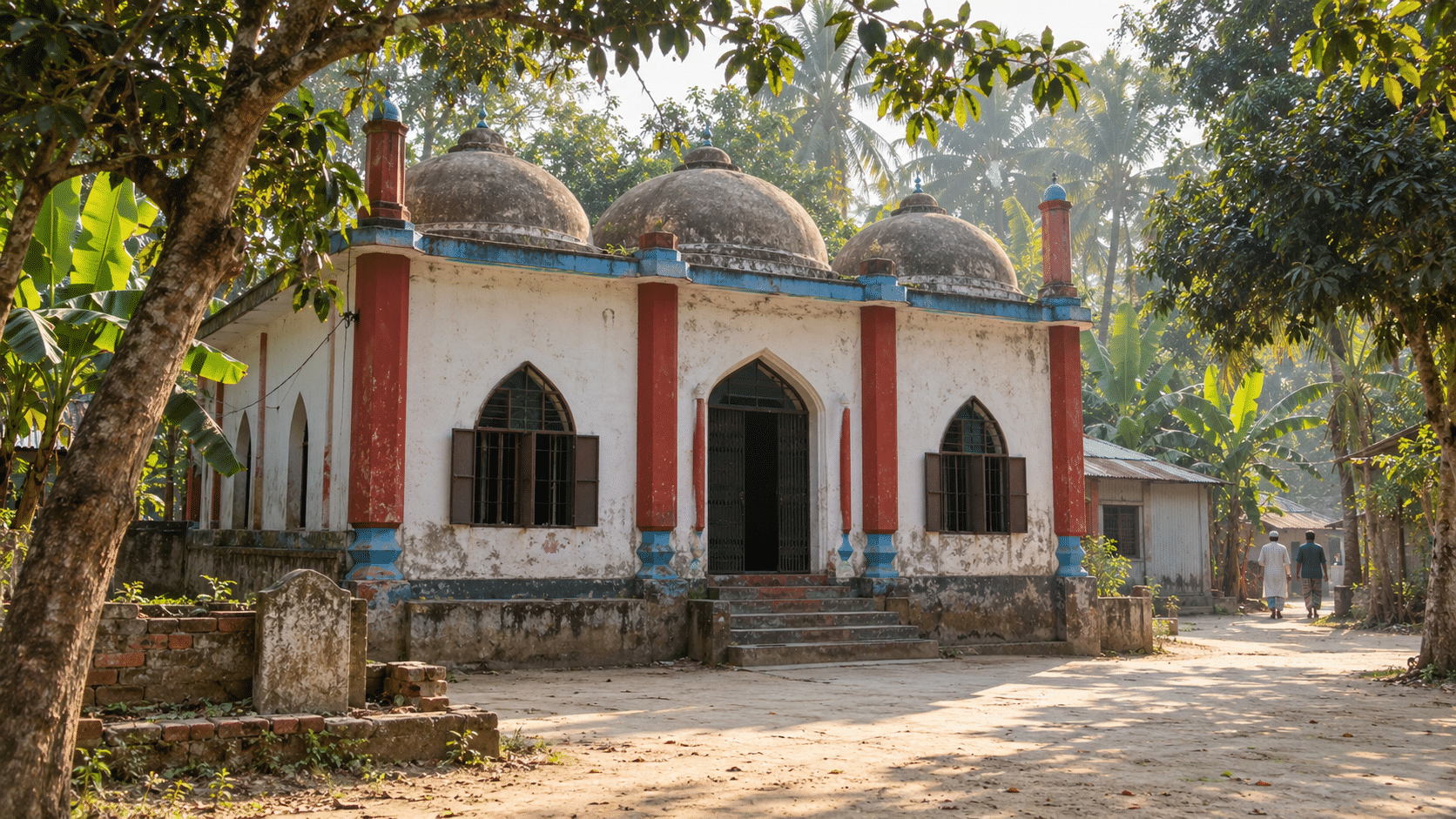
Ashrafpur Mosque in Shibpur, Narsingdi, is a place where the story matters more than the building. The Ashrafpur Mosque you see today is a modern three-domed mosque, but it stands on the site of a small Sultanate-era mosque from 1524. Around it lies one of the most interesting corners of Narsingdi, because the village of Ashrafpur is also known for two seventh-century copper plates that changed how historians read early Bengal.
The History of Ashrafpur Mosque
An inscribed stone that was once fixed to the mosque is now kept in the Bangladesh National Museum. It records that Ashrafpur Mosque was built in 930 Hijri (1524 CE) by a man named Dilwar Khan, during the reign of Sultan Nasiruddin Nusrat Shah. Nusrat Shah ruled Bengal from 1519 to 1532 and is remembered for building mosques across his kingdom. The famous Bagha Mosque in Rajshahi comes from the same period.
The original Ashrafpur Mosque was a small, single-domed building in the Sultanate style. The earthquake of 1897 ruined it. Prayers stopped, and over time the jungle swallowed the ruins. In 1940, local people led by Moulana Syed Ali cleared the jungle and brought the site back to life. Even then, the mihrab and part of the western wall were still standing. A larger, three-domed mosque was built later on the same ground.
What Is Special About Ashrafpur
The village is far older than the mosque. In 1885, a villager named Mia Baksh Khan found two copper plates in a mound here. Experts date them to the seventh century. The inscriptions show that Devakhadga of the Khadga dynasty granted land for a Buddhist sangha and vihara. The mosque stands about 1 km south of the place where the plates were found.
Old bricks and a ruined wall have been traced under the soil, and scholars believe a Buddhist monastery and centre of learning once stood nearby. Full excavation has not been possible because people live on top of the site. That makes Ashrafpur Mosque a stop where you are walking over layers of history, from Buddhist Bengal to the Sultanate and today.
What to Expect at Ashrafpur Mosque
- A modern, active three-domed mosque built on the Sultanate site.
- A calm village setting in Shibpur upazila, with a local community around it.
- No big signboards, so the story comes from locals and from reading before you go.
- A good photo stop, though please do not photograph worshippers without asking.
Manage Your Expectations
If you arrive hoping to see a 500-year-old building, you will be disappointed. The value of Ashrafpur Mosque lies in knowing what happened here. Read the history first, and the visit becomes far richer. Ask older residents what they remember about the mosque and the mounds nearby.
Visitor Etiquette at Ashrafpur Mosque
This is a place of worship, so dress modestly, keep your voice low and avoid entering the prayer area during prayer times. Visitors to Ashrafpur Mosque are usually welcomed warmly, especially if they greet people and explain why they came.
Plan Your Ashrafpur Mosque Visit
- Time needed: about 45 minutes to one hour, including a short walk through the village.
- Best months: November to February for dry paths and comfortable walking.
- Getting there: from Narsingdi town, go toward Shibpur by local bus or CNG, then ask locals for Ashrafpur.
- Pair it with: Sonaimuri Tek and the red-soil hills of Shibpur, which are close by.
Combine Ashrafpur Mosque With the Heritage Trail
Ashrafpur Mosque fits neatly into our Narsingdi historical places trail. Start with the Sultanate story here, move on to Parulia Shahi Mosque in Palash for the Mughal-era chapter, and finish at Balapur Zamindar Bari for the zamindar age.
Ashrafpur Mosque FAQs
Who built Ashrafpur Mosque?
An inscription now in the Bangladesh National Museum says Dilwar Khan built it in 1524 during the reign of Sultan Nasiruddin Nusrat Shah.
Is Ashrafpur Mosque still the original building?
No. The original small Sultanate mosque was ruined in the 1897 earthquake, and a modern three-domed mosque now stands on the same site.
Why is Ashrafpur important?
Two seventh-century copper plates found here show that a Buddhist vihara received land grants from a Khadga dynasty ruler.