
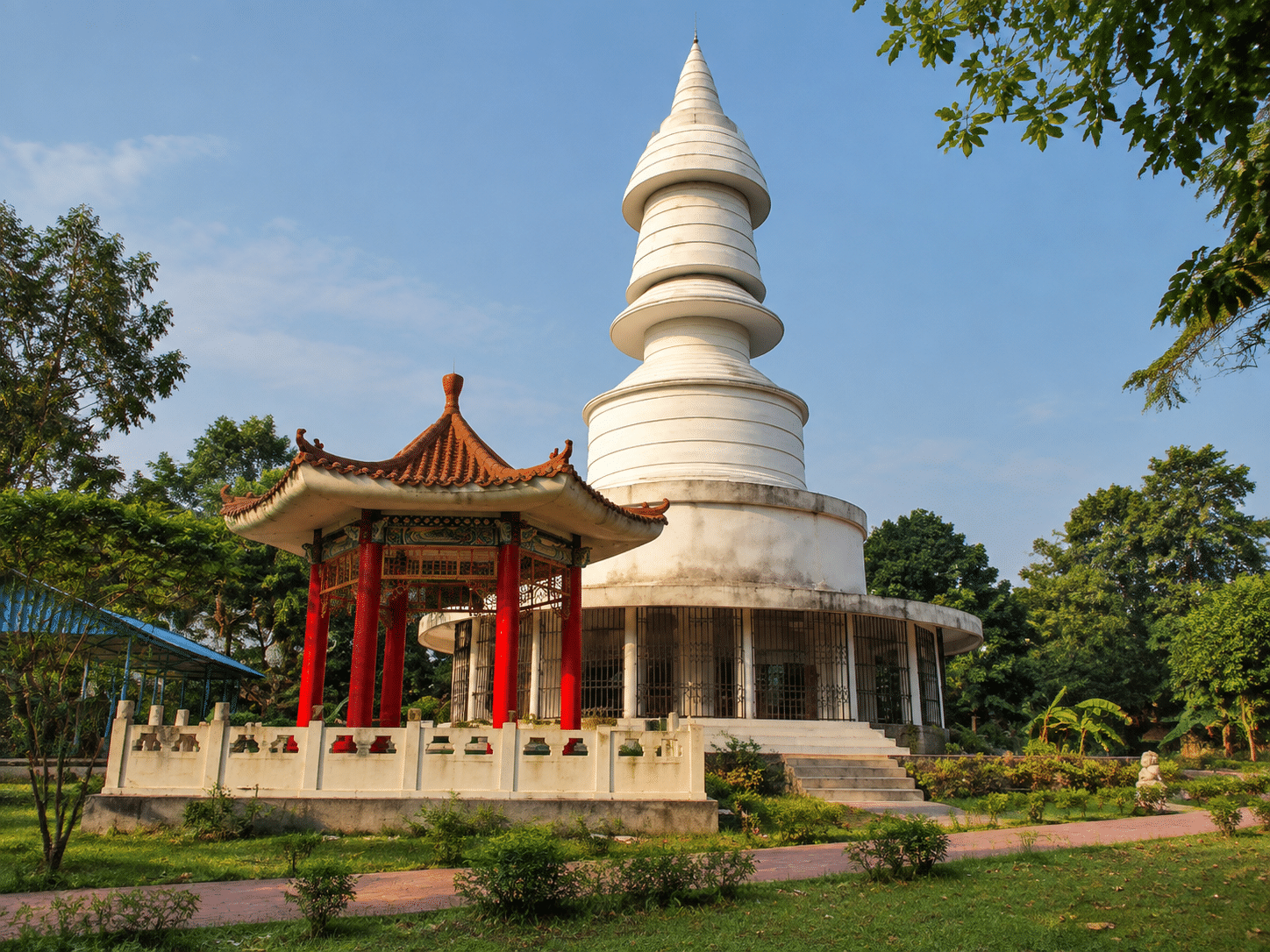
The Atish Dipankar Memorial in Bajrayogini village, Munshiganj, honours one of the greatest Buddhist scholars ever born in Bengal. Atish Dipankar Srijnan was born here in the Bikrampur region around the year 980, and he later travelled to Tibet, where he helped revive Buddhism. Today the Atish Dipankar Memorial is a peaceful place of pilgrimage and quiet reflection, and it is easy to reach from Dhaka in a day.
Who Was Atish Dipankar?
Atish Dipankar Srijnan (980 to 1054) was a Buddhist teacher and scholar of the Pala age. Local accounts say he was born in Bajrayogini village in Bikrampur, and that his childhood name was Chandragarbha. His father is described as a local ruler under the Pala kings.
As an adult, he became famous across Asia for his learning. He was invited to Tibet by its king, spent about sixteen years there, and left a deep mark on Tibetan Buddhism, according to a report in The Asian Age. For many Buddhists, his place comes next after the Buddha himself.
What to See at the Atish Dipankar Memorial
The memorial stands on Sukhbashpur Road in Bajrayogini, at the place known locally as Nastik Panditer Bhita, the traditional site of his birthplace. Visitors will find a monument as the main focus, along with a building that has a small library and a prayer room.
- The central monument that honours Atish Dipankar
- A quiet prayer room and small library
- Green grounds and calm walking paths
- A temple with golden tones that stands out inside the complex
- A memorial chaitya linked with relics of the scholar, according to local accounts
The memorial’s community page also mentions a large stupa built with support from the Chinese government. Because facilities change over time, it helps to ask the caretaker what is open on the day of your visit.
Why the Atish Dipankar Memorial Matters for Bikrampur
Bikrampur was once a centre of learning and power, and Atish Dipankar is its most famous scholar. The Atish Dipankar Memorial keeps that story alive. The memorial connects the district to the wider Buddhist world, and Buddhist visitors from different countries are reported to come here each year. It also links naturally with the ancient Nateshwar Buddhist Bihar in Tongibari, which shows how deep Buddhist history runs in this land.
Best Time to Visit the Atish Dipankar Memorial
November to February is the best time, with dry, mild weather that is comfortable for a slow walk. Try to go in the morning, when the site is quiet. Buddhist festival days can be busier and more colourful, so check the local calendar if you want to see the community at its liveliest.
How to Reach the Atish Dipankar Memorial
Take a bus from Gulistan in Dhaka to Munshiganj. From Munshiganj Sadar, a rickshaw or CNG takes you to Bajrayogini village, about two kilometres beyond Sukhbashpur. Ask for the Atish Dipankar Memorial Complex on Sukhbashpur Road, and drivers will know it. A reserved auto-rickshaw is easiest if you also plan to visit Idrakpur Fort and Baba Adam’s Mosque.
Tips for Visiting the Atish Dipankar Memorial
- Dress modestly and speak softly at the Atish Dipankar Memorial, as many visitors come to pray or meditate.
- Remove your shoes where signs or worshippers ask you to.
- Ask before photographing monks, worshippers or the prayer room.
- A small ticket may be charged at the gate, so keep a little cash ready.
Frequently Asked Questions
Where is the Atish Dipankar Memorial?
It is on Sukhbashpur Road in Bajrayogini village, Munshiganj Sadar.
Why is the Atish Dipankar Memorial important?
It marks the traditional birthplace of Atish Dipankar Srijnan, a Buddhist scholar who helped revive Buddhism in Tibet.
Is the Atish Dipankar Memorial open to everyone?
Yes. Visitors of all faiths are welcome as long as they show respect.