
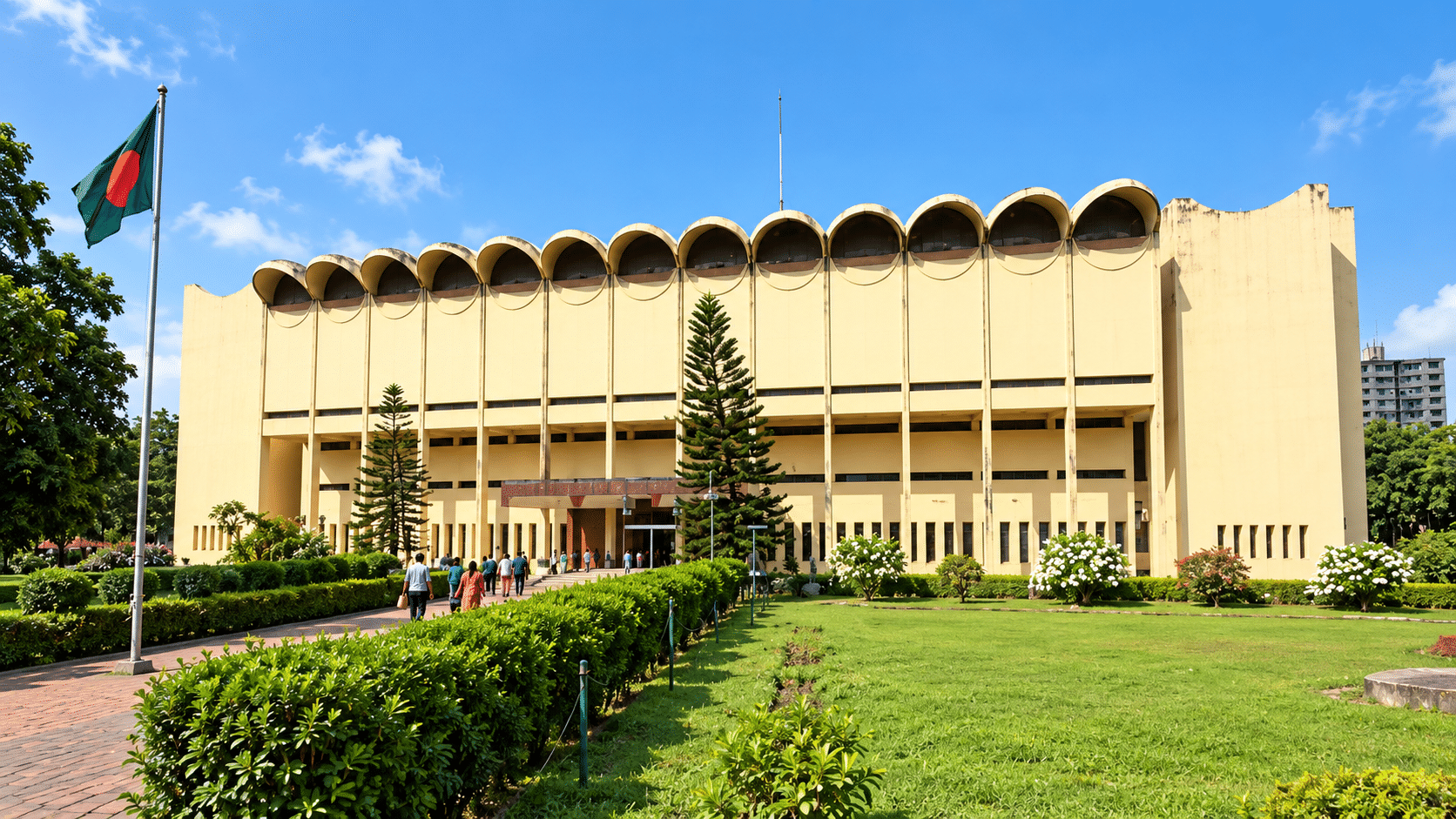
Bangladesh National Museum is the country’s largest and most comprehensive museum, and its own history mirrors the region’s, it opened in 1913 as the Dhaka Museum under British colonial administration, and was renamed after independence in 1971 to reflect its new role as the national institution of a new country.
The collection is genuinely vast, spread across multiple floors organized to walk visitors chronologically through Bangladesh’s story: the region’s geological formation, its flora and fauna, its Buddhist and Hindu past represented through terracotta plaques and statuary dating back to the 6th century, and its more recent history through the colonial period, the Liberation War, and the formation of the modern state. A carved wooden river racing boat, large enough to prompt most visitors to wonder how it got inside, is one of the collection’s more memorable oddities.
For visitors trying to understand Bangladesh’s history in a single stop, this museum does more of that work than any other single site in the city, it’s simply the most complete overview available, covering everything from the Pala dynasty’s Buddhist sculpture to the Nawabs of Dhaka to 1971. Set aside at least two hours if you want to move through the galleries properly rather than rushing.
Located centrally in Shahbagh, the museum sits within easy walking distance of Dhaka University, Ramna Park, and the Shaheed Minar, making it a natural anchor for a full day exploring the Shahbagh-Ramna cultural quarter.