
The Central Shaheed Minar exists because a movement demanded it, quite literally, students built the first version of this monument themselves, overnight, in 1952. On February 23 of that year, just two days after police fired on demonstrators protesting the imposition of Urdu as Pakistan’s sole state language, Dhaka Medical College students constructed a makeshift memorial in a single night. Police demolished it within days. A second attempt at Dhaka College met the same fate.
The permanent monument that stands today took years and real political struggle to build. Construction finally began in 1957 under sculptor Hamidur Rahman’s design, only to stall again under martial law in 1958. Work resumed under a later administration, though budget and political pressure forced significant trims to Rahman’s original vision, planned fountains and murals by sculptor Novera Ahmed were dropped entirely. The monument wasn’t actually completed until 1983, more than three decades after the events it commemorates.
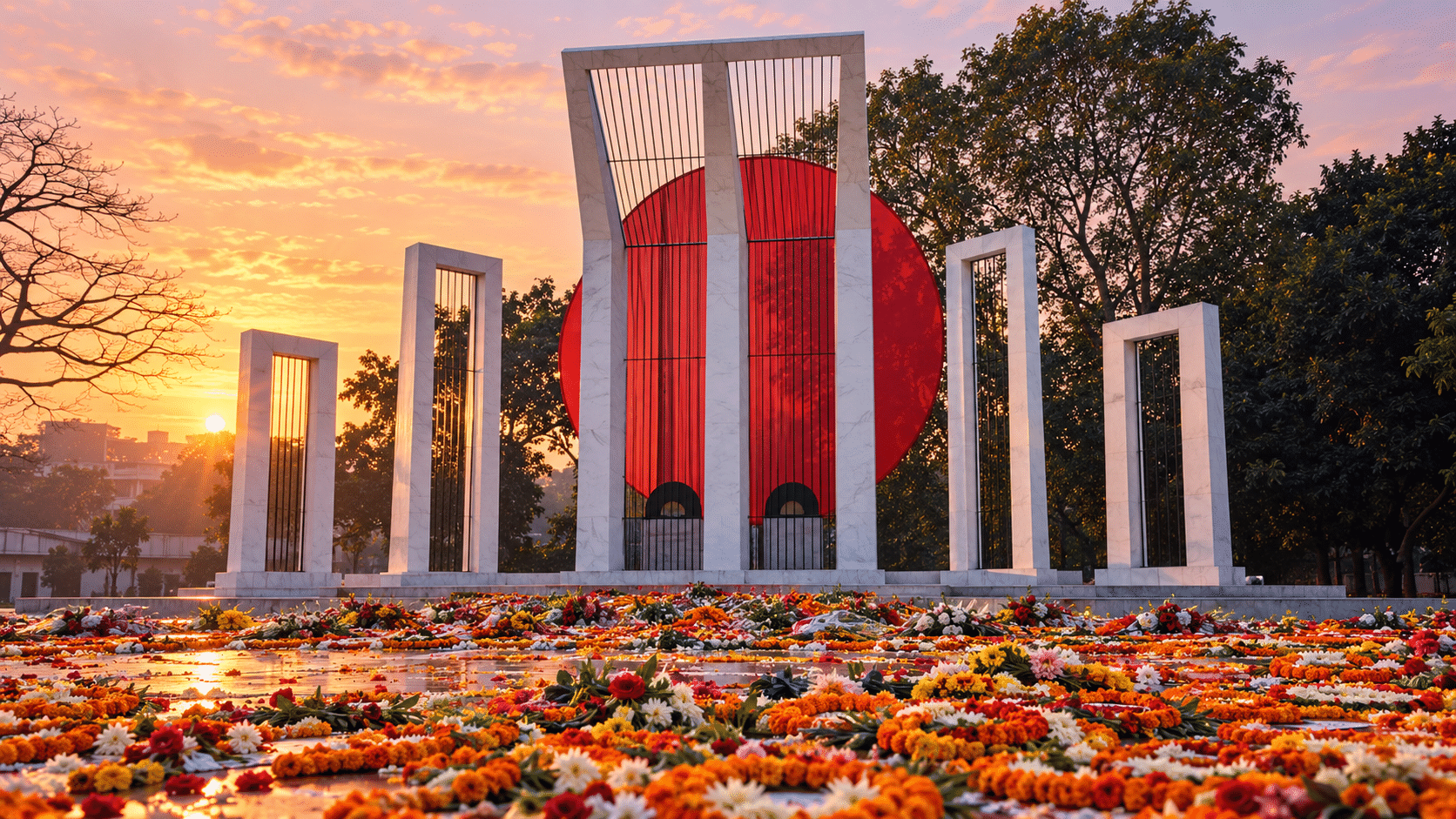
What stands now rises roughly 14 meters, a semicircular arrangement of marble columns meant to evoke a grieving mother standing over her fallen children, set against a striking red sun disk. White stairways and iron-lettered poetry along the fencing add to the monument’s solemn, almost devotional character, and a basement mural panel narrates the movement’s history for visitors who want the full context.
Every February 21, now recognized internationally as International Mother Language Day, thousands gather here in a barefoot dawn procession to lay flowers and honor those killed in 1952, an annual ritual that makes the Shaheed Minar one of the most emotionally significant public spaces in Bangladesh, not just architecturally, but as living civic memory.