
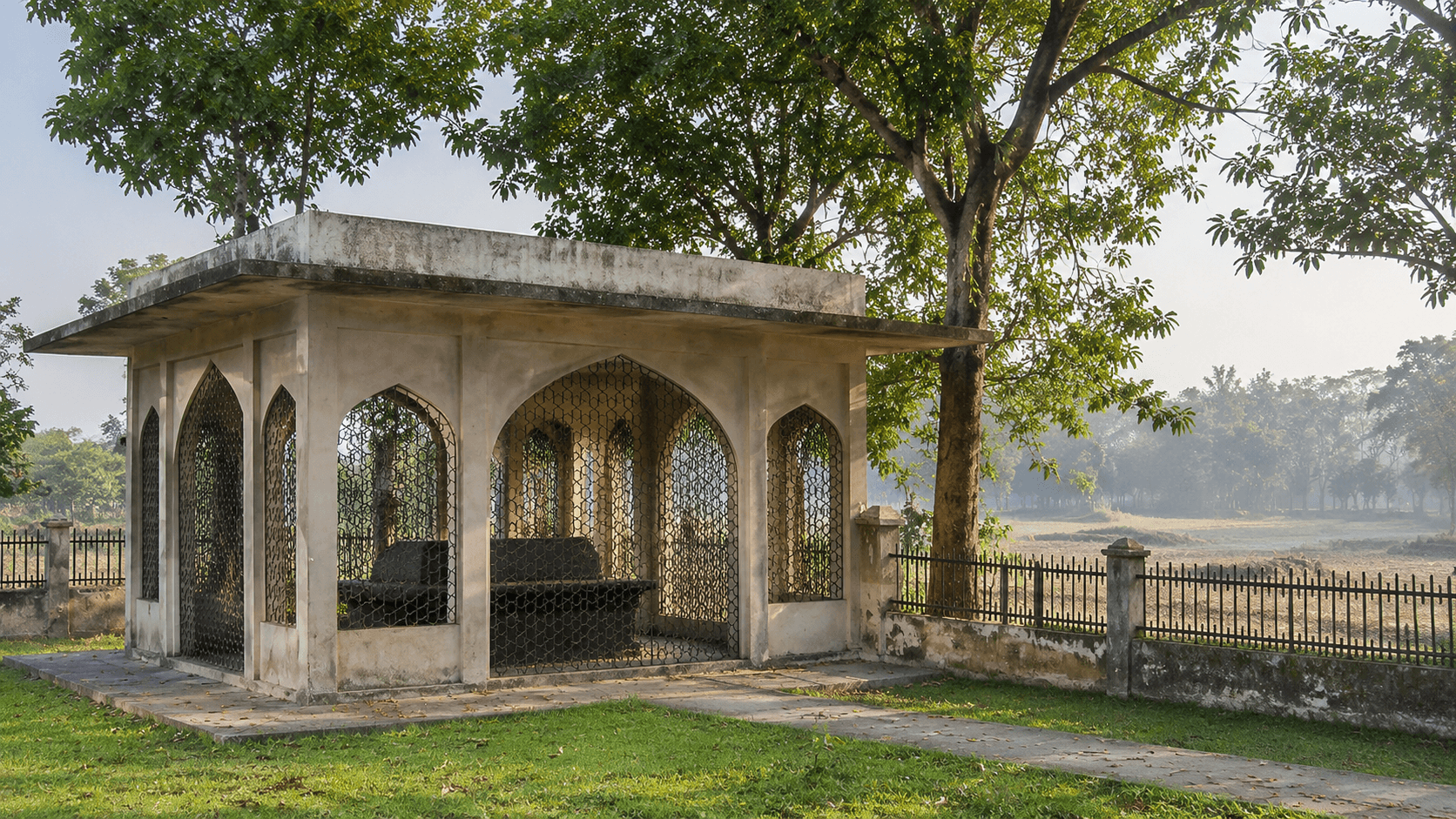
The tomb of Sultan Ghiyasuddin Azam Shah at Mograpara in Sonargaon is one of the oldest surviving monuments of the Bengal Sultanate. Standing beside a dried-up pond, this quiet stone tomb is traditionally linked with Ghiyasuddin Azam Shah, the third Sultan of the Ilyas Shahi dynasty. For anyone who wants to touch the deep roots of Sonargaon’s history, the tomb of Ghiyasuddin Azam Shah is a quiet, rewarding stop.
Who Was Ghiyasuddin Azam Shah?
Ghiyasuddin Azam Shah ruled Bengal from 1390 to 1411 and is remembered as one of the most prominent medieval sultans of the region. He expanded Bengal’s influence abroad, established diplomatic contact with Ming China, and is remembered as a patron of scholars and poets. A famous tradition says the Persian poet Hafez corresponded with him.
Many people also know the story of the sultan and the qazi. The tale says that after he accidentally harmed a widow’s son, the sultan stood before a qazi like any ordinary person and paid compensation. Whether told as history or legend, it shows how later generations remembered Ghiyasuddin Azam Shah: as a ruler who respected the law.
About the Tomb of Ghiyasuddin Azam Shah
The tomb stands at Shah Chilapur in the Mograpara area, on the southern edge of the old city of Sonargaon. It is a stone sarcophagus-style tomb on the edge of a dried-up pond locally known as Magh Dighi, and it lies close to the Panch Pir Dargah. Banglapedia describes it as the earliest surviving structure of the Sultanate period in Bangladesh.
There is no inscription on the tomb, and it appears to be the earliest monument to copy decorative designs from the Adina Mosque in Pandua. Because of this, scholars still debate whose grave it really is. Local tradition and the historian Ahmad Hasan Dani connect it with Ghiyasuddin Azam Shah, while other scholars suggest it could belong to his father, Sikandar Shah. That debate is part of the fascination: the Ghiyasuddin Azam Shah tomb is a real monument with an open historical question.
What to See at the Tomb of Ghiyasuddin Azam Shah
- The stone tomb: A simple, powerful structure made of dark stone, with carved decorative patterns.
- The dried pond: Magh Dighi gives the setting a quiet, open feeling.
- Panch Pir Dargah nearby: A nearby shrine complex that is often visited together with the tomb.
Most visitors spend thirty minutes here, enough to walk around, read about the tomb and take photographs.
Best Time to Visit the Tomb of Ghiyasuddin Azam Shah
November to February is the most comfortable period, with dry weather and gentle light. In the rainy season the paths can be muddy. Early morning is best for quiet photography and cooler temperatures.
How to Reach the Tomb of Ghiyasuddin Azam Shah
The tomb is at Mograpara in Sonargaon. From Dhaka, take a bus from Gulistan to Mograpara, or from Chashara in Narayanganj. From the Mograpara junction, take a rickshaw or CNG auto-rickshaw toward Shah Chilapur and ask for the tomb of Ghiyasuddin Azam Shah or Panch Pir Dargah. By private car, drive toward Mograpara and follow local directions. The tomb sits close to other Sonargaon sites, so you can combine it with Goaldi Mosque, Panam Nagar and the Sonargaon Museum.
Respectful Visiting Tips
- Dress modestly, especially near the dargah.
- Do not climb on or touch the carved stone.
- Ask permission before photographing people.
- Carry water and wear comfortable shoes.
- Read about the tomb before you go, so the quiet stone comes alive.
Why the Tomb of Ghiyasuddin Azam Shah Matters
This tomb shows that Sonargaon’s story begins long before the merchant houses of Panam Nagar. It reaches back to the sultanate era, when the city was a seat of power and learning. A short, thoughtful visit adds a rare early chapter to your Sonargaon day. For the full route, read our Panam Nagar and Sonargaon Heritage Capital destination guide.