
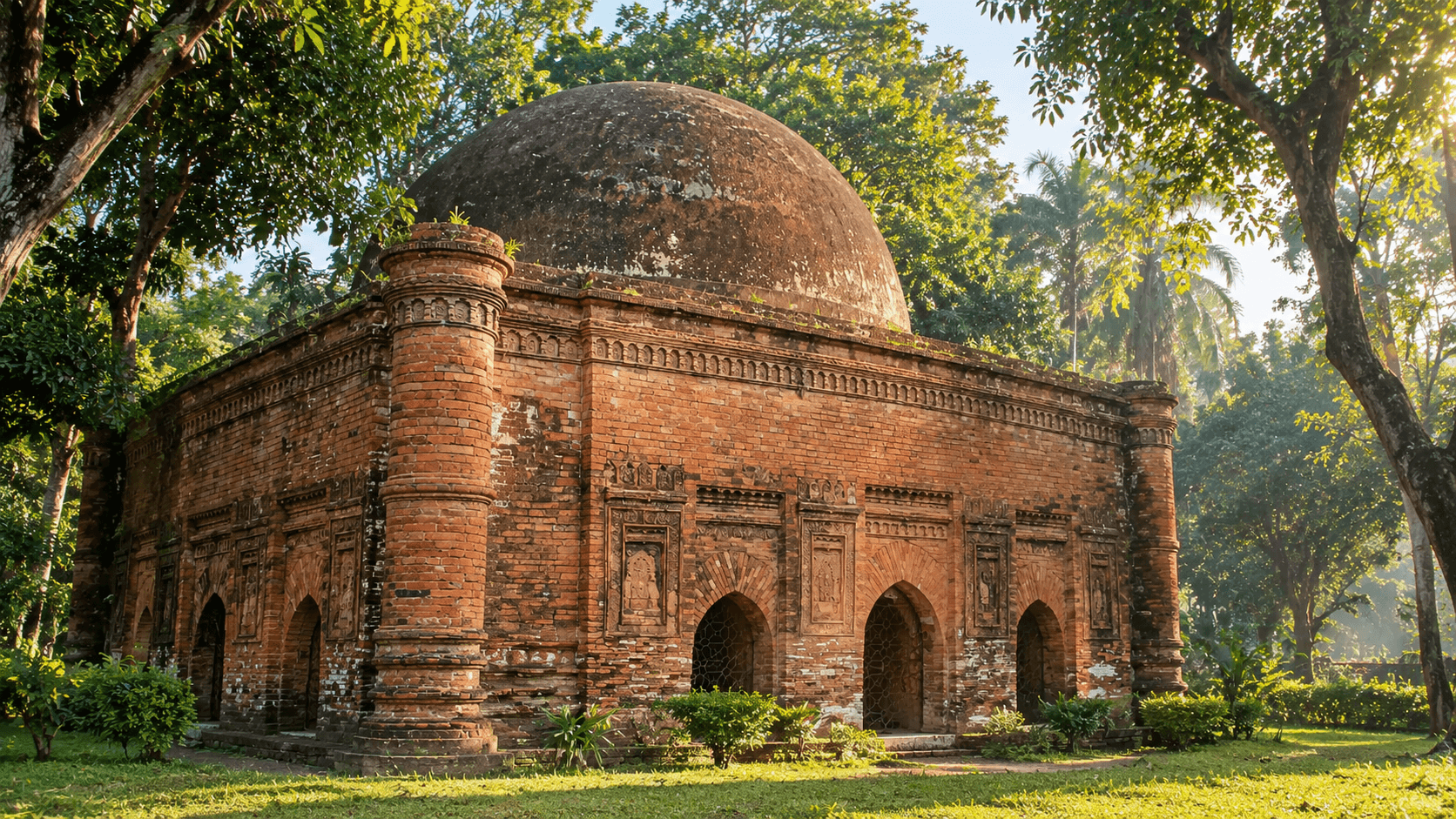
Goaldi Mosque is one of the finest surviving buildings of old Sonargaon, a single-domed mosque that dates back to the early 16th century. Standing quietly in a green corner of Narayanganj, Goaldi Mosque is small in size but rich in history. It is a perfect stop for travellers who want to see how Bengal’s sultanate-era builders worked with brick, terracotta and simple, graceful design.
History of Goaldi Mosque
Sonargaon was once a major centre of power and trade in eastern Bengal. Many of its early monuments are gone, which is why Goaldi Mosque matters so much. Sources date the mosque to 1519, and it is often described as the most impressive of the few surviving monuments from the old capital. Some accounts say it was found again when thick jungle was cleared around it, which gives the building an almost storybook feeling.
The mosque belongs to the pre-Mughal period, when local builders shaped their own style using bricks and terracotta decoration. For architecture lovers, Goaldi Mosque is an easy lesson in how Bengal’s early Islamic buildings looked before Mughal influence arrived.
What to See at Goaldi Mosque
- The single dome: The graceful dome sits over a compact prayer hall and gives the mosque its calm, balanced look.
- Brick and terracotta details: Look closely at the walls for decorative patterns and weathered surfaces that show five centuries of age.
- The quiet setting: The surroundings are peaceful, with trees and open space that suit slow walking and photography.
Most visitors spend only thirty minutes at Goaldi Mosque, but photographers and history readers often stay longer to study the brickwork in different light.
A Small Building With a Big Lesson
Standing in front of Goaldi Mosque, it helps to think about time. Panam Nagar’s houses are mostly from the 19th century, while this mosque is several centuries older. Walking from one to the other is like turning pages backward in the history of Sonargaon, from merchant townhouses to sultanate-era worship.
Goaldi Mosque in the Sonargaon Heritage Trail
Goaldi Mosque is not a stand-alone attraction. It fits neatly into a Sonargaon heritage day with Panam Nagar, the Sonargaon Folk Art and Craft Museum and the tomb of Sultan Ghiyasuddin Azam Shah. Seeing these stops together helps you connect the early sultanate buildings with the later merchant houses of Panam Nagar, and understand how the old capital changed over centuries.
Best Time to Visit Goaldi Mosque
The best months are November to February, when the weather is dry and cool and the brick looks warm in the winter light. Summer afternoons can be hot, and the rainy season can make the paths damp. Choose a weekday for a calmer visit.
How to Reach Goaldi Mosque
From Dhaka, take a bus from Gulistan toward Mograpara in Sonargaon. Bus services also run from Chashara in Narayanganj. From Mograpara, use a CNG auto-rickshaw or rickshaw to reach the Sonargaon area and ask locals for Goaldi Mosque. If you travel by private car, you can drive toward Sonargaon and visit it along with the museum and Panam Nagar in one loop.
Visitor Etiquette at Goaldi Mosque
- Dress modestly and cover your shoulders and knees.
- Remove your shoes before entering any prayer area.
- Keep your voice low, and avoid visiting during prayer time if you only want to take photos.
- Ask permission before photographing people.
- Do not touch or lean on the old brick and terracotta surfaces.
Why Goaldi Mosque Deserves a Visit
Goaldi Mosque proves that the story of Sonargaon is not only about Panam Nagar. It also lives in small, older buildings that survived centuries of weather and change. Giving Goaldi Mosque a short, respectful visit adds real depth to your day in the old capital. For the full heritage route, read our Panam Nagar and Sonargaon Heritage Capital destination guide.