
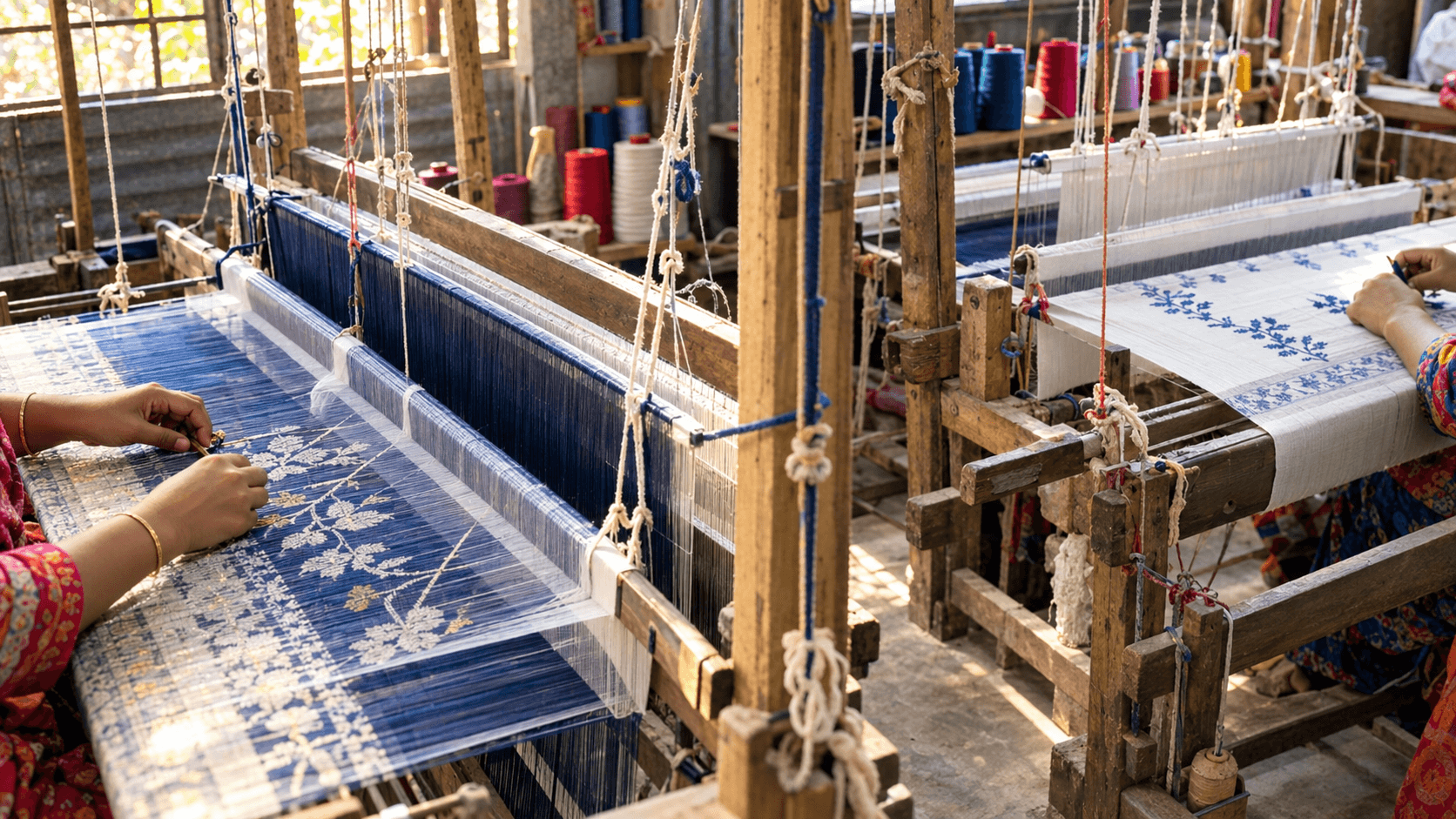
Jamdani Palli is the place where Narayanganj’s most famous cloth is woven, sold and celebrated. Officially known as the BSCIC Jamdani Palli, this large weaving cluster in Noapara, Rupganj, is home to hundreds of weavers and a lively Friday market. If you want to see real Jamdani being made and buy it directly, Jamdani Palli is the best organised stop near Dhaka.
What Is Jamdani Palli?
Jamdani Palli was built in 1991 by the Bangladesh Small and Cottage Industries Corporation (BSCIC) on around 20 acres of land at Noapara, under Tarabo in Rupganj. It was designed to bring Jamdani weavers together in one place, with workspaces, support and a shared market. Today about 1,600 weavers are reported to live and work here, and the mix of weavers from different regions has created a rich variety of designs.
Jamdani itself is a hand-woven fabric known for its patterns woven directly into the cloth. UNESCO recognises the traditional art of Jamdani weaving as Intangible Cultural Heritage of Humanity. A standard sari can take weeks, and one report says around two months of labour for a standard piece, which explains why every Jamdani carries a story of patience.
What You Can See and Do at Jamdani Palli
- Watch the looms: Many workshops are open to curious visitors. You can watch weavers work with fine threads and add patterns by hand.
- Visit the Friday haat: Every Friday, traders and buyers gather soon after the early morning prayer for a weekly wholesale market. It is lively, crowded and fascinating.
- Buy directly: Buying here usually means better prices and a chance to ask about the design, the thread and the time it took.
- Meet the weavers: Many families have woven for generations, and women weavers now play a growing role.
Jamdani Palli and Rupshi: What Is the Difference?
Travellers often hear two names. Rupshi is a traditional weaving village in Rupganj, popularly known as a Jamdani village, where weaving happens in family homes. Jamdani Palli at Noapara is the organised estate with a larger market. Together they form the weaving heartland along the Shitalakshya River. If you have time, visit both: the estate for the market, and the village lanes for a quieter feel.
How to Buy Real Jamdani at Jamdani Palli
- Ask whether the piece is handloom Jamdani and how long it took to weave.
- Check the back of the fabric. Handwoven motifs look neat but slightly irregular.
- Compare two or three weavers before you buy.
- Bargain politely, and remember that fair pay keeps the craft alive.
- Ask for a clear receipt, especially for expensive saris.
Best Time to Visit Jamdani Palli
October to March is the most comfortable period. For the market, plan a Friday morning and arrive early, because trading begins shortly after dawn. If you only want to watch the looms and talk to weavers, a weekday is calmer. In the weeks before Eid and the wedding season, weavers are very busy, and workdays can stretch from early morning until late at night, so be patient and respectful.
How to Reach Jamdani Palli
Jamdani Palli is at Noapara in Tarabo, Rupganj, about three kilometres north of Kanchpur Bridge on the Dhaka to Sylhet highway. From Dhaka, take a bus on the highway toward Rupganj or Narsingdi, get down near Noapara or Tarabo, and use a CNG auto-rickshaw or rickshaw for the last stretch. By private car, drive along the Dhaka to Sylhet highway across Kanchpur Bridge and follow the signs for Jamdani Palli. Travel time depends heavily on traffic, so start early.
Tips for Visiting Jamdani Palli
- Carry cash, because most small sellers prefer it.
- Wear comfortable shoes and light clothes.
- Ask before taking photos of weavers or their work.
- Keep your valuables safe in the crowded Friday market.
- Pair Jamdani Palli with Zinda Park or Murapara Rajbari for a full Rupganj day.
Why Jamdani Palli Matters
Jamdani Palli shows how a living craft survives when people, markets and skills are brought together. A visit is not only shopping. It is a chance to see heritage at work. For the wider story of this craft area, read our Rupganj Jamdani Village and Eco Retreat Belt destination guide.