
Close Menu
Bangladesh Branding
  • Destinations
    • By Region
      • Dhaka
      • Chattogram
      • Sylhet
      • Rajshahi
      • Khulna
      • Barishal
      • Rangpur
      • Mymensingh
    • By Landscape
      • Beachs
      • Hills
      • Forests
      • Wetlands
      • Rivers
      • Historical Sites
      • Archaeological Sites
      • Religious Places
    • Popular Now
      • Cox’s Bazar
      • Sundarbans
      • Sajek
      • Bandarban
      • Sylhet
      • Srimangal
  • Experiences
  • Places to Visit
  • Festivals and Events
  • Plan Your Trip
  • Travel Stories
    • Travel Guide
      • Travel Tips
      • Hotels
      • Flights
      • Local Transport
      • Currency
    • News and Updates
      • News
      • Business and Brands
      • Buy Bangladeshi
    • Culture and Heritage
      • People
      • Culture
      • Food
      • Heritage Moshque
      • Arts and Crafts
  • Map
Facebook X (Twitter) Instagram YouTube
Facebook X (Twitter) Instagram
Bangladesh Branding
Subscribe
  • Destinations
    • By Division
      • Dhaka
      • Chattogram
      • Sylhet
      • Rajshahi
      • Khulna
      • Barishal
      • Rangpur
      • Mymensingh
    • By Landscape
      • Beachs
      • Hills
      • Forests
      • Wetlands
      • Rivers
      • Historical Sites
      • Archaeological Sites
      • Religious Places
    • Popular Now
      • Cox’s Bazar
      • Sundarbans
      • Sajek
      • Bandarban
      • Sylhet
      • Srimangal
    • Featured Destinations
  • Experiences
  • Places to Visit
  • Festivals and Events
  • Plan Your Trip
  • Travel Stories
    • Travel Guide
      • Travel Tips
      • Hotels
      • Flights
      • Local Transport
      • Currency
    • News and Updates
      • News
      • Business and Brands
      • Buy Bangladeshi
    • Culture and Heritage
      • People
      • Culture
      • Food
      • Heritage Moshque
      • Arts and Crafts
  • Map
Bangladesh Branding
Home » Places » Pallikabi Jasimuddin House & Museum

Pallikabi Jasimuddin House & Museum

October 3, 2026No Comments4 Mins Read
Pallikabi Jasimuddin House & Museum
Share
Facebook Twitter LinkedIn WhatsApp Copy Link

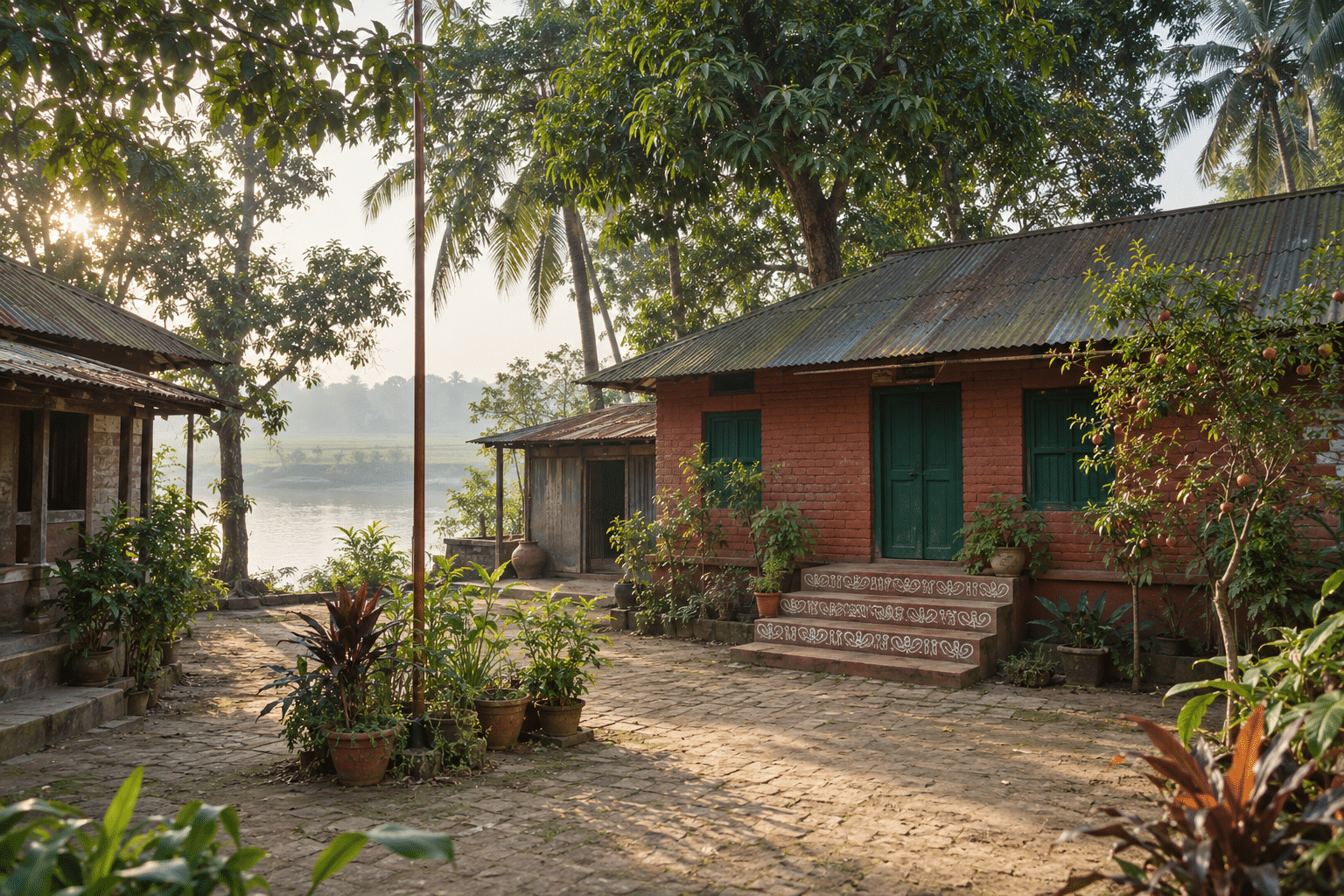
Every Bangladeshi student has read Jasimuddin. Very few have stood in his courtyard. The Jasimuddin House in Gobindapur village, Ambikapur, is where that changes. Four old tin-roofed houses, a pomegranate tree over a quiet grave and the Kumar River flowing past the front yard turn the poems you memorised in school into something you can actually see and touch.

A Short Story of the House

Jasimuddin was born on 1 January 1903 at his maternal uncle’s house in Tambulkhana and grew up here in Gobindapur, the family’s ancestral village. The fields, boatmen and riverbank around the Jasimuddin House shaped the rural world of Nakshi Kanthar Math and Sojan Badiyar Ghat. When he died on 14 March 1976, he was laid to rest right here, under a pomegranate tree, close to the home he wrote from.

What to See at the Jasimuddin House

The Four Tin Houses

The heart of the visit is the family compound itself: four old tin houses beside the Kumar River. The rooms hold everyday things the poet used, and his writings are displayed around the premises. Nothing is overly polished. That honesty is what makes the Jasimuddin House feel real.

The Poet’s Grave

Beside the road on the north side lies his grave under a pomegranate tree. If you know his poem Kobor, this spot will stay with you. Many local visitors stop here to pray, so keep your voice low.

The Museum and Memorial Complex

Next to the house, the Pallikabi Jasimuddin museum complex was built under a Ministry of Cultural Affairs project begun in 2010 to preserve the poet’s work and support research. Inside, you can see photographs, manuscripts and books that tell his story from village boy to national poet. Visit the museum first, then walk through the old home. The house means more once you know the life behind it.

The Riverside Ghat

In front of the Jasimuddin House, a riverside area with seating looks over the Kumar River. One ghat is named after Sojan Badiyar Ghat. It is the best place to sit, read a few of his lines and watch village boats drift by.

Visiting During the Jasim Mela

Every January, around the poet’s birthday, the Jasim Palli Mela fills the riverside grounds next to the Jasimuddin House with around two hundred stalls, folk songs, recitation, jatra and puppet shows. It is the most colourful time to visit, but also the most crowded. If you prefer quiet, come in November, December or February instead.

How Much Time You Need

  • Museum: 45 minutes to 1 hour.
  • House and grave: 30 to 45 minutes.
  • Riverside: as long as you like, ideally until late afternoon.

Two to three hours is comfortable. Pair the Jasimuddin House with Faridpur town and a Padma sunset at Dholar Mor to make a full day.

Tips for a Better Visit

  • Confirm opening days before you travel. The museum may close on its weekly holiday and on public holidays.
  • Dress modestly and remove shoes where asked, especially near the grave.
  • Photography is usually fine outdoors. Ask staff before shooting inside the museum.
  • Bring cash for tickets and riverside tea. Card payment is unlikely.
  • Respect the families living around the area, and ask before photographing people.

Why the Jasimuddin House Is Worth It

Bangladesh has bigger monuments, but few places feel this personal. The Jasimuddin House shows how our greatest rural poet lived, simply and close to the river. For anyone exploring the wider Pallikabi Jasimuddin heritage area of Ambikapur, this is the essential first stop.

Quick FAQ

Where is the Jasimuddin House located?

In Gobindapur village under Ambikapur union, Faridpur Sadar, north of Ambikapur railway station and on the south bank of the Kumar River, a short auto ride from Faridpur town.

Is there an entry fee for the Jasimuddin House?

A small ticket is charged for the museum. Rates are set by the authorities and can change, so check at the counter.

Search
Recent Post
  • Shahriar Zaman Joins the Board of Directors of Global Creative Foundation! November 16, 2026
  • Chandpur District: Where the Great Rivers Meet September 13, 2026
  • Noakhali District: Islands, Estuary, and Gandhian Heritage September 13, 2026
  • Feni District: Migratory Birds, Ancient Tanks, and the Hill-Plains Edge September 13, 2026
  • Khagrachari District: Cave Country, Tribal Heartland, and Hill Panoramas September 9, 2026
  • Cumilla District: Ancient Buddhism and the Highway City September 9, 2026
  • Rangamati District: The Lake District of Bangladesh September 8, 2026
  • Cox’s Bazar District: The World’s Longest Beach September 8, 2026
  • Chattogram District: Bangladesh’s Port City and Hill Country Gateway September 8, 2026
  • Jhenaidah District: Ancient Mosques and Riverine Landscapes September 7, 2026
  • Magura District: Quiet Rivers and Zamindari Remnants September 7, 2026
  • Narail District: Where Art Lives on the River September 5, 2026
  • Kushtia District: The Soul of Bangladesh’s Folk Tradition September 3, 2026
  • Jashore District: The Flower Capital of Bangladesh September 2, 2026
  • Khulna District: Gateway to the World’s Largest Mangrove Forest September 2, 2026
Who We Are

Bangladesh Branding, your premier source for uncovering the treasures of Bangladesh, a land where vibrant culture meets breathtaking landscapes and warm hospitality.

Facebook X (Twitter) Instagram YouTube LinkedIn
Explore
  • Destinations
  • Places to Visit
  • Experiences
  • Travel Stories
  • Events
  • Crafts
Plan your trip
  • Trip Planner
  • Travel Guide
  • Best Time to Visit
  • How to Reach
  • Travel Tips
About
  • About Us
  • Contact Us
  • Partner With Us
  • Media / Press
  • Submit a Place
Search
Copyright © 2026 Bangladesh Branding | Developed by Business Brillianz.

Type above and press Enter to search. Press Esc to cancel.

imunify-bot-check