
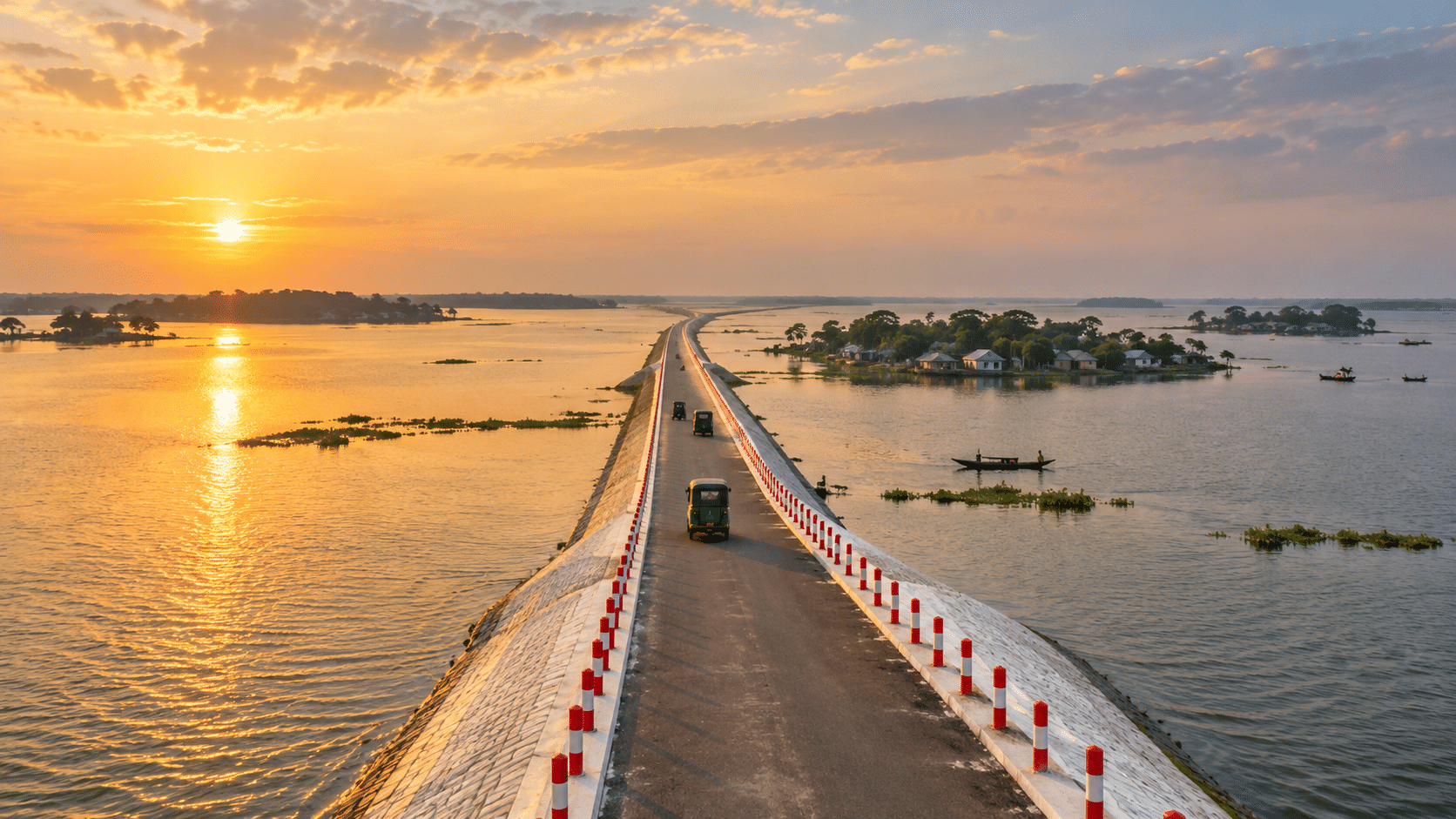
The Mithamain Austagram road is one of the most unusual roads in Bangladesh, because the main attraction is not at the end of it. The attraction is the road itself. Raised above the haor and paved for all seasons, the Mithamain Austagram road lets you cross a wide wetland by land and watch the haor change from green paddy to open water.
Why the Mithamain Austagram Road Is Special
Built in 2019, this elevated all-weather road runs through Nikli Haor and connects three upazilas of Kishoreganj: Itna, Mithamain and Austagram. In haor country, rising water can cut villages off in the rainy months, so all-weather roads matter. Today this one works as a lifeline for local people and as a viewing platform for travellers. Reports give different lengths for the road, from about 30 km to 47 km, so it is wise to check with locals before planning your timing.
Thousands of visitors come here all year, which says a lot about how easy it is to enjoy. You do not need a boat, a guide or a big budget. You only need a vehicle, patience and a camera.
The Road in Monsoon and in Winter
In the monsoon, from July to September, the haor fills up and the road feels like a long causeway across a lake. Villages look like green islands on both sides, and the sky reflects on the water. In the dry season, the water pulls back and the same view turns into paddy fields, with farmers busy at work. The Mithamain Austagram road is rare because it gives you both pictures on one route.
Many travellers also come in the evening. The haor is quiet, the light turns golden, and on clear nights the moon’s reflection on the water is a sight people remember for years.
Plan Your Day on the Road
A simple plan works well. Start in Nikli, take a boat to Chatir Char in the morning, then travel to the road by auto-rickshaw or CNG and enjoy the open views. If you have extra time, visit Austagram and see the five-domed Kutub Shah Mosque, which adds a heritage stop to the trip. End the day with a bus from Katiadi back to Dhaka.
Why an All-Weather Road Matters in Haor Country
For villagers, a raised paved road means markets, schools and relatives stay reachable even when the water is high. For visitors, it means a gentler way into the haor. Travellers who once needed a boat for every trip can now see the same landscape from a seat in a CNG. That does not make boats less magical, but it opens the haor to families, older travellers and anyone who feels nervous on open water.
Photography Tips
Go early or stay for the golden hour, when the light is soft and the water glows. Use a wide view to capture the road meeting the horizon, and look for fishing boats, birds and village reflections to add life to the frame. In the monsoon, keep your camera covered because the weather changes fast.
Tips for Travellers
- Carry water and light snacks, because shops are few along the haor stretch
- Stop only in safe, wide spots and never block the road for photos
- Keep children close, especially near the road edge and water
- Start early to avoid heat and to enjoy softer light
- Take all your waste back with you
Respect Local Life
This is a working road for villagers, farmers and fishermen. Please give way to local vehicles, avoid loud music and be gentle when taking photos of people.
Quick Answers About the Mithamain Austagram Road
Where is the Mithamain Austagram road?
It runs through Nikli Haor in Kishoreganj district and connects Itna, Mithamain and Austagram upazilas.
Can I visit the road in winter?
Yes. It is an all-weather road, and in winter you can see paddy fields instead of open water.
How long is the road?
Sources report different lengths, from about 30 km to 47 km, so confirm locally.