
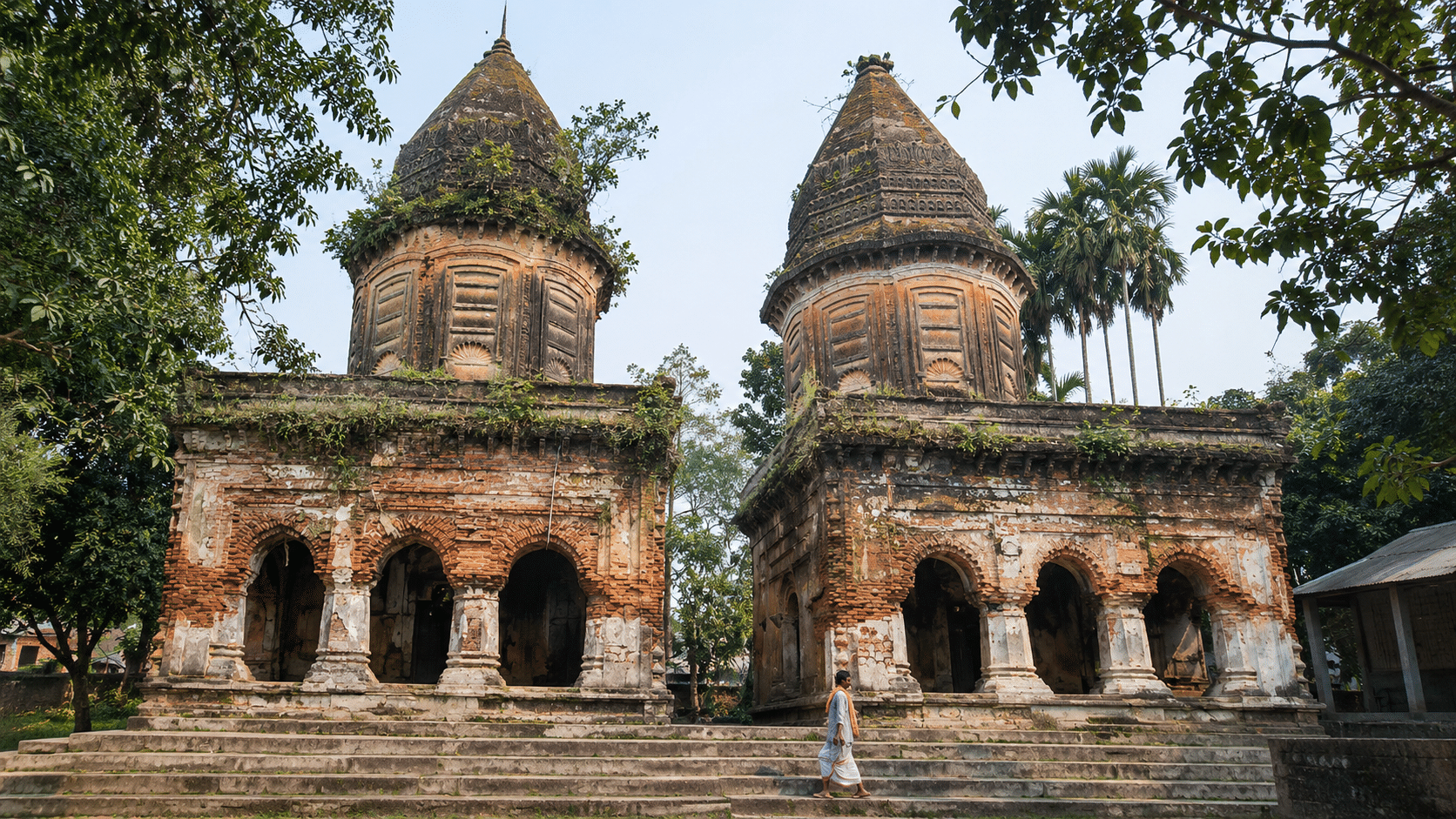
Muktagachha Twin Temple: The Shiva and Kali Shrines Beside the Rajbari
The Muktagachha twin temple is one of the oldest and most photogenic religious buildings in Mymensingh district. Standing in the Kalibari area just outside the old palaces of the Muktagachha zamindars, the Muktagachha twin temple has watched over the town for more than two centuries. Its brick walls are worn, its cornices are crowded with plants, and its shape still hints at a grander past.
This guide covers the history of the Muktagachha twin temple, what to see, and how to visit a living place of worship with respect.
History of the Muktagachha Twin Temple
Records say the temple was built in 1820 by Rani Bimola Devi, the mother of Maharaja Shashikanta Acharya Chowdhury of Muktagachha. The Muktagachha twin temple has two shrines side by side: the Anandamoyee Shiva temple and the Kali Mata temple. Locals also call it the Dhaksinashar Mandir or Jora Kali, and some older accounts call it the Jora Shiva Temple. Whatever name you hear, they all point to the same elegant pair.
Architecture of the Muktagachha Twin Temple
The Muktagachha twin temple is built of brick with plaster, on a high base reached by a staircase. The shrines are oblong, with conical tops and small corridors. If you approach from the south, the left shrine is for Shiva and the right one is for Kali, and the two mirror each other. This mirror-like layout is an unusual feature, and it is the main reason architecture lovers travel here.
Festivals at the Muktagachha Twin Temple
The temple is still active. Devotees gather for Durga Puja and for Kali and Manasha puja each year. In the Bengali month of Kartik, the local Rabidas community performs a two-day Kattyani Puja here, known locally as the Shat Puja. Visiting during a festival gives the Muktagachha twin temple a lively, colourful mood, but crowds are large, so go with patience and respect.
The Condition of the Muktagachha Twin Temple
Be ready for signs of age. The Daily Star has reported for years that the Muktagachha twin temple is in poor condition, with plants growing on its cornices and promised restoration still waiting. The archaeology department put up a signboard in 2006, but major repairs have been slow. That is sad, yet it also makes a visit meaningful: attention from visitors helps keep the case for preservation alive.
How to Visit the Muktagachha Twin Temple Respectfully
- Dress modestly and remove shoes where asked.
- Do not climb on the walls or touch fragile plaster.
- Ask before photographing worshippers or ceremonies.
- Carry your rubbish out and keep the area clean.
Best Time to Visit the Muktagachha Twin Temple
November to February is the most comfortable season, with cool, dry weather. If you want to see the temple in festival mood, ask locals about the dates of Durga Puja and the Kartik puja. Monsoon rain can make the steps and paths slippery.
Combine the Muktagachha Twin Temple With the Rajbari
The Muktagachha twin temple is a short ride from the Muktagachha Zamindar Bari, so the two make an easy half-day heritage route. Add a stop for Muktagachha’s famous sweets before you head back. For more ideas, browse our Places to Visit collection.
Quiet, weathered and still alive with prayer, the Muktagachha twin temple rewards travellers who look slowly and tread gently.