
Close Menu
Bangladesh Branding
  • Destinations
    • By Region
      • Dhaka
      • Chattogram
      • Sylhet
      • Rajshahi
      • Khulna
      • Barishal
      • Rangpur
      • Mymensingh
    • By Landscape
      • Beachs
      • Hills
      • Forests
      • Wetlands
      • Rivers
      • Historical Sites
      • Archaeological Sites
      • Religious Places
    • Popular Now
      • Cox’s Bazar
      • Sundarbans
      • Sajek
      • Bandarban
      • Sylhet
      • Srimangal
  • Experiences
  • Places to Visit
  • Festivals and Events
  • Plan Your Trip
  • Travel Stories
    • Travel Guide
      • Travel Tips
      • Hotels
      • Flights
      • Local Transport
      • Currency
    • News and Updates
      • News
      • Business and Brands
      • Buy Bangladeshi
    • Culture and Heritage
      • People
      • Culture
      • Food
      • Heritage Moshque
      • Arts and Crafts
  • Map
Facebook X (Twitter) Instagram YouTube
Facebook X (Twitter) Instagram
Bangladesh Branding
Subscribe
  • Destinations
    • By Division
      • Dhaka
      • Chattogram
      • Sylhet
      • Rajshahi
      • Khulna
      • Barishal
      • Rangpur
      • Mymensingh
    • By Landscape
      • Beachs
      • Hills
      • Forests
      • Wetlands
      • Rivers
      • Historical Sites
      • Archaeological Sites
      • Religious Places
    • Popular Now
      • Cox’s Bazar
      • Sundarbans
      • Sajek
      • Bandarban
      • Sylhet
      • Srimangal
    • Featured Destinations
  • Experiences
  • Places to Visit
  • Festivals and Events
  • Plan Your Trip
  • Travel Stories
    • Travel Guide
      • Travel Tips
      • Hotels
      • Flights
      • Local Transport
      • Currency
    • News and Updates
      • News
      • Business and Brands
      • Buy Bangladeshi
    • Culture and Heritage
      • People
      • Culture
      • Food
      • Heritage Moshque
      • Arts and Crafts
  • Map
Bangladesh Branding
Home » Places » Nuhash Polli: Humayun Ahmed’s Green Retreat in Gazipur

Nuhash Polli: Humayun Ahmed’s Green Retreat in Gazipur

September 28, 2026No Comments4 Mins Read
Nuhash Polli
Share
Facebook Twitter LinkedIn WhatsApp Copy Link

Nuhash Polli is one of those places that people visit for a person, not just a view. It is the garden retreat of Humayun Ahmed, one of Bangladesh’s best-loved writers, in Pirujali village of Gazipur. He built it as a private escape, and after his death in 2012 it also became his resting place. If you grew up reading his novels or watching his dramas, walking through Nuhash Polli can feel like stepping into one of his stories.

The Story of Nuhash Polli

Humayun Ahmed was born on 13 November 1948 and died on 19 July 2012. He created Nuhash Polli in the late 1980s and named it after his son, Nuhash. Over the years he filled the land with trees he collected from different places, and he used it as a shooting spot for his films and dramas. Many visitors say the place still feels like his imagination made real.

The grounds cover about 40 bighas. Published accounts mention roughly 250 species of fruit, forest and medicinal trees, many with small name plates so visitors can learn as they walk. Under the shade of litchi trees lies Humayun Ahmed’s grave, a quiet corner where many readers pause in silence.

What to See Inside Nuhash Polli

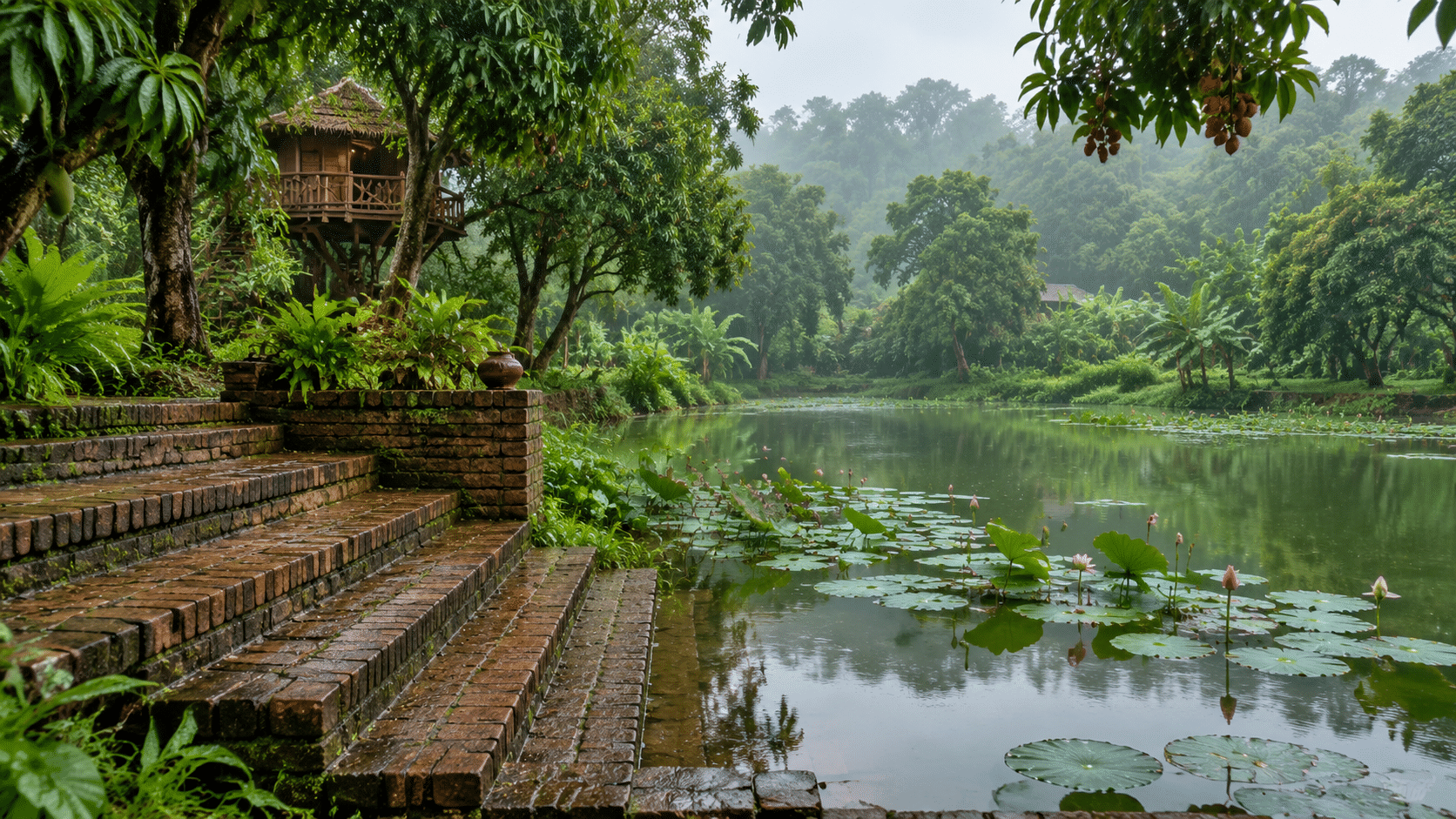
  • The large pond, often called Lilabati Dighi, with its steps and a calm, green look
  • Small houses and cottages such as Bhoot Bilash and Brishti Bilash
  • Tree houses built among the branches, which children love
  • Sculptures, including mythical creatures and other playful figures inspired by his stories
  • Fruit orchards, a small garden and open grass areas
  • A separate memorial corner where visitors pay their respects

Treat the memorial area with care. Many people come only to say a prayer or remember the writer, so keep noise low there.

Free Entry Days

Reports say Nuhash Polli opens free to everyone on two days of the year: 13 November, his birthday, and 19 July, the day he died. These days can be very crowded, so if you prefer a peaceful visit, choose an ordinary weekday instead.

Best Time to Visit Nuhash Polli

The best window is July to November. The rainy months turn the grounds deep green, and autumn is soft and pleasant. Sources disagree on whether the place is open to general visitors all year or mainly from April to November, with the cooler months used for group picnics. Because of this, please confirm the current schedule before you go.

Tips for Your Visit

  • Go on a weekday if you can, because weekends can feel crowded
  • Wear light clothes and comfortable shoes, and carry an umbrella in the rainy season
  • Carry water and snacks, and ask in advance if you need meals arranged
  • Avoid littering, and do not pick fruit or plants
  • Keep your voice low near the grave and memorial area
  • Roads to Pirujali can be rough after rain, so allow extra time

Make It a Gazipur Day

Nuhash Polli is a bit far from the highway, so it works best as one main stop. Pair it with Bhawal Rajbari or Bhawal National Park earlier in the day, or keep it as a relaxed half-day trip from Dhaka.

Frequently Asked Questions

What is Nuhash Polli?

It is the garden farmhouse of writer Humayun Ahmed in Pirujali, Gazipur, and the place where he is buried.

How much is the Nuhash Polli ticket?

Reports mention about BDT 200 per person for visitors above 12. Entry is reported free on 13 November and 19 July. Please confirm current rates.

Is Nuhash Polli open every day?

Published timings say it opens daily around 8 AM to 5 PM, but the public visiting period may change by season. Check before you go.

Can I stay overnight at Nuhash Polli?

Reports say there is no regular accommodation, though visitors may rest in a bungalow during the day.

Search
Recent Post
  • Shahriar Zaman Joins the Board of Directors of Global Creative Foundation! November 16, 2026
  • Chandpur District: Where the Great Rivers Meet September 13, 2026
  • Noakhali District: Islands, Estuary, and Gandhian Heritage September 13, 2026
  • Feni District: Migratory Birds, Ancient Tanks, and the Hill-Plains Edge September 13, 2026
  • Khagrachari District: Cave Country, Tribal Heartland, and Hill Panoramas September 9, 2026
  • Cumilla District: Ancient Buddhism and the Highway City September 9, 2026
  • Rangamati District: The Lake District of Bangladesh September 8, 2026
  • Cox’s Bazar District: The World’s Longest Beach September 8, 2026
  • Chattogram District: Bangladesh’s Port City and Hill Country Gateway September 8, 2026
  • Jhenaidah District: Ancient Mosques and Riverine Landscapes September 7, 2026
  • Magura District: Quiet Rivers and Zamindari Remnants September 7, 2026
  • Narail District: Where Art Lives on the River September 5, 2026
  • Kushtia District: The Soul of Bangladesh’s Folk Tradition September 3, 2026
  • Jashore District: The Flower Capital of Bangladesh September 2, 2026
  • Khulna District: Gateway to the World’s Largest Mangrove Forest September 2, 2026
Who We Are

Bangladesh Branding, your premier source for uncovering the treasures of Bangladesh, a land where vibrant culture meets breathtaking landscapes and warm hospitality.

Facebook X (Twitter) Instagram YouTube LinkedIn
Explore
  • Destinations
  • Places to Visit
  • Experiences
  • Travel Stories
  • Events
  • Crafts
Plan your trip
  • Trip Planner
  • Travel Guide
  • Best Time to Visit
  • How to Reach
  • Travel Tips
About
  • About Us
  • Contact Us
  • Partner With Us
  • Media / Press
  • Submit a Place
Search
Copyright © 2026 Bangladesh Branding | Developed by Business Brillianz.

Type above and press Enter to search. Press Esc to cancel.

imunify-bot-check