
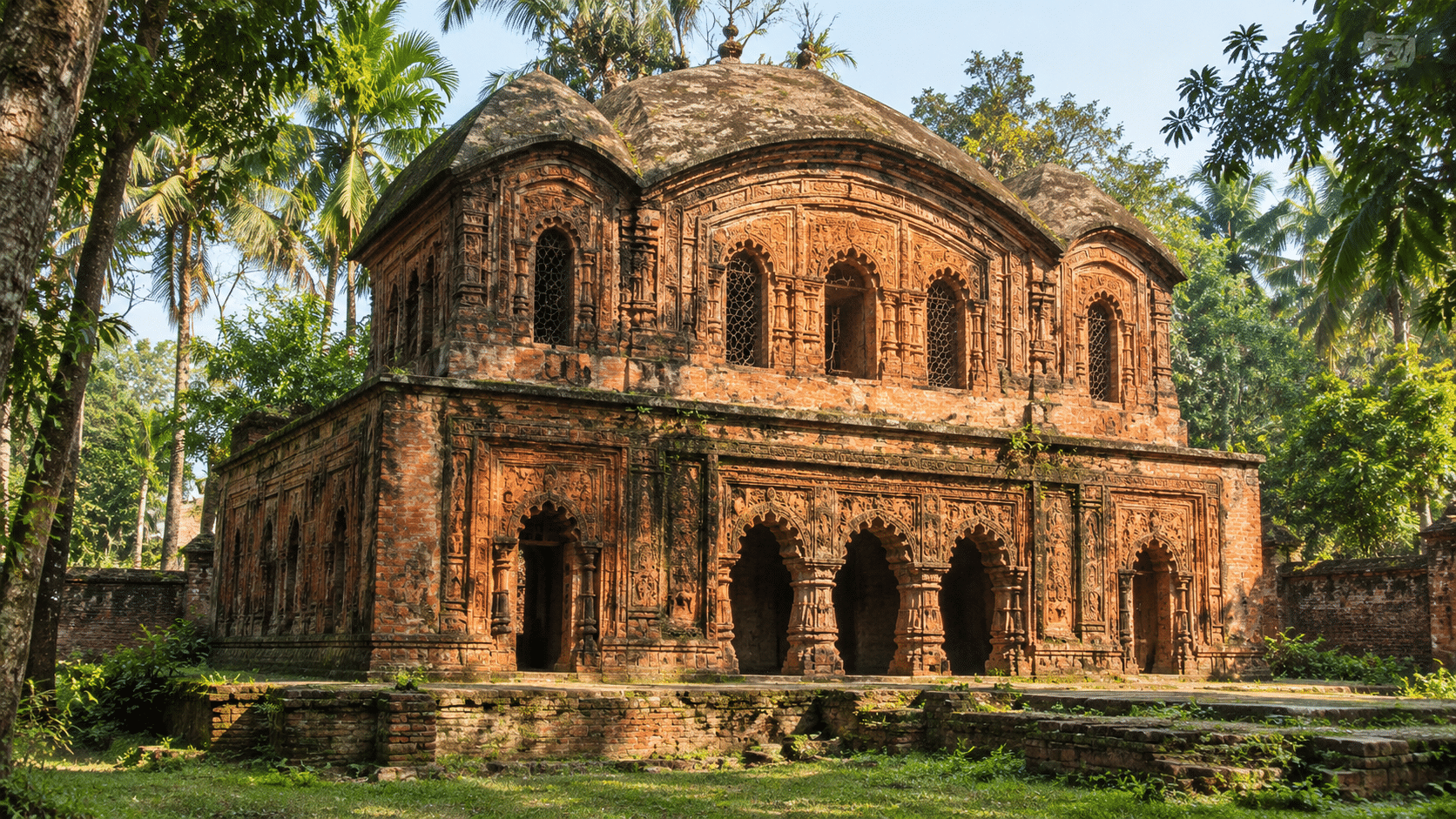
Raja Ram Temple Khalia: Reading a 17th Century Temple Like a Story
Raja Ram Temple Khalia is the kind of heritage site you read slowly, not just photograph. It stands in Khalia village of Rajoir Upazila in Madaripur, and it dates to the 17th century. It was built by Rajaram Rai, a member of the local Khalia zamindar family and a devotee of the goddess Kali. Many people also call it the Jora Bangla Temple.
The World Behind Raja Ram Temple Khalia
To understand the temple, picture the Bengal of its time. Zamindars were local landlords with land, influence and a wish to leave something lasting. Temples were one way to show faith and standing together. Raja Ram Temple Khalia is a surviving piece of that world in this part of Dhaka Division, and it carries the name of the man who built it.
The temple is two-storeyed and built in the bangla style of rural Bengal. That village-hut inspired shape is the reason it is known as Jora Bangla. When you stand in front of Raja Ram Temple Khalia, you are looking at a village building idea turned into brick and terracotta.
How to Read Raja Ram Temple Khalia
Start with the Front Panels
The front of the temple carries terracotta panels showing scenes from the Ramayana and the Mahabharata. Treat them like a comic strip carved in clay. Move from left to right and take your time with each panel.
Look Up at the Roof
Raise your eyes to the double-sloped roof. It explains the Jora Bangla name and shows how Bengal’s everyday architecture shaped its temple forms.
Notice the Sunken Base
Much of the ground floor of Raja Ram Temple Khalia is now buried. The earth has slowly climbed up the walls. This small detail makes the building feel real and old, and it is a quiet reminder of how many seasons it has seen.
Search for Painted Details
Accounts of the temple also mention painted figures of deities. Many are faded, so look closely in good daylight and move slowly.
Why Raja Ram Temple Khalia Needs Careful Visitors
Heritage like this is fragile. Terracotta panels can crack when touched, and old walls can weaken when people climb on them. Raja Ram Temple Khalia is also a place of faith for the Hindu community, so a respectful visit matters as much as a good photograph.
- Never touch, lean on or scratch the terracotta panels.
- Do not climb on old walls or into damaged corners.
- Ask before photographing worshippers or local families.
- Take your waste with you and leave nothing behind.
- Speak quietly and follow any local guidance.
Photography Tips for Raja Ram Temple Khalia
Soft daylight brings out the colour of terracotta best. Take one wide shot to show the temple in its village setting, then move closer for panel details. A phone camera is enough, and patience matters more than equipment at Raja Ram Temple Khalia.
Plan Your Trip to Raja Ram Temple Khalia
- Start from Madaripur town and allow around half a day with the return journey.
- Use a CNG auto-rickshaw or rickshaw van and confirm the way in Khalia village.
- Visit in the cool dry months, since village roads can turn muddy after rain.
- Carry water, a hat and a power bank, as facilities near the site are limited.
- Pair it with Shakuni Lake and Shah Madar Dargah Sharif for a full heritage day.
Raja Ram Temple Khalia: Quick Answers
Where is Raja Ram Temple Khalia?
Raja Ram Temple Khalia is in Khalia village, Rajoir Upazila, Madaripur District, Dhaka Division.
Who built Raja Ram Temple Khalia?
Rajaram Rai of the Khalia zamindar family built the temple in the 17th century.
Why is it called the Jora Bangla Temple?
The name comes from the twin bangla-style roof form of the building.