
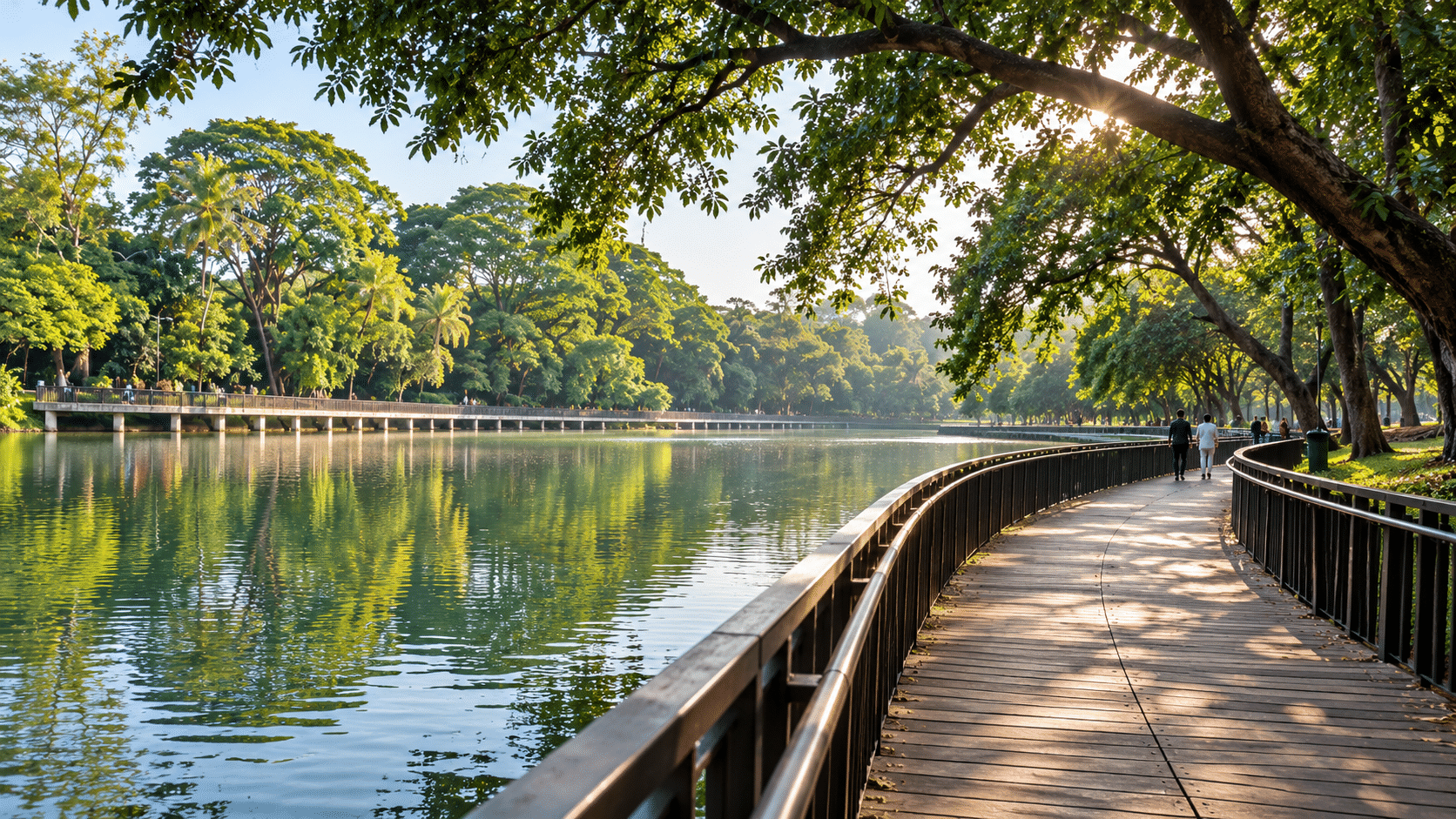
Ramna Park’s roots reach back to the Mughal era, when this stretch of land functioned as a garden during Dhaka’s time as provincial capital of Bengal from 1608. What visitors walk through today, though, owes its actual shape to a British colonial magistrate named Charles Dawes, who developed the area with a lake and a nearby racecourse, and to R.L. Proudlock, a landscaper brought in from London’s Kew Botanical Gardens in 1908 specifically to design the park’s layout of trees, flowering plants, and water features.
That design took two decades to fully realize, and the park wasn’t formally inaugurated until 1949. Queen Elizabeth II received a civic reception here in 1961, a sign of how central Ramna had already become to the city’s public life. After independence in 1971, the park’s role only grew, it became one of the country’s key sites for cultural gathering and public celebration, a role it still fills today.
The clearest expression of that role happens every April 14, when Pohela Boishakh, the Bengali New Year, draws thousands of people to Ramna at dawn. Chhayanaut, a leading cultural organization, leads traditional songs beneath the park’s old banyan tree in a ceremony that’s become one of the most recognizable expressions of Bengali cultural identity anywhere in the country. Outside that one extraordinary morning, Ramna functions as exactly what its 88.5 acres suggest, a genuine urban escape, tree-lined paths circling a central lake, popular with joggers and morning walkers well before the rest of the city wakes up.
Located directly beside Dhaka University, Ramna pairs naturally with a Shahbagh-Ramna cultural quarter walk, offering a green, unhurried counterpoint to the museums and monuments nearby.