
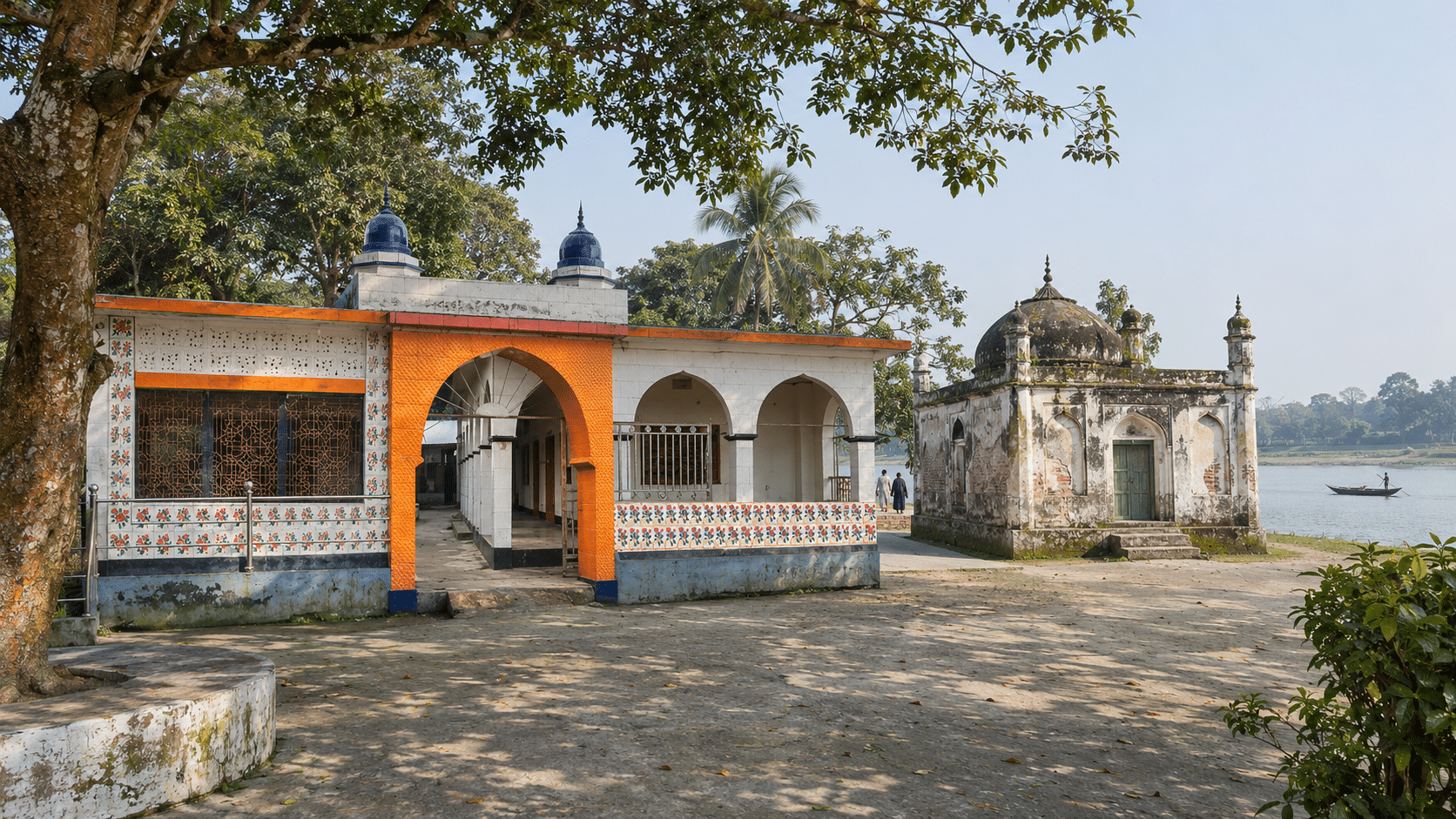
The Shah Jamal Shrine stands on the bank of the Brahmaputra in Jamalpur town, and it is the reason the town carries its name. For many local families it is a place of prayer long before it is a place of tourism. This guide explains the story behind the Shah Jamal Shrine, what you will see there, and how to visit with respect.
Who Was Hazrat Shah Jamal?
According to historical accounts, a preacher from Yemen named Hazrat Shah Jamal came to this region during the reign of Emperor Akbar, with about 200 followers, to spread Islam. He soon gained respect as a religious leader, and the district town is believed to have taken the name Jamalpur from him. Its older name was Singhjani.
Accounts differ on exact dates. One local source places his arrival in 1586, while some tourist listings call him a seventeenth-century saint. Treat the dates as traditional rather than settled. What matters for a visitor is that the Shah Jamal Shrine keeps this old story alive in the middle of a modern town.
A Story Locals Still Tell
A popular local account says Akbar’s court heard of the saint’s spiritual reputation and offered to cover the costs of his khanqah, along with several land grants. The saint is said to have declined. Whether you read it as history or tradition, it helps explain why the Shah Jamal Shrine is remembered for humility as much as for fame.
What You Will See at the Shah Jamal Shrine
The tomb sits on the Brahmaputra bank near Chapatali Ghat. The mazar building has been modernised over the years, and an old traditional mosque stands beside the burial ground. Banglapedia lists the tomb of Hazrat Shah Jamal among the archaeological heritage of Jamalpur Sadar, together with Dayamayee Mandir and Radhanath Jeur Mandir.
Expect a working place of worship, with devotees coming and going and the open river close by. After your visit, walk toward the riverbank to take in the setting. The Brahmaputra is part of what shaped Jamalpur, and the view helps you understand the town’s character.
Visiting the Shah Jamal Shrine with Respect
- Dress modestly, with shoulders and knees covered. Women may want a scarf for the head.
- Remove your shoes where asked and keep your voice low.
- Ask before photographing people, especially worshippers and women.
- If you wish to donate, use the official donation boxes only.
- Expect larger crowds on Fridays and around religious occasions.
Pair the Shah Jamal Shrine with Other Jamalpur Tourist Places
The shrine fits neatly into a day of town heritage. Pair it with Dayamoyee Mandir, which sits in town, and the Gandhi Ashram, which tourist listings place roughly 12 km from the Shah Jamal Shrine. Browse more places to visit in Bangladesh on our site if you are planning a longer northern trip.
Quick Facts: Shah Jamal Shrine
- Location: Jamalpur town, on the Brahmaputra bank near Chapatali Ghat
- Type: Sufi shrine with an old traditional mosque beside it
- Heritage listing: named by Banglapedia among Jamalpur Sadar’s archaeological heritage
- Entry: no official ticket notice found, usually free
- Best months: November to February
FAQ: Shah Jamal Shrine
Who Is the Shah Jamal Shrine Dedicated To?
The Shah Jamal Shrine is dedicated to Hazrat Shah Jamal, a preacher from Yemen who is believed to have come to this region in Emperor Akbar’s time. Jamalpur is believed to be named after him.
Where Is the Shah Jamal Shrine?
The Shah Jamal Shrine is in Jamalpur town, on the Brahmaputra bank near Chapatali Ghat. A rickshaw or easy bike from Jamalpur railway station is the simplest way to reach it.
Can Non-Muslims Visit the Shah Jamal Shrine?
Visitors of all backgrounds are generally welcome at shrines in Bangladesh if they dress modestly and behave respectfully. Follow the guidance of the caretakers if you are unsure about any area.
Is There an Entry Fee?
We could not find an official ticket notice, and shrines are usually free to enter. Donations are voluntary.