
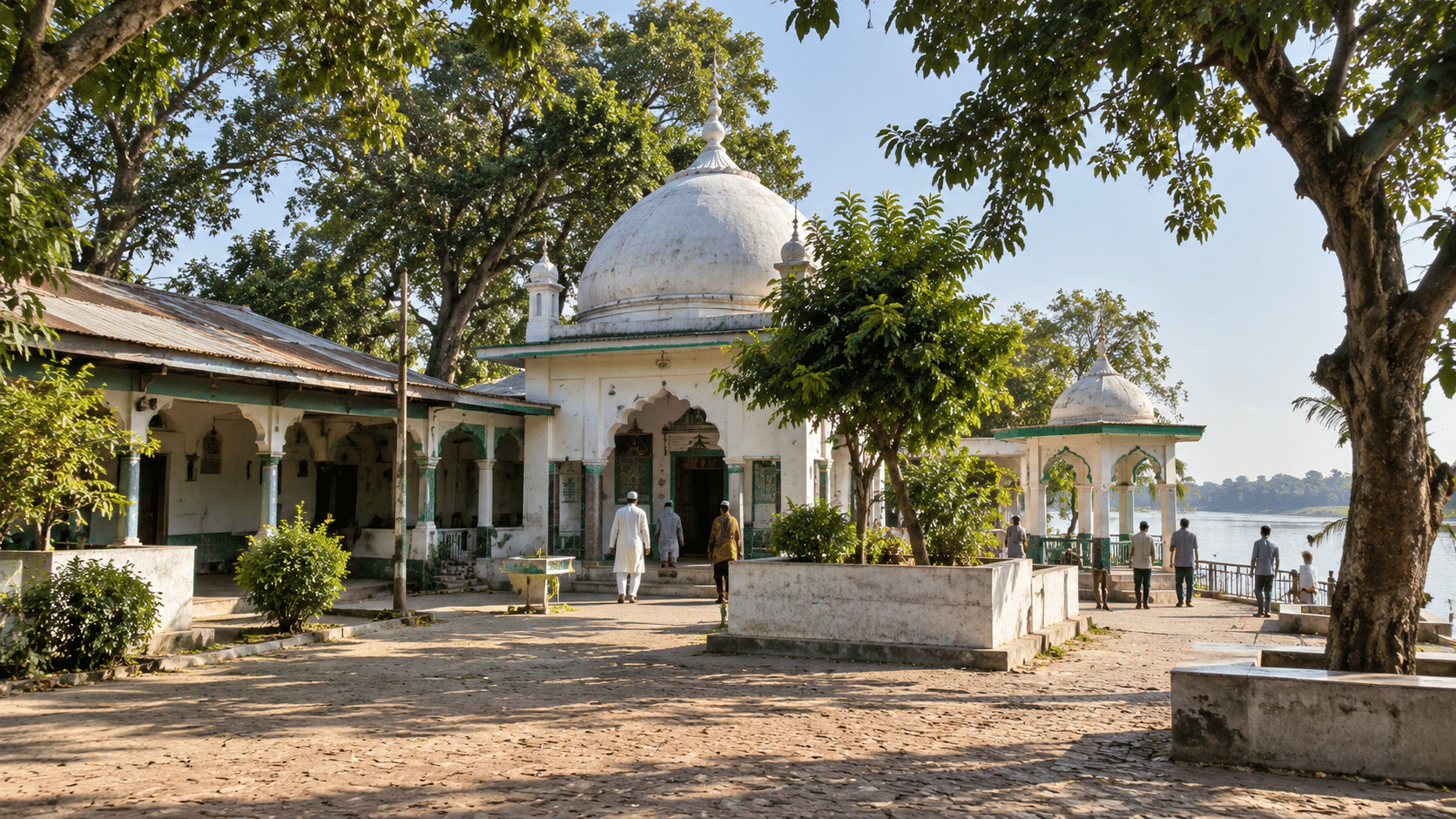
Shah Madar Dargah Sharif: The Shrine That Named a Town
Few towns in Bangladesh carry the name of a saint as clearly as Madaripur does. The story begins at Shah Madar Dargah Sharif, the shrine of Badruddin Shah Madar, a Sufi saint of the 15th century. Today it stands as the spiritual heart of Madaripur, and any visitor who wants to understand the town should begin here.
Who Was Shah Madar?
Banglapedia records that Badruddin Shah Madar came to Bangladesh from a Middle Eastern country in the 15th century to preach Islam in Bengal. Several Sufis of that era set up small stations in the Faridpur region. While travelling toward Barisal, Shah Madar set up his own astana on the southern bank of the Arial Khan, a tributary of the Padma.
Over time, devout people began to gather around Shah Madar Dargah Sharif. First a small bazaar grew there, and later a large settlement. That settlement is believed to have become Madaripur, named after the saint. It is a rare story: a saint’s quiet station slowly turned into a district headquarters.
The River Story Devotees Still Tell
Devotees believe that the Arial Khan came close to the dargah when it changed its course, yet the holy place was spared. The river ate away much of the land around it, but the shrine stayed intact, and the town was able to spread southward. Whether you see this as faith or as local history, it gives Shah Madar Dargah Sharif a deep place in the memory of Madaripur.
What You Will Experience at Shah Madar Dargah Sharif
A Place of Quiet Devotion
People from many places visit the shrine to seek the blessings of the saint, and the mood is respectful and calm. You do not need to be a devotee to feel the weight of the place. Just stand quietly and watch.
A Recognised Heritage Site
Banglapedia notes that the dargah is listed as a recognised archaeological site. This means Shah Madar Dargah Sharif is not only a place of worship but also a piece of the district’s heritage.
The River Setting
The shrine’s story is tied to the Arial Khan. Understanding that link changes the way you see the town. The river did not just flow past Madaripur, it helped shape it.
Photography with Care
Respect the mood of the shrine before you lift your phone. Ask permission before photographing people, and avoid taking pictures during prayer. Shah Madar Dargah Sharif is a place of faith first and a photo spot second.
Visitor Etiquette at Shah Madar Dargah Sharif
- Dress modestly and cover your shoulders and knees.
- Remove your shoes where asked, and keep your voice low.
- Do not treat the shrine area as a picnic spot or a casual hangout.
- Ask before taking photographs of worshippers.
- Donations are a personal choice, and no one should pressure you.
- Expect larger crowds on special religious days, and plan your visit around them.
How to Plan Your Visit
Most visitors need about an hour at Shah Madar Dargah Sharif. It is easy to combine with Shakuni Lake in the same town walk, since both are in Madaripur Sadar. Start with the dargah to understand the town’s origin, then walk to the lake to see the town as it is today.
Who Should Visit Shah Madar Dargah Sharif
This place suits history lovers, spiritual travellers, students of Bangladesh’s Sufi heritage and anyone who wants to know why Madaripur has its name. If you want one stop that explains the whole town, make it Shah Madar Dargah Sharif.
Shah Madar Dargah Sharif: Quick Answers
Where is Shah Madar Dargah Sharif?
Shah Madar Dargah Sharif is in Madaripur Sadar, on the Arial Khan side of Madaripur town in Dhaka Division.
Why is Madaripur named after Shah Madar?
A settlement grew around the saint’s astana on the bank of the Arial Khan and is believed to have become Madaripur, named after him.
Is there an entry fee at Shah Madar Dargah Sharif?
No fixed ticket has been widely reported for Shah Madar Dargah Sharif, but please confirm locally on arrival.
What is the best time to visit Shah Madar Dargah Sharif?
The cool dry months from November to February are the most comfortable for visiting Shah Madar Dargah Sharif.