
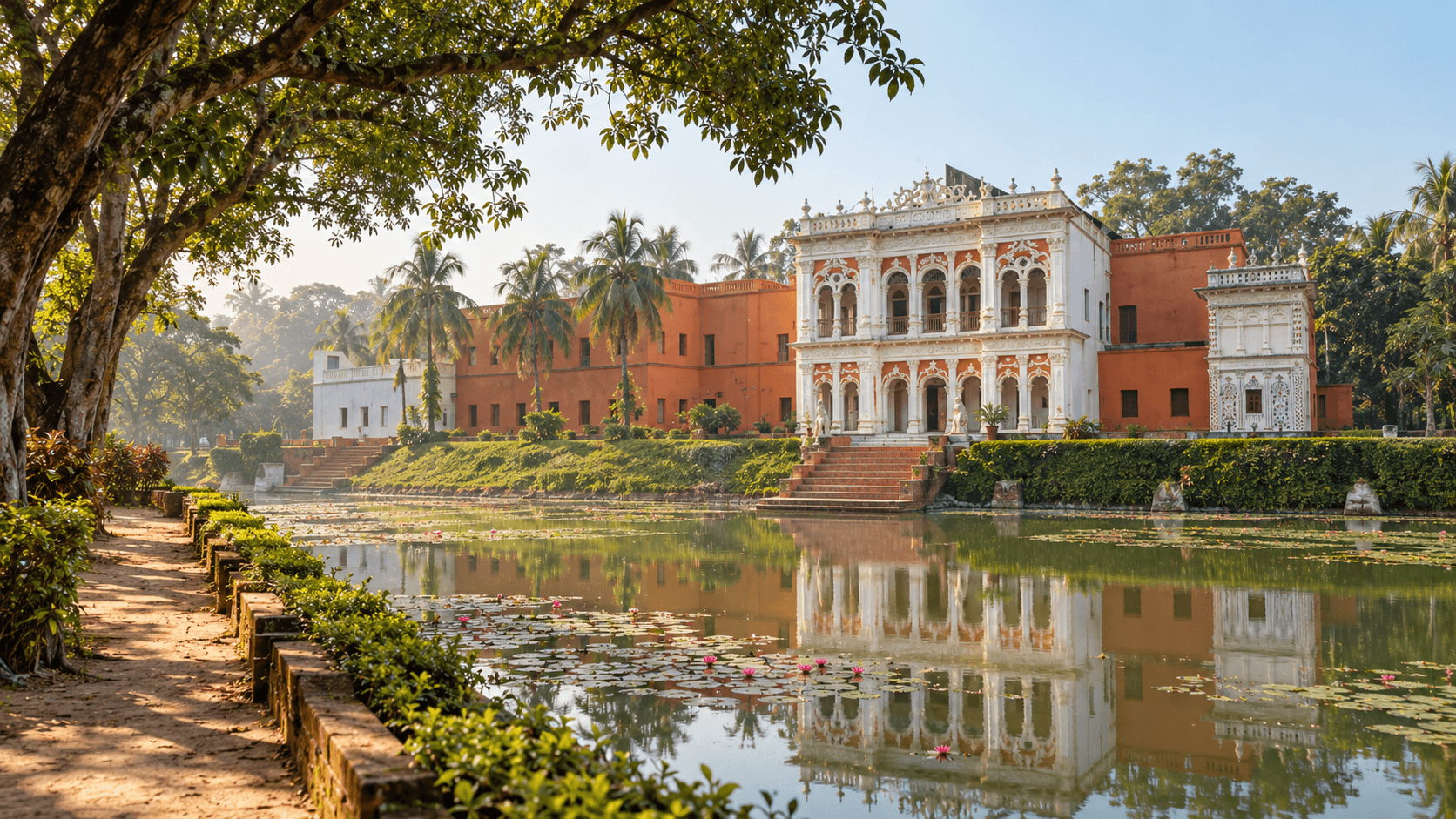
The Sonargaon Museum, officially the Bangladesh Folk Art and Craft Foundation, is the cultural heart of the old capital. Set on a wide green compound with lakes, old trees and a historic mansion, the Sonargaon Museum shows how Bengal’s weavers, potters and artists lived and worked. It is a gentle, family-friendly stop that pairs perfectly with Panam Nagar.
How the Sonargaon Museum Began
The foundation was established in 1975 through the efforts of the painter Joynul Abedin, with support from the government of the time. The aim was simple and powerful: to protect the memory of historic Sonargaon and the living folk traditions of Bangladesh. Today the Sonargaon Museum stands on a large piece of land of around fifty hectares, with lakes, ponds and gardens around the main buildings.
What You Will See at the Sonargaon Museum
The collections focus on everyday art and craft, and they are easy to enjoy even if you are not a museum person. Look out for:
- Textiles: Samples of fine cloth, including muslin, and ornate Nakshi Kantha.
- Brass and household objects: Traditional items that show how people lived in earlier times.
- Boat models: Miniature boats that remind visitors how central rivers were to life in the delta.
- Decorative pieces: Folk art and craft items from different parts of the country.
A newer museum building inside the compound highlights the rich fabric culture of Sonargaon, which makes the visit especially meaningful if you also plan to see Jamdani in Rupganj.
Boro Sardar Bari and the Museum Grounds
Inside the Sonargaon Museum compound stands Boro Sardar Bari, a 19th-century mansion that has been renovated. Its decorated plaster work and old architecture make it one of the most photogenic corners of the site. The grounds also include lakes, picnic spots, a library and a stage for folk programmes. Paddle boats are available on the lake for a small fee, which children usually love.
Opening Hours and Tickets for the Sonargaon Museum
Reported winter hours (October to March) are 9:00 AM to 5:00 PM, and summer hours (April to September) are 10:00 AM to 6:00 PM. The museum is generally closed on Thursdays. Tickets have been reported at BDT 50 for local visitors and BDT 100 for foreign visitors, but prices and timing can change, so check on the day.
Best Time to Visit the Sonargaon Museum
The dry months from November to February are ideal, because you can enjoy the lakeside paths and garden areas without heat or rain. During the monsoon, parts of the grounds can be wet, and in peak summer the afternoon heat can be tiring. Weekdays are quieter than weekends.
How to Reach the Sonargaon Museum
From Dhaka, take a bus from Gulistan to Mograpara in Sonargaon, then take a rickshaw or CNG to the museum. Buses also run from Chashara in Narayanganj. By private car, drive toward Sonargaon and follow the signs to the Folk Art and Craft Foundation. Panam Nagar and Goaldi Mosque are close by.
Tips for Visiting the Sonargaon Museum
- Reach early, so you can combine the museum with Panam Nagar and Goaldi Mosque.
- Carry water and wear comfortable shoes, because the compound is large.
- Do not touch the displays, and follow the photography rules at the entrance.
- Keep children close near the lake edges.
- Allow at least two hours for the museum, mansion and grounds.
Why the Sonargaon Museum Is Worth Your Time
Many visitors rush straight to Panam Nagar and skip the museum, but the Sonargaon Museum gives the context that makes the old capital make sense. It explains the craft, cloth and river life behind the ruins. For the full day plan, read our Panam Nagar and Sonargaon Heritage Capital destination guide.