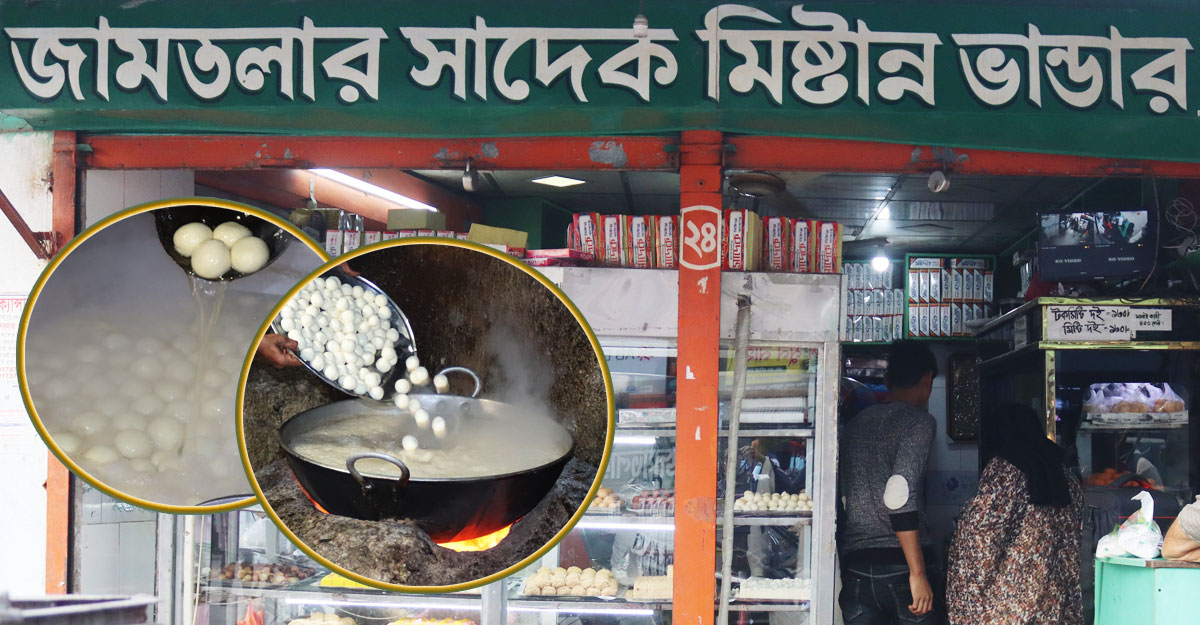
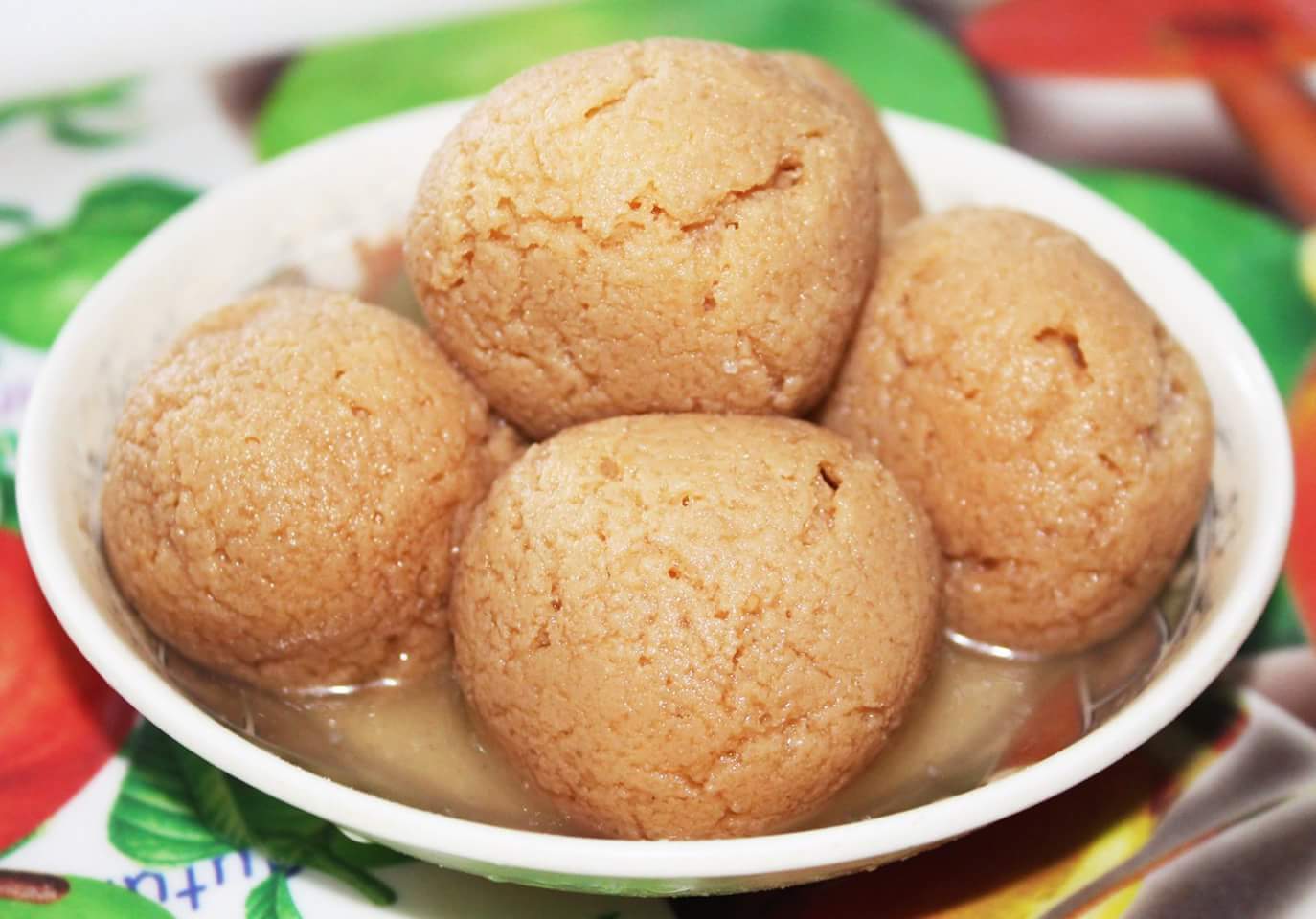
Sadek Golla is a light brown rasgolla from Jamtala in Sharsha Upazila, Jashore, Bangladesh, about 38 km from Jashore town. Sheikh Sadek Ali, a tea shop owner, started it in 1955, and after his death in 1999 his six sons took over the business. What sets Sadek Golla apart is its cooking: the chhana (milk curd) is cooked on an earthen stove until it turns brown, so the sweet has a brownish skin instead of a white one.
Ask people in Jashore what to bring home, and most will say the same thing: a packet of Jamtala sweets. The shop is small, and the setting is a busy bus stand, yet a line forms early every morning. People wait for a sweet that began with a simple problem: too much milk and nowhere to put it. This is the story of how a tea seller turned extra milk into one of Bangladesh’s best-loved sweets.
Sadek Golla at a Glance
- Origin: Jamtala, Sharsha Upazila, Jashore District, Khulna Division
- Founded: 1955, by Sheikh Sadek Ali
- Original shop: Sadek Mishtanno Bhandar, at the Jamtala bus stand
- Run today by: Sadek Ali’s six sons
- Known for: A light brown rasgolla made from locally sourced cow’s milk
- Also called: Jamtala sweets, Sadeker Golla
The Sweet Legacy of Jamtala: The Story of Sadek Golla
The motto of the Jamtala shop is “He who knows buys”. It sums up the sweet’s reputation well. The Sadek Golla tradition has run for more than 70 years, and according to a report in The Daily Star, the shop still draws a crowd every morning.
A Sweet Creation
In 1955, Sheikh Sadek Ali ran a small tea shop in Jamtala. Local cowherds supplied him with more milk than he could use, so he looked for a way to make it last. According to local accounts, a visitor from Comilla showed him how to make sweets from chhana. Sadek Ali took the lesson and never looked back.
Sadek Golla Emerges
With each batch, Sadek Ali changed the recipe a little. He cooked the sweets longer than most makers, until they turned light brown. The result looked and tasted different from the white sponge rasgolla sold in other shops, and people soon began calling it “Sadeker Golla” after its maker. As The Financial Express explains, Jamtala sweets are often called Sadek Golla in honour of the founder.
A Family Tradition: Six Sons, One Legacy
From 1955 until his death in 1999, Sheikh Sadek Ali made the sweets himself. After he passed away, his six sons, Anwar Hossain, Alamgir, Shahinur, Shahjahan, Jahangir and Nuruzzaman, took over. They kept the recipe and added more shops. The Daily Star reports nine outlets in total, three in the Jamtala area and six others around Jashore district, though the number may change over time.
The original Sadek Mishtanno Bhandar still stands at the Jamtala bus stand. It sells other sweets too, but the golla is what brings the crowds. Many families now buy it for weddings, birthdays and other celebrations.
The Essence of Sadek Golla: What Makes It Special
Rasgolla is made all over Bangladesh, so what makes Sadek Golla stand out? The answer starts with the milk and ends at the stove.
- Local milk: The makers use locally sourced cow’s milk, and artisans say they pair it with good sugar and a little semolina.
- The earthen stove: The chhana is cooked on an earthen stove until it turns light brown. This is why Sadek Golla has a brownish skin instead of a white one.
- Wood fuel: The artisans say they use good wood as fuel, which helps give the sweet its flavor.
- Soft and spongy: Customers describe it as soft, rich and different from other rasgolla.
Production is large. Reports mention anywhere from more than a thousand to several thousand sweets a day, and many are sold before noon. If you want your sweets fresh, go early.
A Note on Sugar and Health
Some customers say Sadek Golla tastes less sugary than other sweets. It is still a sweet made with sugar, though, so do not treat it as a diabetes-friendly food. If you manage diabetes or watch your sugar, ask your doctor before you eat it.
Carrying the Torch: A New Generation Takes Charge
Following their father’s footsteps, Sadek Ali’s sons have spread the sweet well beyond Jamtala. It travels to other parts of the country, including Dhaka, where The Financial Express notes that imitations are also sold. If you want the real taste, look for the Jamtala name and buy from the original shops.
Sadek Golla also shows how a small local business can grow without losing its identity. The recipe stays close to the original, the shop stays modest and the founder’s name stays on the product. For more stories of food heritage, read about Beauty Lassi in Old Dhaka and the famous GI products from Rajshahi, including Natore kachagolla.
Planning a Visit to Jamtala
Jamtala is in Sharsha Upazila, about 38 km from Jashore town. Go in the morning, when the sweets are fresh, and be ready for a queue. Prices have changed since older reports listed a few taka per piece, so check at the counter. Opening hours and packaging options can change as well. To plan a trip around Jashore, read our guide to Jashore District, and see our tips on local transport. For more local flavors, browse our foods and cuisines and Buy Bangladeshi sections.
Frequently Asked Questions About Sadek Golla
What is Sadek Golla?
Sadek Golla is a light brown rasgolla from Jamtala in Sharsha Upazila, Jashore, Bangladesh. It is also known as Jamtala sweets.
Who invented Sadek Golla?
Sheikh Sadek Ali, a tea shop owner, started making Sadek Golla in 1955. The sweet is named after him.
Where can you buy original Sadek Golla?
You can buy original Sadek Golla in Jamtala, Sharsha Upazila, Jashore, including the Sadek Mishtanno Bhandar at the Jamtala bus stand. The family also runs other shops around Jashore district.
Why is Sadek Golla brown?
Sadek Golla is brown because the chhana is cooked on an earthen stove for longer, until it turns light brown, while ordinary white rasgolla is soaked in warm sugar syrup.
Who runs Sadek Golla today?
The six sons of Sheikh Sadek Ali, Anwar Hossain, Alamgir, Shahinur, Shahjahan, Jahangir and Nuruzzaman, run the business today.
How far is Jamtala from Jashore town?
Jamtala is about 38 km from Jashore town, according to The Daily Star.
Is Sadek Golla safe for people with diabetes?
Sadek Golla is a sweet made with sugar, so it is not a diabetes-friendly food. People who manage diabetes should ask their doctor before eating it.
Final Thoughts on Sadek Golla
Sadek Golla began with extra milk and a bit of curiosity, and it grew into one of Jashore’s proudest food names. A small shop, a long queue and a light brown sweet are all you need to see why. If you pass through Sharsha, stop at Jamtala, buy a packet and taste a story that is more than seventy years old. For more trip ideas, explore our places to visit in Bangladesh and travel experiences.