
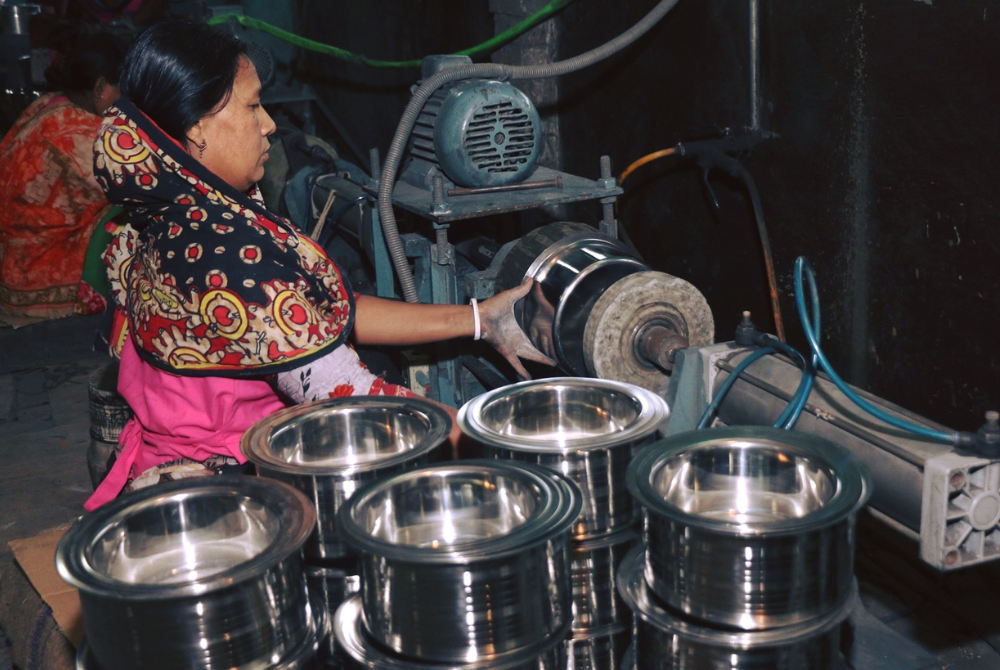
Saidpur cookware is a small but growing industry in the railway town of Saidpur, Nilphamari, in northern Bangladesh. Its best-known maker, Royal Relax Metal Industries, part of the Noah Group, began making aluminium products in 1978 and, by The Business Standard’s 2023 report, was the only export-oriented cookware company in the northern region. It sold pots, pans, pressure cookers and rice cookers to India, Bhutan and Nepal, with annual sales of about $300,000 to $500,000.
Ask most people what Saidpur is famous for, and they will say its railway workshop, its old Chini Mosque or its quiet, tree-lined streets. Far fewer know that a factory near the bus stand has been shipping cookware across the border for over a decade. This is the story of Saidpur cookware: how a northern railway town, a family of aluminium makers and a “Made in Bangladesh” label ended up in kitchens in India, Bhutan and Nepal. The numbers below come from reporting in 2023, so please check for newer figures before you rely on them.
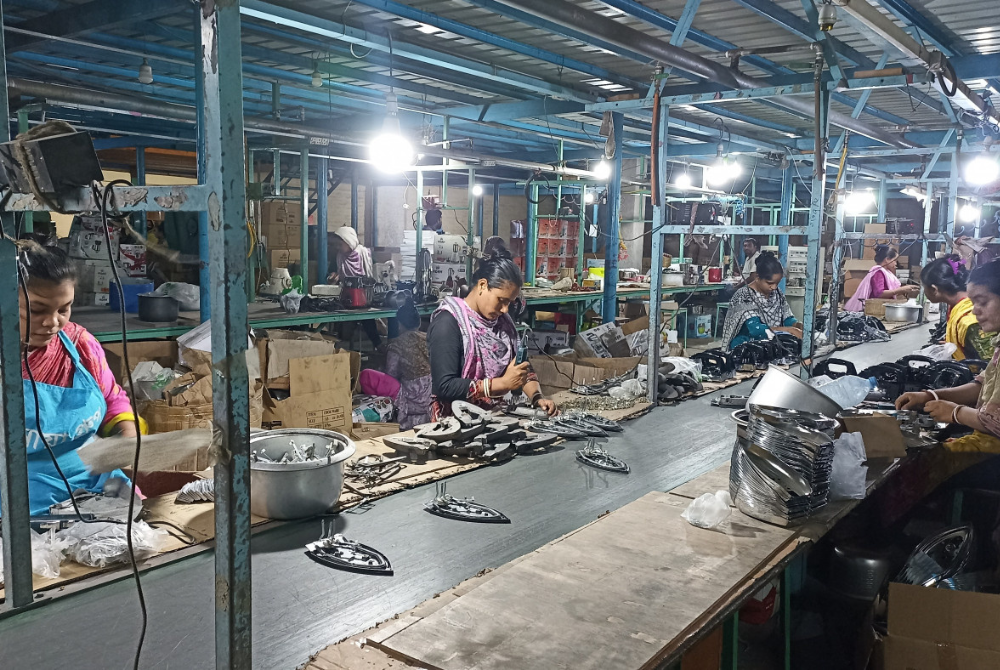
Workers assembling products at Royal Relax Metal Industries in Saidpur. Photo credit: The Business Standard (please confirm permission before reuse).
Saidpur Cookware at a Glance
- Location: Saidpur, Nilphamari District, Rangpur Division
- Best-known maker: Royal Relax Metal Industries, part of the Noah Group
- Started: 1978, making aluminium products
- Main products: Pots, pans, pressure cookers, rice cookers, gas stoves, kettles, blenders and non-stick cookware
- Export markets (2023 report): India, Bhutan and Nepal
- Workforce (2023 report): About 300 workers, around 40% of them women
- Brand message: “Made in Bangladesh”
How Saidpur Cookware Began
Until the late 1970s, Nilphamari had no aluminium factory, even though demand for aluminium products was growing. Shopkeepers got their stock from Bogura, where the trade was already established, as The Business Standard reported in September 2023. Seeing that success, other districts started their own workshops.
The roots of Saidpur cookware lie in Bogura. A later TBS profile, “Noah: Making ‘Made in Bangladesh’ a matter of pride”, says the family business began in 1968 in Talora, Bogura, making aluminium kitchenware from imported aluminium coils under the “Shurjo Marka” brand. Aluminium utensils were replacing clay ones at the time, and the founder saw a chance. In 1978, the next generation set up Royal Relax Metal Industries in Saidpur, which suited the business because the town has good rail and road links to the northern districts.
How Saidpur Cookware Moved from Aluminium Pots to Pressure Cookers
The company behind Saidpur cookware started with aluminium goods. In 2004, it began making steel pressure cookers, which was a turning point. It then added rice cookers, gas stoves, kettles, blenders, induction stoves and non-stick products. According to The Business Standard, it started exporting in the 2010-11 fiscal year. The factory, on about three acres near the Saidpur-Rangpur highway, makes pots, pans, ladles, casseroles, woks and non-stick fry pans.
Saidpur cookware depends on imported raw materials. The company sources aluminium circles, non-stick coatings, stainless-steel circles and fittings, polishing materials and rice-cooker parts from India, China and Malaysia. Skilled foreign technicians trained local staff at the start, and local technicians now run the machines.
Saidpur Cookware Exports and Market Reach
In 2023, the company exported to India, Bhutan and Nepal, with annual turnover of about three to five lakh dollars, and it planned a shipment worth $22,000 to Bhutan that month. A later TBS profile says the wider Noah Group also sells to India and to neighboring countries such as Bhutan and Myanmar. At home, Saidpur cookware serves a market around Rangpur and Dinajpur.
The company’s director, Raju Poddar, told The Business Standard that the factory was using only about 25% of its capacity, so there was room to grow. He also said the company wanted to promote the “Made in Bangladesh” label as a matter of national pride. That label is the heart of the Saidpur cookware brand story: a product that competes with imports and carries the country’s name abroad.
People Behind the Saidpur Cookware Industry
The Business Standard reported that the factory employed around 300 people in 2023, about 40% of them women, along with five to seven workers with disabilities. Some workers said they found the working conditions and pay fair. Saidpur cookware grows out of a town of workshops, because the railway workshop and small engineering units gave it a base of skilled hands. In 2018, a local report noted that some factory workers had retired from the railway workshop.
Challenges Facing Saidpur Cookware Makers
The company described several problems in 2023: unreliable electricity, higher fuel prices and tax-related complaints. Other aluminium clusters have faced pressures like those facing Saidpur cookware makers. The Talora aluminium industry in Bogura, where the family business started, was reported to be near extinction in 2022 because of fuel prices and a gas outage. At the time of the Saidpur report, the gas pipeline had reached Nilphamari, and the company wanted priority gas connections for factories.
The Nilphamari Chamber of Commerce and Industry also made two suggestions in 2023: develop Chilahati, a border upazila, into a full trade port, and upgrade Saidpur airport to an international one. Both would help exporters, and could turn Saidpur into a stronger industrial hub. For the wider picture, see The Daily Star’s reports on small and light engineering industries in Saidpur and on units in Nilphamari.
What Local Makers Can Learn from Saidpur Cookware
- Start where demand is. The business began by filling a local gap that Bogura could no longer fill.
- Move up the product ladder. Pressure cookers in 2004 and then electric products gave the company higher-value goods than plain aluminium pots.
- Use the origin as a brand. “Made in Bangladesh” is a promise of pride and quality, not only a label.
- Build local skill. Foreign experts trained locals first, and then local technicians took over.
- Fix the basics. Reliable power and gas are as important to exports as marketing.
Visiting Saidpur
If you travel to Saidpur, the town is better known for heritage than for factories. Stop at the Chini Mosque, and explore other sights in Rangpur Division, such as the Kantaji Temple in Dinajpur. For more stories about Saidpur cookware and other local products and brands, browse our Buy Bangladeshi section, the story of GI products from Rajshahi and our guide to arts and crafts in Bangladesh.
Frequently Asked Questions About Saidpur Cookware
What is Saidpur cookware?
Saidpur cookware is kitchenware, such as pots, pans, pressure cookers and rice cookers, made by factories in Saidpur, Nilphamari, in northern Bangladesh.
Who makes cookware in Saidpur?
The best-known maker is Royal Relax Metal Industries, part of the Noah Group, which started in Saidpur in 1978.
Where does Saidpur cookware get exported?
According to The Business Standard’s 2023 report, Royal Relax exported to India, Bhutan and Nepal. A later TBS profile says the Noah Group also sells to Myanmar.
When did Royal Relax Metal Industries start?
It was established in 1978 in Saidpur to make aluminium products, and it started making steel pressure cookers in 2004.
How many people work in the Saidpur cookware factory?
In 2023, it employed about 300 workers, around 40% of them women, according to The Business Standard.
Why does Saidpur cookware matter for industry?
Saidpur has good rail and road links, a long history as a railway workshop town and a base of small engineering units, which helps manufacturers reach markets in Rangpur, Dinajpur and beyond.
Are these figures current?
The employment, export and turnover figures come from a September 2023 report, so please check recent sources for updates.
Final Thoughts on Saidpur Cookware
Saidpur cookware shows that a “Made in Bangladesh” success story does not always begin in Dhaka or Chattogram. Sometimes it starts in a northern railway town, with a family trade, a good location and the patience to climb from pots to pressure cookers. If you plan to visit, combine the heritage of Saidpur with a closer look at how its people make a living. For more ideas, explore our places to visit in Bangladesh and travel experiences.
Sources
Main source for this Saidpur cookware guide: “Saidpur’s cookware puts footprint in global market”, by Khorshed Alam, The Business Standard, September 24, 2023. Other sources are linked above.