
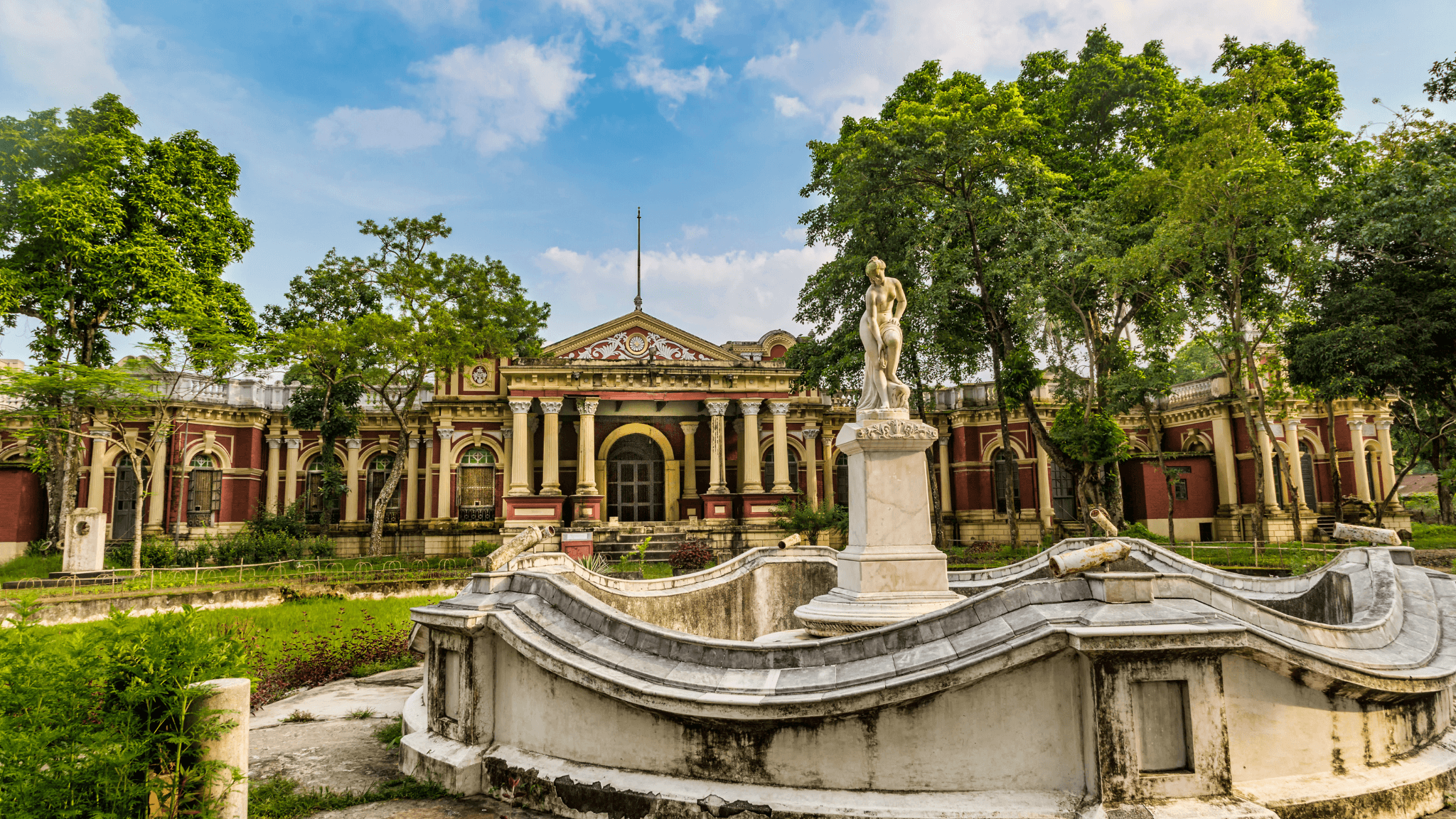
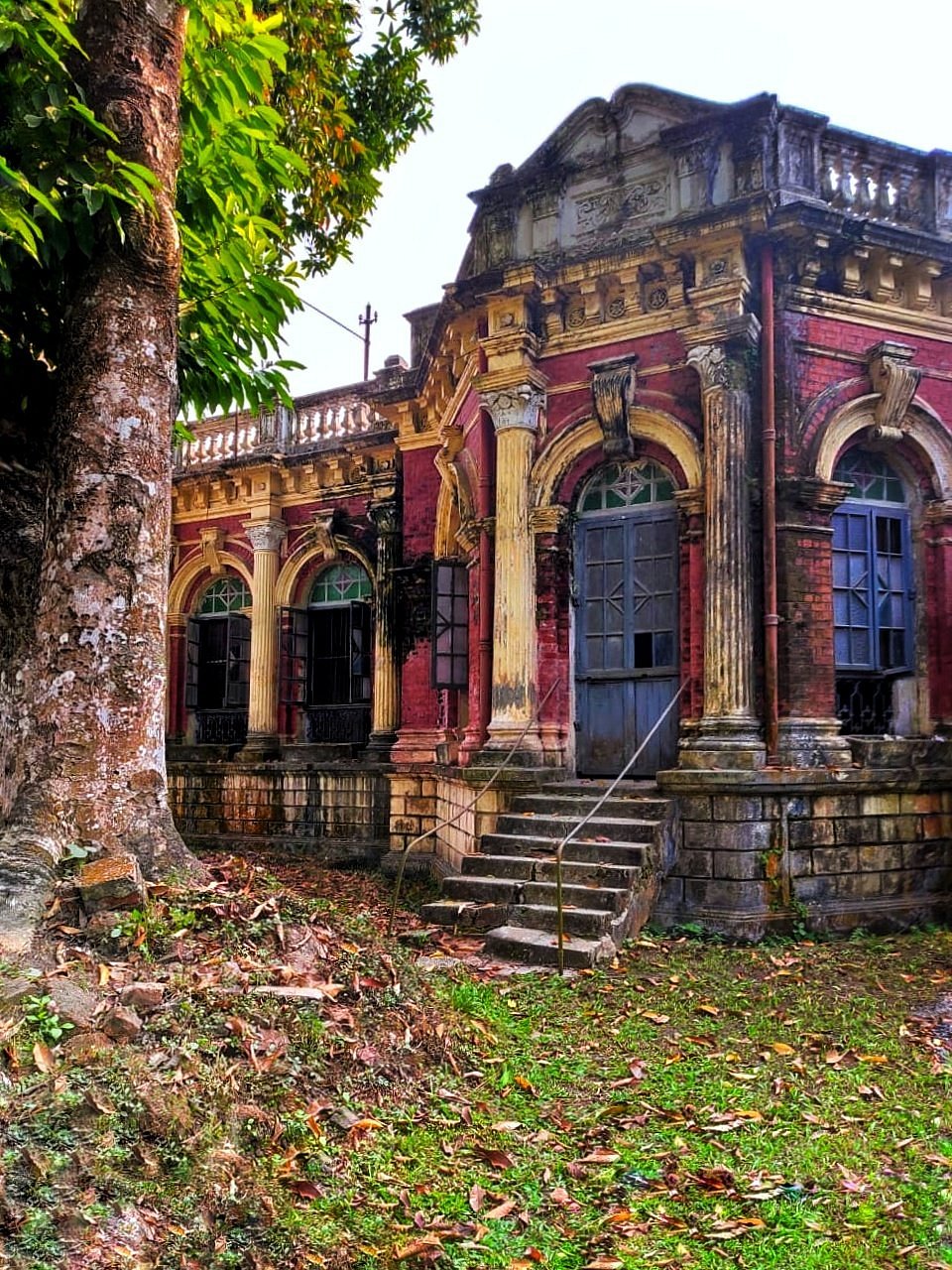
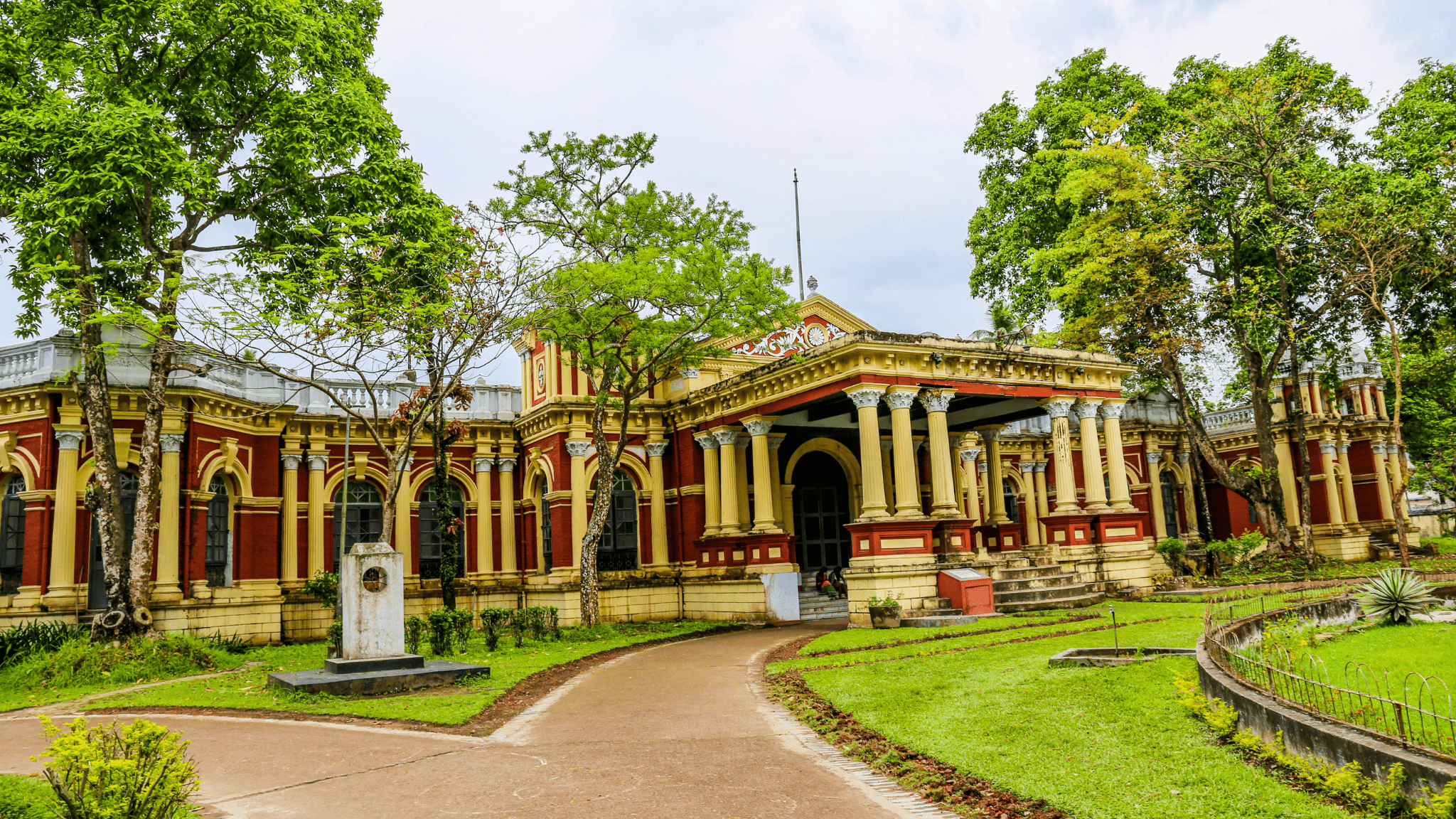
Shoshi Lodge history is a story of family succession, a devastating earthquake and the survival of a grand palace in Mymensingh, Bangladesh. Also written as Shashi Lodge, the mansion was built by Maharaja Suryakanta Acharya Chowdhury of the Muktagachha zamindar family. The original two-storey palace was destroyed in the 1897 earthquake, and his adopted son, Shashikanta, rebuilt it between 1905 and 1911. The surviving building now houses the Mymensingh Museum.
When you approach Shoshi Lodge, its decorated entrance and long front lawn hint at the wealthy family that once lived here. Yet the most interesting part of the place is not simply its appearance. Behind the arches is a history shaped by adoption, changing family responsibilities and repeated efforts to protect an inheritance. This guide looks at the people, architecture and preservation of Shoshi Lodge, rather than repeating a general Mymensingh travel itinerary.
Shoshi Lodge History at a Glance
- Location: Mymensingh city, Mymensingh Division, Bangladesh
- Other names: Shashi Lodge, Shoshi Lodge and Mymensingh Rajbari
- Family: Acharya Chowdhury zamindars of Muktagachha
- Original palace: Commonly dated to 1877; a two-storey building
- Earthquake: June 12, 1897, which destroyed the earlier structure
- Present palace: Rebuilt as a single-storey residence between 1905 and 1911
- Grounds: Approximately nine acres, according to Bangladesh Tourism Board
- Heritage status: Protected monument since 1989
- Present use: Home of the Mymensingh Museum, which moved into the lodge in 2019
Origin of Shoshi Lodge: An Estate Shaped by Adoption
The family story behind Shoshi Lodge begins in Muktagachha. The Acharya Chowdhury family controlled a significant zamindari, or landholding estate, in the greater Mymensingh region. In the inheritance system of the time, an adopted son could become central to the succession of property and family responsibilities. Adoption therefore appears repeatedly in published accounts of this family’s history.
From Raghunandan to the Next Generation
A 2021 RisingBD account traces the estate back to Shrikrishna Acharya Chowdhury and describes Raghunandan Acharya Chowdhury as a later descendant. It says Raghunandan, who had no son, adopted Gaurikanta Acharya Chowdhury. Gaurikanta also died without a direct heir, after which his widow, Bimala Devi, adopted Kashikanta.
The same published family narrative says Kashikanta died without leaving a child. His widow, Lakshmi Devi Acharya Chowdhurani, continued the search for a successor. RisingBD names an additional adopted child, Chandrakanta, before describing the adoption of Purnachandra Majumdar. The original Bangladesh Branding version omits Chandrakanta. Because this detailed succession has not been independently confirmed against an archival family register, it is best understood as a reported family history, not a fully verified genealogical record.
How Purnachandra Majumdar Became Suryakanta
According to that account, Purnachandra Majumdar took the name Suryakanta Acharya Chowdhury after being adopted by Lakshmi Devi. He later became a prominent manager and patron of the Muktagachha estate. Reporting also describes Suryakanta as the adoptive father of Shashikanta Acharya Chowdhury, whose name became attached to Shoshi Lodge.
This family background explains why adoption belongs in the story. Shoshi Lodge was more than a display of wealth: its name and construction reflect the continuity the Acharya Chowdhury family sought across generations. Readers interested in the family’s earlier home can explore Bangladesh Branding’s Muktagachha Zamindar Bari guide.
From the Original Palace to the Great Earthquake of 1897
The first Shoshi Lodge was a two-storey residence built during Suryakanta’s time. The Daily Star and Dhaka Tribune give 1877 as its construction year. The site lay in Mymensingh city, close to the Old Brahmaputra, where trade, administration and cultural life helped make the town an important regional centre.
Then the earthquake of June 12, 1897, changed the building’s future. The original palace was severely damaged or destroyed. Rather than treating the ruins as the end of the family’s project, Shashikanta Acharya Chowdhury rebuilt the residence on the same site. Bangladesh Tourism Board dates the reconstruction to 1905–1911 and describes the surviving palace as a single-storey building, unlike the earlier two-storey mansion.
This distinction matters whenever Shoshi Lodge is described. The upper-level bathing pavilion beside the pond should not be confused with the number of storeys in the main surviving residence. Some accounts mention changes completed in 1911, while others describe the full 1905–1911 period as reconstruction. Both point to the same early-twentieth-century phase of the palace’s history.
Architecture of Shoshi Lodge: European Details in a Bengal Palace
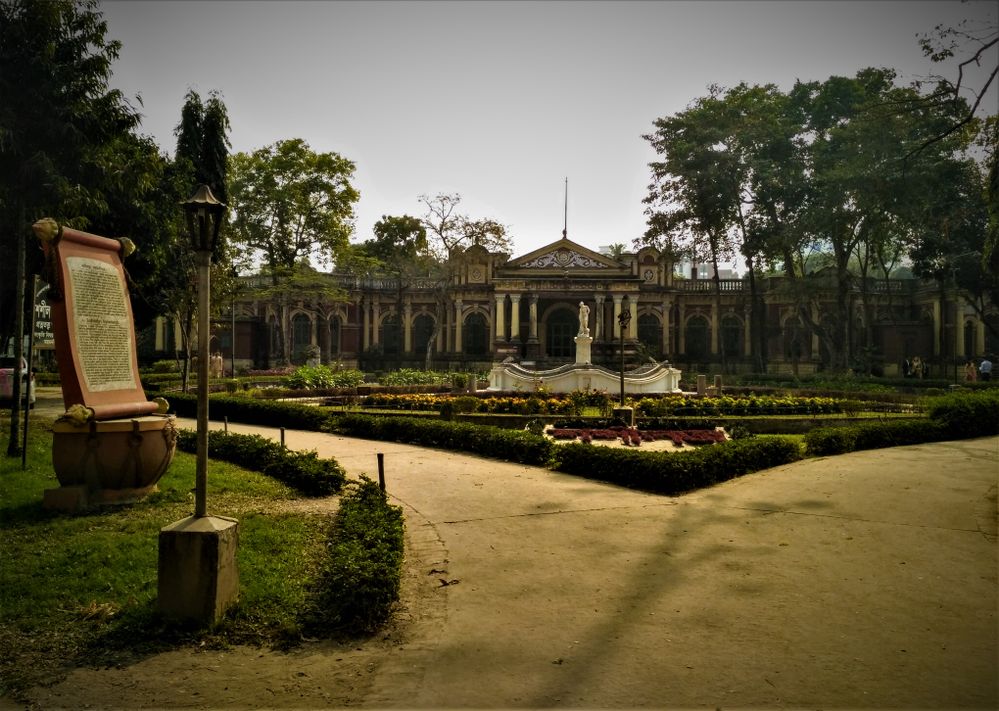
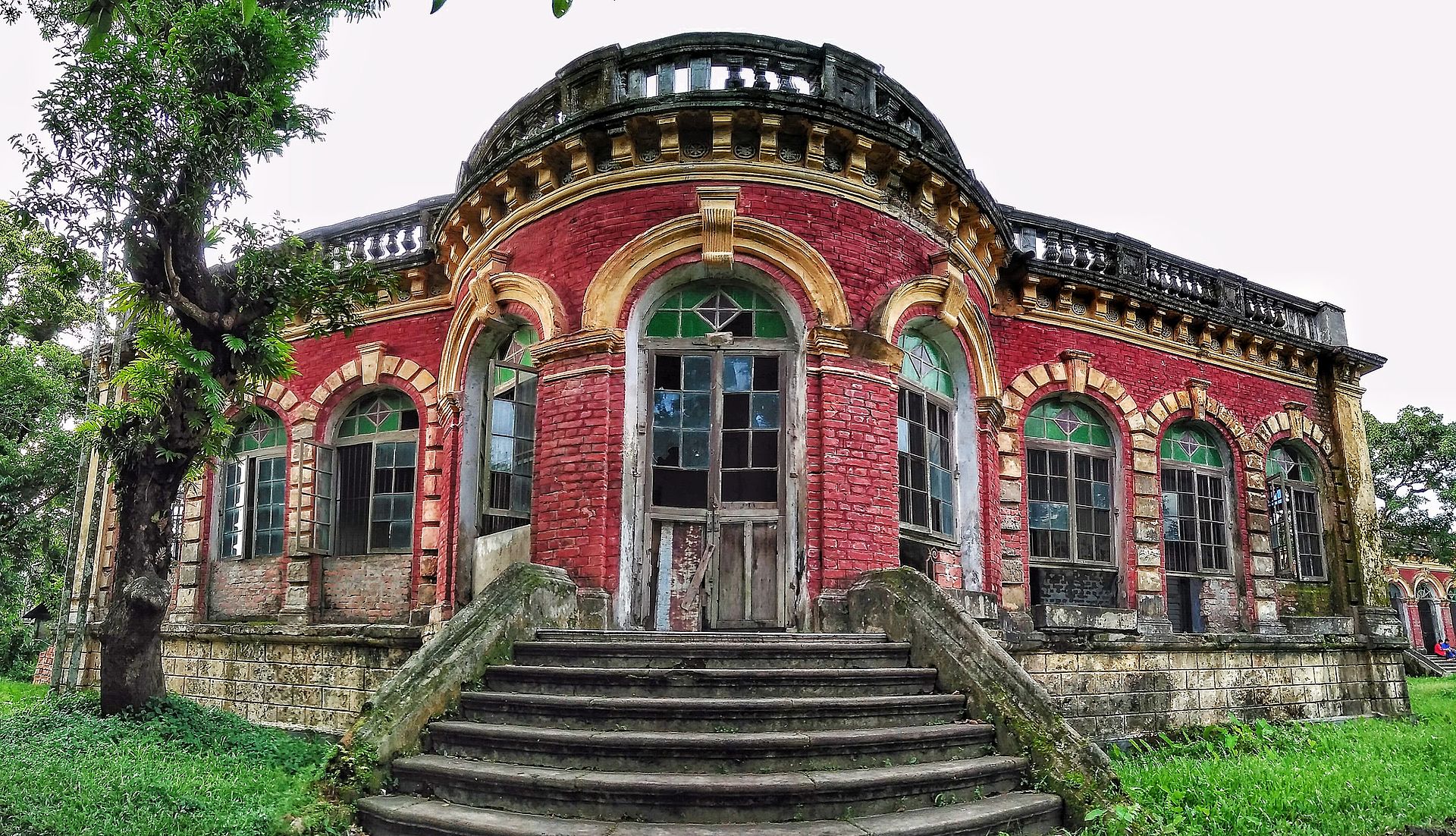
From the front, Shoshi Lodge shows the taste for European-inspired decoration associated with wealthy zamindar households during British rule. Its columns, arches, coloured glass and formal approach give the building a distinctive appearance. The Bangladesh Tourism Board also records decorative items brought from Paris and elsewhere in Europe.
The Entrance, Garden and Classical Fountain
A broad, semicircular entrance gateway leads towards the main building across an open lawn. The formal garden and its fountain were designed to be seen before a guest entered the residence. For many years, a marble statue of Venus, the Roman goddess associated with love and beauty, stood at the centre of the fountain. Historic photographs of Shoshi Lodge often show the statue in place, but they do not represent its present condition.
Halls, Chandeliers and Interior Details
Inside Shoshi Lodge, visitors encounter a large hall associated with the palace’s social gatherings. The Tourism Board identifies a timber-floored room that once served as a ballroom. Coloured glass in the doors and windows, decorative chandeliers and high ceilings add to the sense of a residence built for both private life and formal entertaining.
Other published accounts describe an iron staircase and marble flooring as notable details. The building’s rooms and passages also reveal practical design choices: the main living areas connect with circulation spaces and service features, rather than functioning only as a decorative showpiece. Not every historical interior is necessarily accessible to visitors today, because Shoshi Lodge is both a museum and a protected building.
The Pond, Bathing Pavilion and Marble Ghat
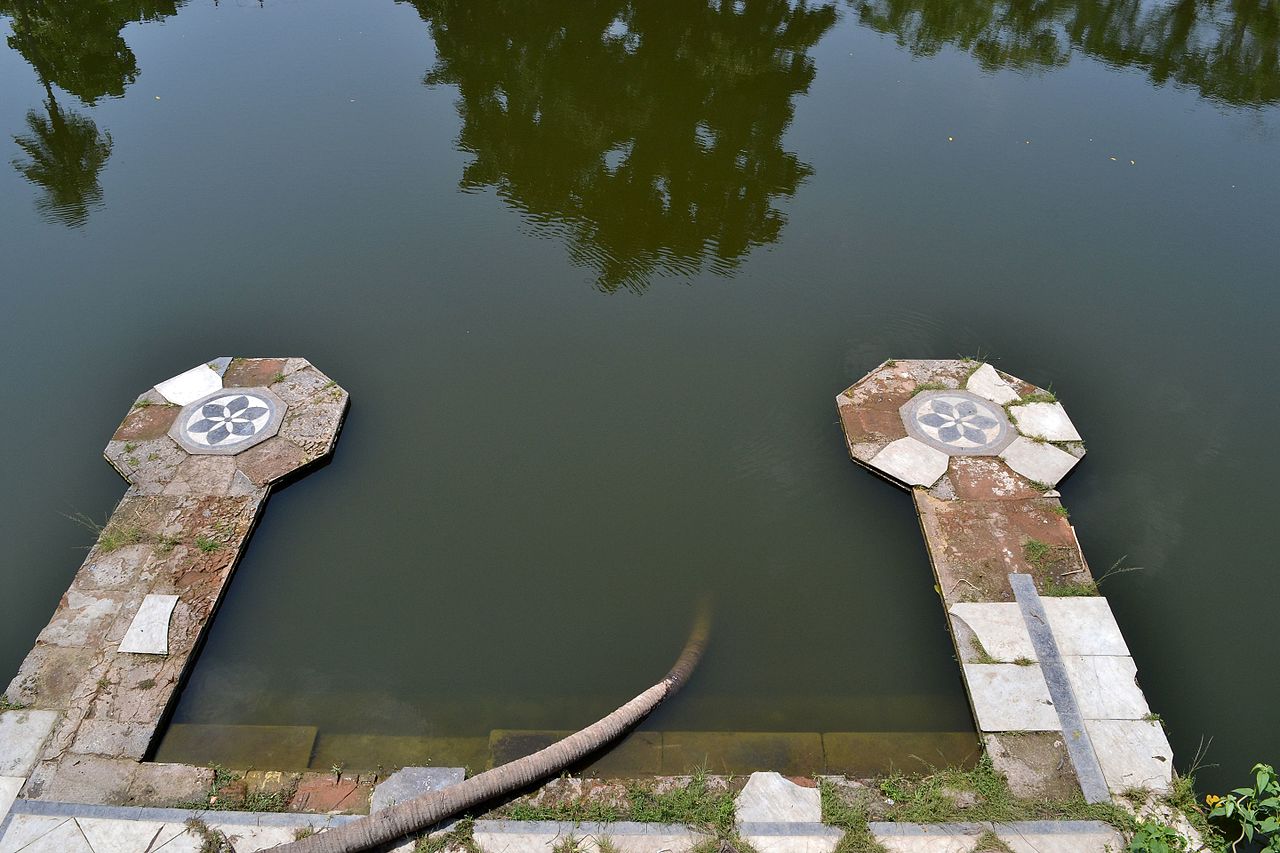
Behind the palace lies another memorable feature: an old pond with a two-storey bathing pavilion. Bangladesh Tourism Board describes the pavilion as a marble-built structure situated beside the pond. A ghat, or stepped landing, connects the water area to the surrounding grounds. Together, these details show how water, gardens and private bathing spaces were included in the original estate landscape.
Stories also circulate about hidden passages between Mymensingh and Muktagachha, and about everyday life in the zamindar household. These may be interesting local traditions, but the available authoritative sources do not establish the existence of a long underground tunnel. They should not be presented as confirmed architectural facts.
Shoshi Lodge in Local Culture: Television, Food and Family Memory
Shoshi Lodge has appeared in accounts of Mymensingh’s cultural life as well as its architectural history. RisingBD reports that scenes from Humayun Ahmed’s television drama Ayomay were filmed at the palace. This association helped introduce the building to audiences beyond the city, although the available reporting does not document every filming date or production detail.
The wider Muktagachha heritage includes its well-known sweet, monda. Older stories connect the sweet to zamindar patronage, but the claim that only Maharajas could eat it, or that leftover sweets were fed to named palace elephants, could not be reliably verified. For a separate food-history angle, see Bangladesh Branding’s Muktagachha monda experience.
From Women’s Teachers’ Training College to Mymensingh Museum
The later history of Shoshi Lodge is also a story of changing use. Beginning in 1952, the building served as part of a women’s teachers’ training college. The Department of Archaeology declared it a protected monument in 1989, recognizing its historical and architectural importance. A transfer involving the cultural affairs authorities followed in 2015 as plans advanced to use the old palace for a museum.
The Mymensingh Museum moved into Shoshi Lodge in 2019. Its collections include objects linked to zamindar houses in Muktagachha, Atharabari and Gouripur, as well as other pieces of regional history. In its 2022 report, The Daily Star noted that limited display cases and staff meant some objects remained in storage. That report describes conditions at the time, not a guaranteed picture of every gallery today.
What Happened to the Venus Statue at Shoshi Lodge?
The Venus statue was one of the best-known features of Shoshi Lodge, but it was vandalized on August 5, 2024. The Daily Star reported in September 2024 that parts of the sculpture had been recovered but its head was missing. In an October 12, 2025 investigation, The Business Standard reported that restoration had not yet been completed.
Those dated reports are important because older photographs and travel descriptions still show the intact figure standing above the fountain. The precise restoration status in November 2026 could not be independently confirmed, so it would be misleading to promise visitors that the original statue is on display. The empty or altered fountain area is now part of the continuing discussion about protecting Shoshi Lodge and other heritage sites.
How to Explore Shoshi Lodge and Related Heritage
Shoshi Lodge is in Mymensingh city. Bangladesh Tourism Board says visitors can reach it by rickshaw or autorickshaw from local transport points, including Maskanda bus terminal. Because it is an archaeological museum, opening hours, ticket prices and room access may change. Check the Department of Archaeology’s published museum schedule and local notices before travelling.
For complete transport information, start with Bangladesh Branding’s Shashi Lodge visitor guide. Readers interested in the same family’s wider legacy can explore Raj Rajeshwari Water Works or the Mymensingh district attractions guide. These complementary pages cover sightseeing and route planning, while this article focuses on the lodge’s history.
Frequently Asked Questions About Shoshi Lodge History
Where is Shoshi Lodge located?
Shoshi Lodge is in Mymensingh city, Bangladesh. It is also called Shashi Lodge or Mymensingh Rajbari and now houses the Mymensingh Museum.
Who built Shoshi Lodge?
Maharaja Suryakanta Acharya Chowdhury of the Muktagachha zamindar family built the original palace. His adopted son, Shashikanta Acharya Chowdhury, rebuilt it after the 1897 earthquake.
When was Shoshi Lodge built?
The original two-storey palace is commonly dated to 1877. The present single-storey structure was built between 1905 and 1911 after the earlier building was destroyed.
Why is it called Shoshi Lodge?
The palace was named after Shashikanta Acharya Chowdhury, the adopted son of Maharaja Suryakanta. Shoshi Lodge and Shashi Lodge are alternative English spellings.
What happened to Shoshi Lodge in 1897?
The Great Indian Earthquake of June 12, 1897, destroyed the original palace. A replacement building was constructed on the same site in the early twentieth century.
Is the Venus statue still standing at Shoshi Lodge?
No. The statue was vandalized in August 2024. A report from October 2025 said it had not been restored; its exact status in November 2026 has not been independently verified.
Is Shoshi Lodge a museum now?
Yes. The Mymensingh Museum moved into Shoshi Lodge in 2019. The building is a protected archaeological monument, and visitors should check current museum access rules before going.
Final Thoughts on the History of Shoshi Lodge
Shoshi Lodge history carries several chapters in one place: an adopted family line, a two-storey palace lost in an earthquake, the determination to rebuild, and a new role as a public museum. Its garden, decorative halls and pond show the tastes of the zamindar era, while the damaged Venus sculpture is a reminder that heritage also depends on care in the present.
To continue the story, explore the family’s Muktagachha palace or browse Bangladesh Branding’s Places to Visit collection for more historic destinations.
Sources and Verification Notes
- Bangladesh Tourism Board, Shashi Lodge – rebuilding, architecture, grounds and protected status.
- RisingBD, August 12, 2021 – reported adoption lineage and cultural associations; not an original family archive.
- The Daily Star, 2022 – museum transfer, collection and earlier palace dating.
- Dhaka Tribune, November 18, 2019 – architecture and 1897 earthquake history.
- The Daily Star, September 11, 2024 – damage to the Venus statue.
- The Business Standard, October 12, 2025 – statue restoration status at that date.