

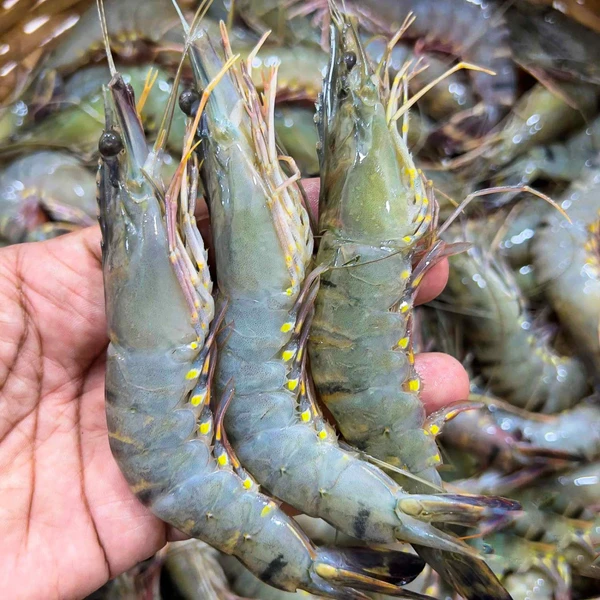
Bagda shrimp, also called Black Tiger Shrimp or Bagda Chingri, became the tenth Geographical Indication (GI) product of Bangladesh when the Department of Patents, Designs and Trademarks (DPDT) certified it in 2022. The Department of Fisheries had applied in May 2019. The GI tag protects the name and origin of this shrimp from imitation.
Bagda shrimp is one of the most important seafood products Bangladesh sells to the world. This guide explains how it won its GI tag, what the tag does and does not do, how the shrimp is farmed, what it offers nutritionally and where you can buy it.
Bagda Shrimp at a Glance
- Also known as: Black Tiger Shrimp, Bagda Chingri, black-striped shrimp
- GI rank: Tenth GI product of Bangladesh
- Applicant: Department of Fisheries (May 2019)
- Certifying body: Department of Patents, Designs and Trademarks, Ministry of Industries
- Main farming areas: Khulna, Satkhira, Bagerhat and Cox’s Bazar
Black Tiger Shrimp: The Jewel of Bangladesh’s Aquatic Harvest
The DPDT registrar, Zanendra Nath Sarker, confirmed that Bagda shrimp had received its GI certificate as Bangladesh’s tenth GI product. At the same time he said Rajshahi’s Fazli mango was at the hearing stage. That mango has since been registered too, in 2023.
The certificate recognises the quality and origin of the shrimp. It is also meant to help Bangladesh sell it as a special product in the international market.
Where Bagda Shrimp Farming Began
Farming of this black-striped shrimp is said to have started in the Sundarbans region about a hundred years ago. Shrimp became part of Bangladesh’s export list in the 1980s, and it grew into one of the country’s most important export products.
Bagda is known for its flavour, colour and size, and it usually sells at a higher price than other shrimp. Officials said at the time of the GI announcement that this price gap could grow as recognition spreads. Black tiger shrimp has also made up the biggest share of the country’s shrimp exports. The Daily Star reported in 2021 that it accounted for 77% of all shrimp species exported and 80% of total seafood exports.
The Journey to Geographical Indication Certification
The Department of Fisheries applied for GI recognition in May 2019 to promote Bagda shrimp abroad. The DPDT issued a gazette notification on 6 October 2021 and published the application in two journals.
The rules give people two months to object after journal publication. If nobody objects, the process moves ahead. For Bagda shrimp the deadline ended on 6 December 2021, which cleared the way for certification in 2022.
Note: some older web pages give these dates as 2023. The correct year for the gazette and the objection deadline is 2021.
Global Recognition and Future Prospects
A GI tag protects a product’s name and origin, so other producers cannot pass off their goods as the real thing. For Bagda shrimp, the hope is better trust and a better price in export markets. It also joins a growing list of GI products from Bangladesh, such as Jamdani, Hilsa and Fazli mango. You can read about another group of GI items in our guide to 7 GI products from Rajshahi.
A GI tag alone does not sell a product, though. In 2023 the Director General of the Department of Fisheries told The Daily Star that, as far as he knew, no business had yet exported hilsa or black tiger shrimp using the GI tag. Marketing and planning have to follow certification. We could not find a later public figure on GI-labelled shrimp exports, so please check with the Department of Fisheries or the EPB before quoting a current number.
The shrimp sector has had a hard decade. Shrimp export earnings were $296.29 million in FY2024-25, far below the near-$1 billion peak of the 1990s, according to a June 2026 industry report, though the sector still supports more than 300,000 direct jobs. Exports from the Khulna region recovered in 2024-25, when Bagda shrimp exports reached 13,963 tonnes worth Tk 1,691.69 crore.
Food Value and Health Benefits of Bagda Shrimp
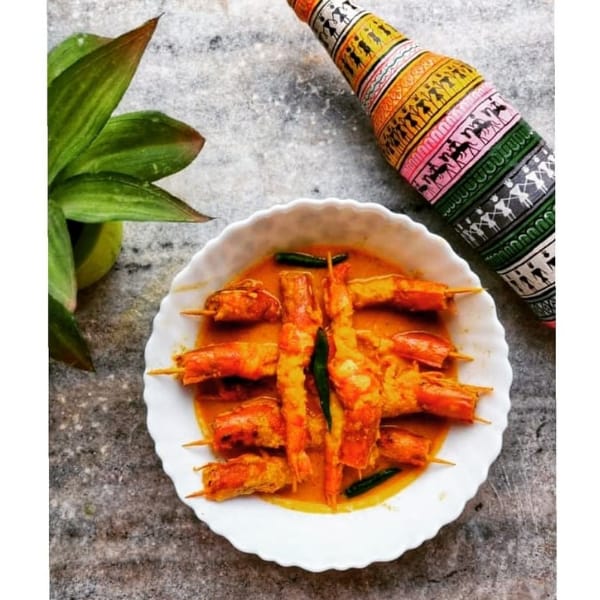
Shrimp is a lean, high-protein seafood. We have not found a Bagda-specific nutrition test, so the numbers below are general values for cooked shrimp. Real values change with size, farming and cooking style.
Food Value of Shrimp (per 100 g, cooked)
- Calories: about 99 kcal
- Protein: about 24 g
- Carbohydrates: close to zero
- Cholesterol: about 189 mg
- Minerals: a good source of selenium and iodine, and also phosphorus, zinc and magnesium
- Omega-3 fats: small amounts of EPA and DHA
What Shrimp Can Offer
- Lean protein: It helps with fullness and muscle repair while staying low in calories.
- Selenium and iodine: Both support thyroid health, and selenium works as an antioxidant.
- Vitamin B12: It supports nerves and red blood cells.
- Cholesterol: Shrimp is high in cholesterol, but it is very low in saturated fat. Current research suggests that for most people, moderate amounts are fine. Butter and heavy cream in recipes can change that picture.
People with a shellfish allergy should avoid shrimp. If you have high cholesterol, diabetes or heart disease, ask your doctor how much suits you. This page is general information, not medical advice.
Availability of Bagda Shrimp in Bangladesh
Main Production Areas
Bagda farming is concentrated in the south-west coastal belt near the Sundarbans. Khulna, Satkhira, Bagerhat and Cox’s Bazar are the main hubs, and farms there use brackish water. Bagerhat is also home to the famous Mosque City, which you can explore in our Bagerhat District guide.
Local Markets and Distribution
- Fish markets: Large city markets such as Karwan Bazar in Dhaka sell fresh and frozen shrimp.
- Supermarkets: Many city supermarkets sell shrimp fresh or frozen.
- Online grocers: Several e-commerce grocery platforms deliver frozen shrimp at home.
Prices and stock change often, so check the label for size grade and weight before you buy.
Export Markets
Bangladesh ships shrimp fresh, frozen and processed. European countries buy more than half of frozen shrimp earnings, according to a 2025 report, and shipments also go to markets such as the United States, Japan, China and India.
Aquaculture Practices
Most Bagda shrimp is raised in traditional or semi-intensive ponds. Small farmers often depend on tidal water and few inputs, while larger farms control water, feed and stocking more closely. Yield per hectare is low compared with the vannamei shrimp that dominates world exports: industry leaders say Bagda farms produce around 500 kg per hectare, while vannamei farms produce 12 to 15 tonnes. This gap is one reason the sector looks for better practices and higher-value positioning, such as the GI tag.
Sustainable farming is a growing focus. It includes better water management, improved feed and disease control.
Government Support and Initiatives
The government supports shrimp farmers through training, seed quality programmes and work on cold storage and transport. In 2026 industry bodies and the investment authority also set out a plan to reach $3 billion in annual shrimp export earnings by 2030, which includes proposed shrimp economic zones in districts such as Khulna, Satkhira, Bagerhat and Cox’s Bazar. This is a target, not a result, so treat it as a plan.
Challenges in Availability
- Disease: White Spot Disease has hurt Bagda farming, and Early Mortality Syndrome hit farms in Khulna and Satkhira between 2019 and 2023.
- Weather and water: Cyclones, floods, changes in salinity, temperature and pollution can damage farms and cut supply.
- Quality rules: Misuse of antibiotics and bad practices such as pushing jelly into shrimp have harmed export trust, industry leaders say.
- Competition: Vannamei shrimp from neighbouring countries sells in larger volumes at lower cost.
What Brands Can Learn from the Bagda GI Story
This story is a useful case in Brand Equity. A GI tag gives a product a protected name and an origin story, which are two strong brand assets. But assets only create value when they are used: clear labels, trusted quality, storytelling and a way for buyers to find the real product. It also fits the Fogg Behavior Model. A buyer needs motivation (the story) and ability (easy access and clear proof of origin) at the same moment, and the tag helps with only one of them.
Frequently Asked Questions
What is Bagda shrimp?
Bagda shrimp, also called Black Tiger Shrimp or Bagda Chingri, is a brackish-water shrimp farmed mainly in the south-west coastal region of Bangladesh.
Is Bagda shrimp a GI product?
Yes. It was recognised as the tenth GI product of Bangladesh by the Department of Patents, Designs and Trademarks in 2022.
Who applied for the Bagda shrimp GI tag?
The Department of Fisheries applied in May 2019.
Where is Bagda shrimp farmed in Bangladesh?
The main areas are Khulna, Satkhira, Bagerhat and Cox’s Bazar.
Is shrimp healthy to eat?
Shrimp is low in calories and high in protein, selenium and iodine. It is also high in cholesterol but very low in saturated fat, so most people can eat it in moderation. Ask a doctor if you have a medical condition.
Final Thoughts
The GI tag gave Bagda shrimp an official identity, and it is a good start. The next step is turning that identity into better prices, steady supply and stronger trust abroad. For more stories about Bangladeshi products and brands, keep reading in our Business category, and see our Sundarbans facts guide for the forest behind the shrimp belt.
Sources: The Business Standard, Bagda Prawn receives GI certificate, banglanews24, Bagda Shrimp gets GI certificate, The Daily Star, Businesspeople unable to benefit from GI products, BSS, Khulna fish and shrimp exports FY2024-25, Cleveland Clinic, Is shrimp healthy, and Wikipedia, Geographical indications in Bangladesh.