
Close Menu
Bangladesh Branding
  • Destinations
    • By Region
      • Dhaka
      • Chattogram
      • Sylhet
      • Rajshahi
      • Khulna
      • Barishal
      • Rangpur
      • Mymensingh
    • By Landscape
      • Beachs
      • Hills
      • Forests
      • Wetlands
      • Rivers
      • Historical Sites
      • Archaeological Sites
      • Religious Places
    • Popular Now
      • Cox’s Bazar
      • Sundarbans
      • Sajek
      • Bandarban
      • Sylhet
      • Srimangal
  • Experiences
  • Places to Visit
  • Festivals and Events
  • Plan Your Trip
  • Travel Stories
    • Travel Guide
      • Travel Tips
      • Hotels
      • Flights
      • Local Transport
      • Currency
    • News and Updates
      • News
      • Business and Brands
      • Buy Bangladeshi
    • Culture and Heritage
      • People
      • Culture
      • Food
      • Heritage Moshque
      • Arts and Crafts
  • Map
Facebook X (Twitter) Instagram YouTube
Facebook X (Twitter) Instagram
Bangladesh Branding
Subscribe
  • Destinations
    • By Division
      • Dhaka
      • Chattogram
      • Sylhet
      • Rajshahi
      • Khulna
      • Barishal
      • Rangpur
      • Mymensingh
    • By Landscape
      • Beachs
      • Hills
      • Forests
      • Wetlands
      • Rivers
      • Historical Sites
      • Archaeological Sites
      • Religious Places
    • Popular Now
      • Cox’s Bazar
      • Sundarbans
      • Sajek
      • Bandarban
      • Sylhet
      • Srimangal
    • Featured Destinations
  • Experiences
  • Places to Visit
  • Festivals and Events
  • Plan Your Trip
  • Travel Stories
    • Travel Guide
      • Travel Tips
      • Hotels
      • Flights
      • Local Transport
      • Currency
    • News and Updates
      • News
      • Business and Brands
      • Buy Bangladeshi
    • Culture and Heritage
      • People
      • Culture
      • Food
      • Heritage Moshque
      • Arts and Crafts
  • Map
Bangladesh Branding
Home » Crafts » Rickshaw Art of Dhaka

Rickshaw Art of Dhaka

September 28, 2026No Comments4 Mins Read
Rickshaw Art of Dhaka
Share
Facebook Twitter LinkedIn WhatsApp Copy Link

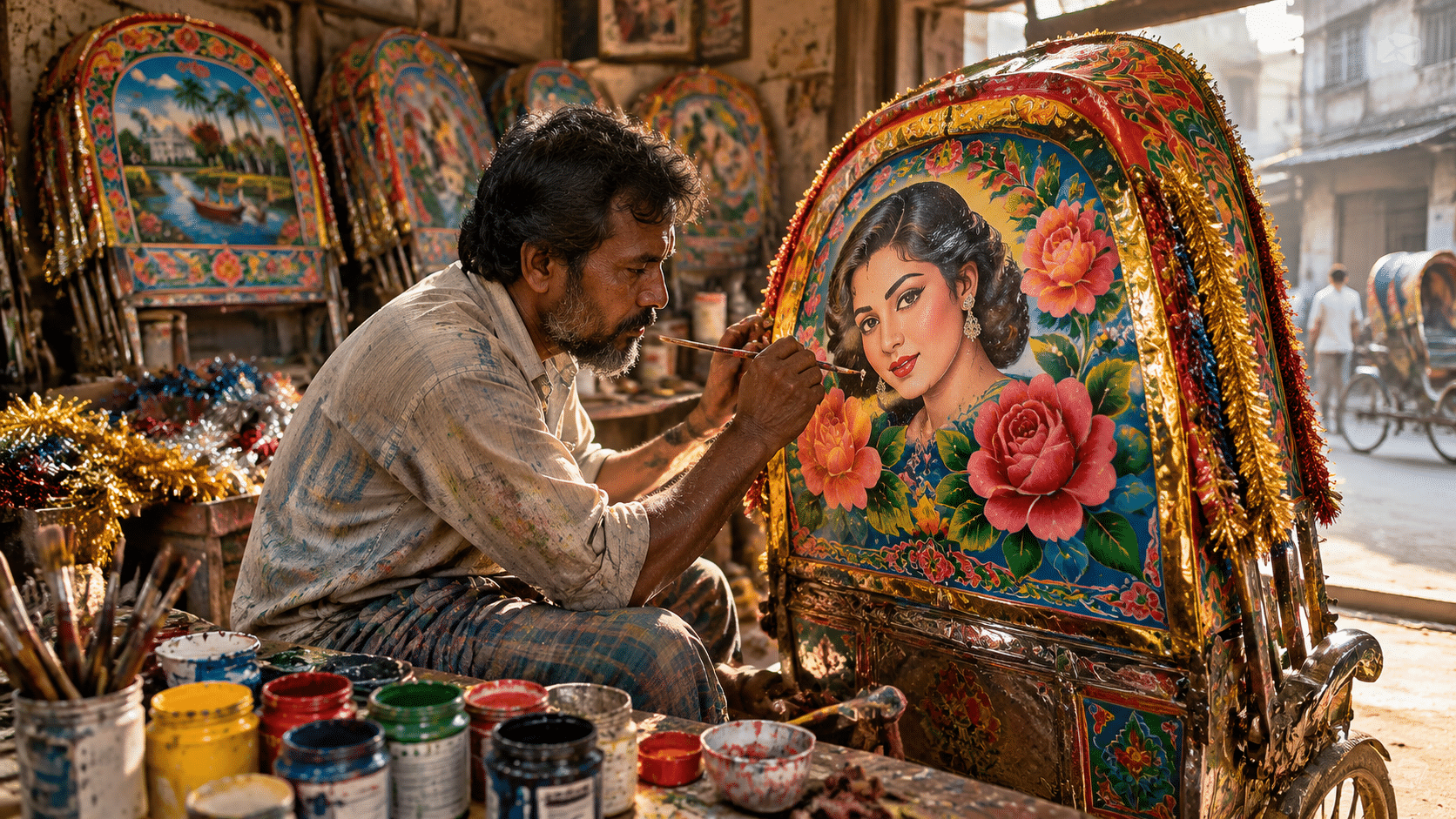
Rickshaw art is the hand-painted decoration that covers almost every part of a Dhaka cycle rickshaw, and it is the reason the city’s traffic looks the way it does. Back panels show film stars, village scenes, tigers and flowers. Hoods carry tinsel and pleated plastic, and even the wheel rims are painted. In December 2023, UNESCO inscribed “Rickshaws and rickshaw painting in Dhaka” on the Representative List of the Intangible Cultural Heritage of Humanity, recognising a craft that most residents see every day without thinking about how it is made.

A rolling gallery

The rickshaw itself is built by hand by a small group of craftsmen, and almost every part is then decorated: painted panels, appliqué, tassels, plastic flowers and tinsel. Because rickshaws move slowly, the paintings are easy to see from the pavement, so each vehicle works as a small roving exhibition. Dhaka is often called the rickshaw capital of the world, and reports put more than half of Bangladesh’s million or so rickshaws in the capital.

What gets painted

Common subjects include floral patterns, birds and animals, scenes from history and folk tales, national heroes, film stars and short lines of text. Village landscapes and natural scenery often fill the back board. Owners sometimes add personal messages, so two rickshaws almost never look the same. That variety is what makes rickshaw art worth studying up close rather than glancing at in passing.

How rickshaw art is made

Decorated rickshaws come from workshops led by a master (an ustad or mistri), where apprentices learn by watching and doing. UNESCO notes that painters usually work on commission and pass their skills to their children and close relatives. All rickshaw craftsmen are men, while the painters include both men and women. Old Dhaka is where much of this work is concentrated, and Sarder Street has long been known for rickshaw workshops, although few of them focus on the painted decoration itself.

Where rickshaw art comes from

Rickshaw painting is generally traced to the mid-20th century, after cycle rickshaws became a common way to move around Dhaka. Owners wanted their vehicles to stand out and attract passengers, and the decoration grew from there into a recognised urban folk art. UNESCO describes it as a key part of the city’s cultural tradition, giving inhabitants a sense of shared identity and continuity. Decorated rickshaws also show up in exhibitions, festive events, films and other artworks.

A tradition under pressure

The art form is not as secure as its UNESCO listing might suggest. One Old Dhaka rickshaw artist told a travel writer that only around a dozen artists were still working in the area at the time, and that commissions from visitors had become a new source of income because regular rickshaw work no longer paid enough. In August 2024, members of the Bangladesh Rickshaw Art Society painted murals on walls near Sheikh Russel Tower at Dhaka University, saying they wanted to teach younger people why the art matters.

How to appreciate it, and how to support it

Look closely at the back panel and the hood, and notice how the style changes from one rickshaw to the next. Morning and late afternoon light show the colours best, and rickshaws parked between fares give you time to look. Ask before you photograph a rickshaw or its puller, and a small tip is a kind gesture. If you want to take a piece home, painters now make rickshaw-style work on fabric, canvas and other items for visitors, and buying directly from an artist is the most direct way to support the craft. For a walking route built around this art, see our Old Dhaka rickshaw art photography walk.

Another Dhaka craft with deep roots is the conch shell bangles made by hand in Old Dhaka’s Shakhari community.

Search
Recent Post
  • Chandpur District: Where the Great Rivers Meet September 13, 2026
  • Noakhali District: Islands, Estuary, and Gandhian Heritage September 13, 2026
  • Feni District: Migratory Birds, Ancient Tanks, and the Hill-Plains Edge September 13, 2026
  • Khagrachari District: Cave Country, Tribal Heartland, and Hill Panoramas September 9, 2026
  • Cumilla District: Ancient Buddhism and the Highway City September 9, 2026
  • Rangamati District: The Lake District of Bangladesh September 8, 2026
  • Cox’s Bazar District: The World’s Longest Beach September 8, 2026
  • Chattogram District: Bangladesh’s Port City and Hill Country Gateway September 8, 2026
  • Jhenaidah District: Ancient Mosques and Riverine Landscapes September 7, 2026
  • Magura District: Quiet Rivers and Zamindari Remnants September 7, 2026
  • Narail District: Where Art Lives on the River September 5, 2026
  • Kushtia District: The Soul of Bangladesh’s Folk Tradition September 3, 2026
  • Jashore District: The Flower Capital of Bangladesh September 2, 2026
  • Khulna District: Gateway to the World’s Largest Mangrove Forest September 2, 2026
  • Panchagarh District: Where Bangladesh Meets the Himalayas September 2, 2026
Who We Are

Bangladesh Branding, your premier source for uncovering the treasures of Bangladesh, a land where vibrant culture meets breathtaking landscapes and warm hospitality.

Facebook X (Twitter) Instagram YouTube LinkedIn
Explore
  • Destinations
  • Places to Visit
  • Experiences
  • Travel Stories
  • Events
  • Crafts
Plan your trip
  • Trip Planner
  • Travel Guide
  • Best Time to Visit
  • How to Reach
  • Travel Tips
About
  • About Us
  • Contact Us
  • Partner With Us
  • Media / Press
  • Submit a Place
Search
Copyright © 2026 Bangladesh Branding | Developed by Business Brillianz.

Type above and press Enter to search. Press Esc to cancel.

imunify-bot-check