

Kabaddi: Bangladesh’s National Treasure
Kabaddi, called ha-du-du in rural Bengal, has been the national game of Bangladesh since 1972. Two teams of seven take turns sending a “raider” into the other half, chanting without a breath while trying to tag defenders and get home. Kabaddi in Bangladesh grew from village fields to Asian Games podiums, and it still carries the country’s community spirit.
Banglapedia calls kabaddi in Bangladesh the “game of rural Bengal” because it is loved most in villages. This guide covers how the game works, how it got its name and rules, and what Bangladesh’s teams have achieved.
Game Overview
Under international rules, a men’s court measures 13 metres by 10 metres, and a women’s court 12 metres by 8 metres. Each team has 12 players, but only seven are on court at a time and five wait as reserves. A match has two halves of 20 minutes with a 5-minute break, and the teams swap sides at half time. Here is how kabaddi in Bangladesh is played under national rules:
The Raid: One player, the raider, crosses into the opponent’s half. While holding their breath, the raider keeps chanting “kabaddi, kabaddi” (this repeated chant is called the “cant”). The aim is to touch as many defenders as possible and get back to their own half without breaking the chant. Dhaka Tribune notes that in Bangladesh, raiders often cant “ha-du-du-du-du”, “sikabaddi” or “kapat kapat”, depending on the region.
The Defense: The defenders try to stop the raider from returning by tackling or holding them. A raider who is caught, or who runs out of breath, is out, and the defending team scores a point.
Points work like this:
- 1 point for each defender the raider touches and gets back safely (the touched defenders go out).
- 1 point for the defending team when it stops a raider.
- 2 extra points, called a “lona”, when a team puts all seven opponents out. After a lona, the whole side returns to play, according to Olympics.com.
Players who are out come back when their team scores. Some formats also give a bonus point for crossing a bonus line. The team with the most points at the end wins.
Historical Context
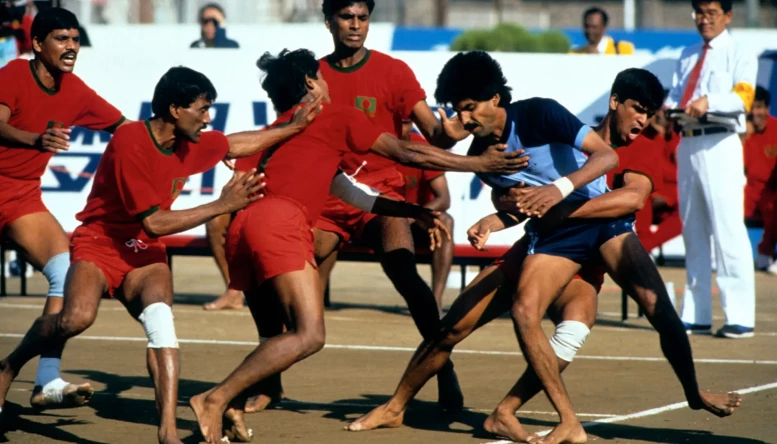
Kabaddi in Bangladesh, known regionally as ha-du-du, was once played with different rules in different parts of the country. Dhaka Tribune says the form closest to modern kabaddi was probably played in Faridpur in the early 20th century. In 1972, the game was given the name kabaddi and the status of national game, according to Banglapedia, which brought one shared set of rules and a sense of national pride.
The Bangladesh Amateur Kabaddi Federation was formed in 1973 to set rules and regulations for the national game. In 1974, the national team played a kabaddi test against a visiting Indian side, and the visitors also played sides from Dhaka, Tangail, Dinajpur, Jessore, Faridpur and Comilla, according to Dhaka Tribune.
In 1978, delegates from Bangladesh, India, Nepal and Pakistan founded the Asian Amateur Kabaddi Federation. Dhaka Tribune places the meeting in the Indian town of “Villai”, most likely Bhilai in Madhya Pradesh. The first Asian Kabaddi Championship followed in Kolkata in 1980, where Bangladesh finished runners-up behind India. Kabaddi was a demonstration sport at the 1982 Asian Games and became a medal event in 1990.
Achievements and Recognition
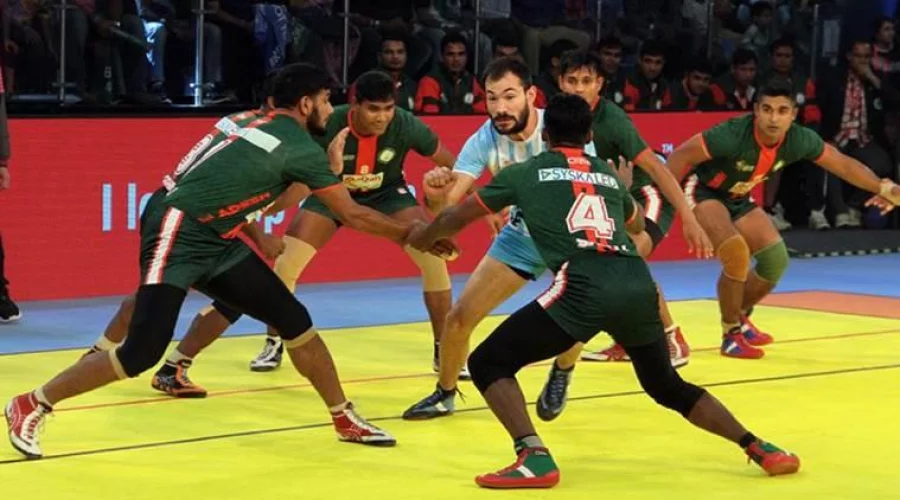
Kabaddi in Bangladesh has produced some of the country’s best results in international sport. At the Asian Games, the men’s team won silver in 1990, 1994 and 2002, and bronze in 1998 and 2006. The women’s team won bronze in 2010 and 2014. The men also took bronze at the Kabaddi World Cup in 2004 and 2007.
At the 2016 World Cup in Ahmedabad, Bangladesh beat Argentina 67 to 26 in their last group game, according to Dhaka Tribune. They also crushed Australia 80 to 8, a 72-point margin that was the biggest of that tournament.
Why Kabaddi in Bangladesh Still Needs Attention
Despite its status, an academic chapter on the sport notes that kabaddi in Bangladesh has neither won mass national recognition nor spread far beyond rural areas. For brands and tourism bodies, that gap is the opportunity.
- Brand Equity: Kabaddi in Bangladesh already carries strong cultural meaning (rural pride, teamwork, heritage), which is hard for any brand to build from scratch.
- Blue Ocean Strategy: Football and cricket crowd the sponsor market. A well-organised kabaddi league is an uncontested space.
- Fogg Behavior Model: Fans join in when watching or playing is easy. Local tournaments, school programmes and short match clips lower the effort.
For more heritage stories, read about jamdani weaving and rickshaw art.
Frequently Asked Questions
Is kabaddi the national sport of Bangladesh?
Yes. Ha-du-du was given the name kabaddi and the status of national game in 1972.
What is the difference between kabaddi and ha-du-du?
Ha-du-du is the traditional village game with no fixed rules and different local chants. Kabaddi is the standardised version used in national and international tournaments.
How popular is kabaddi in Bangladesh?
It is loved most in villages, but an academic chapter says it has not gained mass national recognition.
How many players are in a kabaddi team?
Each team has 12 players. Seven play on court and five wait as reserves.
How long is a kabaddi match?
Two halves of 20 minutes with a 5-minute break.
What medals has Bangladesh won in kabaddi at the Asian Games?
The men won silver in 1990, 1994 and 2002 and bronze in 1998 and 2006. The women won bronze in 2010 and 2014.
When was the Bangladesh Kabaddi Federation formed?
In 1973, as the Bangladesh Amateur Kabaddi Federation.
Final Thoughts
Kabaddi in Bangladesh is more than a game. It connects tradition, community and national identity, and it celebrates both athletic skill and cultural pride. Explore more stories in our Culture category.
Sources: Banglapedia, Kabadi, Dhaka Tribune, A tale of kabaddi, Olympics.com, Kabaddi rules, Wikipedia, Bangladesh at the Asian Games, Wikipedia, Bangladesh national kabaddi team, Dhaka Tribune, 2016 World Cup and Britannica, Kabaddi.